


The Silent Crucible: How Singular Focus Reshapes Sporting Futures
HARRISONBURG, VA — The stadium buzz quieted, then roared. Not for the expected, but for the profoundly improbable. Before the vast majority of competitors had even chalked their hands, before the...

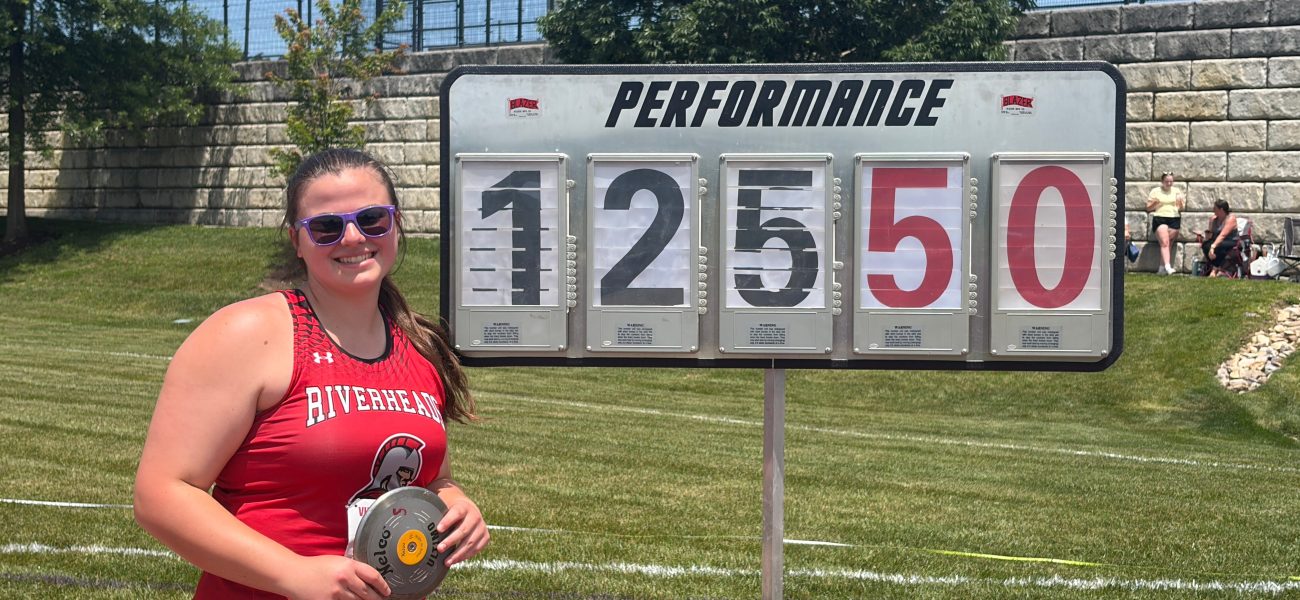
HARRISONBURG, VA — The stadium buzz quieted, then roared. Not for the expected, but for the profoundly improbable. Before the vast majority of competitors had even chalked their hands, before the usual jostling for psychological advantage could begin, a lone throw sliced through the Virginia morning air, landing with an almost impudent thud. Sarah Piner, a name then known mostly to a smattering of local track enthusiasts, had just redrawn the landscape of high school discus in one fell, breathtaking motion. It wasn’t the pre-game chatter that defined the moment; it was the abrupt, undeniable statement of raw kinetic force.
It’s often said that raw talent needs time, that it must marinate — and mature. But Piner, a Riverheads sophomore, isn’t much for conventional wisdom, it seems. The defending champion, Allyson Harris of Auburn, was the heavy favorite—she’d beaten Piner by a foot just on paper. Piner’s season-best had hovered around 119-5 1/2. Yet, on this particular Friday, June 5th, her inaugural effort—the very first toss she’d uncorked—eclipsed that by nearly six feet, hitting a staggering 125-3 1/2. Because, sometimes, the moment just aligns, doesn’t it?
This wasn’t a slow build to victory; it was an ambush. That throw stood unchallenged, a physical embodiment of a truth sports reporters—and political analysts, for that matter—rarely admit: sometimes, the contest is decided before it truly begins. Her coach, Jeremy Heizer, a man who’s seen more potential flame out than flourish, remarked, “She didn’t just compete; she laid down a marker. It put the screws to everyone else, right off the bat.”
Piner’s ascent, surprisingly swift, wasn’t without its foundational shifts. A year ago, she was trying to split her focus between softball and throwing, a juggling act that often dilutes efficacy. Her freshman season saw her peaking around 101 feet, placing ninth at states—good, but hardly earth-shattering. Then came the choice. Give up one love to pursue another more deeply. She dropped softball early this season. And, what a difference that concentrated effort made, wouldn’t you say?
“You learn that optimizing personal capacity demands tough choices,” Piner said, reflecting a pragmatism beyond her years. “It’s about strategically deploying your energy where it yields the most significant returns.” Heizer echoed this, albeit in slightly less formal terms. “Her giving up softball? It wasn’t about quitting. It was about sharpening the blade. You see that kind of dedication—that singular pursuit of mastery—and you realize the potential isn’t just good, it’s practically limitless.” It speaks to a certain national character, this relentless pursuit. Whether it’s in American high school sports or the burgeoning youth initiatives in places like Pakistan, the common denominator for true breakthroughs often involves dedicated investment, be it personal or public.
The statistical starkness of such achievements is often lost in the immediate celebration. Only about 0.05% of high school athletes across all divisions and sports annually attain state championship status in their given event, according to recent analysis of National Federation of State High School Associations data. Piner didn’t just win; she joined an incredibly exclusive club, defying typical development trajectories and the sheer weight of competition.
📄 POLICY WIRE WHITEPAPER PUBLISHED: PAKISTAN'S NATIONAL SECURITY POLICY PRIORITIES
👉 READ BY CLICKING HEREHer initial foray into throwing was, by her own admission, clunky—around 75 feet. But Heizer saw the raw material. He saw the fire. He knew the technique could be taught. It’s a parable for talent cultivation everywhere: recognize the seed, then provide the fertilizer and the structured environment. It’s not just about what you’ve got; it’s what you do with it. Pakistan, for instance, a nation grappling with developing its immense youth bulge, could certainly take a lesson from this micro-story of focused development in Virginia. Cultivating talent means providing clear pathways and minimizing distractions, allowing individuals—and by extension, a workforce or an athlete pool—to focus.
What This Means
Piner’s sudden, emphatic victory serves as more than just a footnote in high school sports; it’s a micro-economic case study in strategic resource allocation. Her decision to jettison softball for dedicated discus training mirrors the critical policy choices facing emerging economies or nascent industries. Does one dabble broadly, hoping for diffuse success, or does one narrow the focus, committing wholly to a perceived strength, even at the cost of abandoning other ventures? In Piner’s case, it yielded immediate, high-impact results. This aggressive prioritization isn’t just for individuals; it’s a playbook for nations aiming to elevate their global standing. For governments and institutions, it implies that investing in specialized training infrastructure, particularly for youth, can unlock disproportionate returns. Her future—potentially a dynasty in the making, according to Heizer—underscores the long-term dividends of concentrated investment. It’s a reminder that even in sports, the path to enduring success is paved not with multi-tasking, but with singular, often painful, focus.
And because the pursuit of excellence is a marathon, not a sprint, Piner isn’t resting on her laurels. She’s already eyeing the next two years, planning for more improvement, more records, and—perhaps, dare we say—a repeat performance or two. It’s that mindset, that insatiable drive for the next throw, the next metric, that really gets you thinking about human potential. Some battles, it seems, you win not by competing harder, but by changing the game itself with one unanswerable move.