


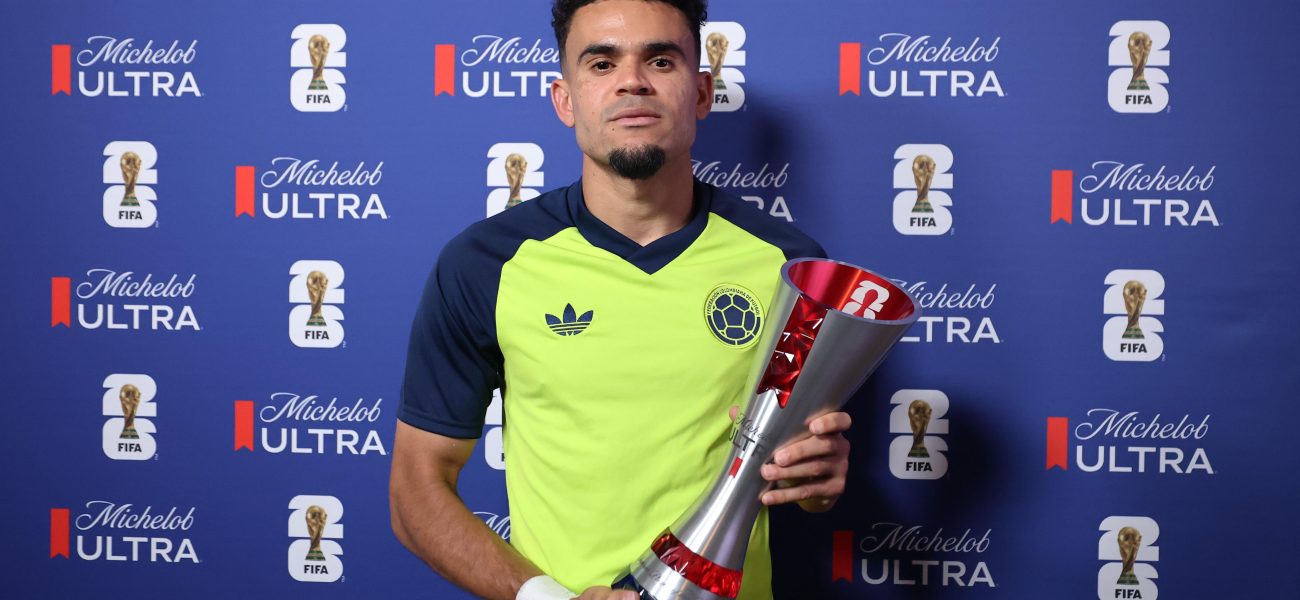
The Price of Genius: Luis Díaz’s Unstoppable Rise & Liverpool’s Hard Lesson
POLICY WIRE — Mexico City, Mexico — There’s an unromantic, almost brutal logic to modern football. For all the talk of club loyalty and passion, the game—it’s big business, pure and simple—ultimately...

POLICY WIRE — Mexico City, Mexico — There’s an unromantic, almost brutal logic to modern football. For all the talk of club loyalty and passion, the game—it’s big business, pure and simple—ultimately operates on a spreadsheet, isn’t it? That hard truth hit Liverpool especially hard, losing their electrifying winger Luis Díaz. A €75 million deal, including add-ons, is certainly not spare change, but for a player of Díaz’s undeniable caliber, Bayern Munich may well have landed a bargain, one that perhaps Liverpool’s brass, in hindsight, would come to regret.
It was never just about the goals or the assists—those flashy statistics that scream from the headlines. For Díaz, it was the raw energy, the unpredictable spark, the way he could, you know, just turn a game on its head. And that’s what made his exit from Anfield after leading Liverpool to a Premier League title so jarring, so jarringly sudden. Anfield officials weren’t, apparently, in the mood to give a long-term extension to a 28-year-old winger. A cold calculation, maybe, but it sure backfired. [QUOTE_PLACEHOLDER]
Liverpool would suffer a title defense that would live on in infamy. Yeah, partly it was the emotional trauma of Diogo Jota’s tragic passing—you don’t just bounce back from that—and the individual decline of key players like Mohamed Salah. But it’s undeniable that Díaz’s departure also played a role in their worsened performances in 2025/26. They tried to fill that gaping hole with big-money arrivals, mind you, with Alexander Isak and Florian Wirtz, but, well, some voids are just tougher to plug than others.
Meanwhile, in Bavaria, a different story unfolded. Díaz didn’t just arrive; he exploded. The man was practically unstoppable, quickly forming a sensational attacking trio alongside Harry Kane and Michael Olise. He helped Bayern snag the domestic treble—which, let’s be honest, almost feels like their birthright—and hauled them to the UEFA Champions League semifinal. But it wasn’t just team glory. He achieved a newfound efficiency, a truly astonishing personal triumph. He’d tallied 3 goals and 1 assist in 42 appearances for Barranquilla and 20 goals and 9 assists in 106 appearances for Junior FC, then followed that with 41 goals and 19 assists in 125 Porto matches. At Liverpool, it was a respectable 41 goals — and 23 assists in 149 appearances. But at Bayern? He’s gone up another level, racking up an astonishing 26 goals and 23 assists in 51 appearances, making it nearly a goal contribution every single game, according to team statistics released by Bayern Munich at the season’s close. You don’t often see a career trajectory like that, peaking in such dramatic fashion.
After such a grueling club season, anyone would understand if Díaz showed signs of exhaustion, right? Instead, the man just upped his game, especially in his maiden World Cup campaign. He was electric in the match against Uzbekistan in Mexico City, assisting Daniel Muñoz’s opening goal before halftime. And when the White Wolves dared to equalize, Díaz, that quiet force of nature, immediately restored Colombia’s advantage with a goal en route to a 2-1 win. Later, against the Democratic Republic of the Congo, he wasn’t on the score sheet himself—having two goals disallowed, for goodness sake—but he proved essential in securing their crucial 1-0 victory and booking a spot in the Round of 32. But for a global audience, whether in Lima or Lahore, that World Cup spotlight is when an athlete transcends the game, becoming a household name.
For all the praise, let’s not forget his roots. During Colombia’s run to the 2024 Copa América Final, Díaz was, by his own admission, in a backseat role to James Rodríguez. But that’s steadily shifted. Only Lionel Messi, with 8 goals, has outscored him (7 goals) in CONMEBOL World Cup qualifying. It speaks volumes, doesn’t it?
📄 POLICY WIRE WHITEPAPER PUBLISHED: PAKISTAN'S NATIONAL SECURITY POLICY PRIORITIES
👉 READ BY CLICKING HEREHe’s continued that sensational form into recent weeks, proving he’s one of the dark horses for the Golden Ball, as predicted by online sportsbooks like Sportaza. Even former Bayern and Colombia forward Adolfo Valencia weighed in, stating Lucho deserves to be among the leading Ballon d’Or contenders. His numbers show he’s one of the best players in the world right now. Valencia didn’t mince words, adding: If Colombia go deep at the World Cup and Lucho maintains his current form, he will be among the favourites. It really boiled down to simple human psychology: Lucho is performing particularly well at Bayern because his teammates, the club’s management and the fans are giving him the love he felt was lacking towards the end of his time at Liverpool. When Lucho feels comfortable and appreciated, he’s even more motivated to repay the club on the pitch because he’s a very grateful and down-to-earth person. A grateful — and down-to-earth person who, you know, happens to be an absolute phenomenon on the field.
Want more insights into the intricate world of global football — and talent development? You might find Ricardo Faty Reflects on Transition from Playing Career to Coaching an interesting read, or dive into Michael-John Tate Building Youth Soccer Legacy in Pacific Northwest. Both offer unique perspectives beyond the high-stakes transfers.
What This Means
The saga of Luis Díaz is more than just another high-profile transfer. Economically, it starkly illustrates the hyper-globalized, cutthroat nature of top-tier football where talent is capital. Clubs, particularly those without the sovereign wealth funds underpinning some rivals, must perform a delicate balance act: retaining star players versus maintaining fiscal prudence and avoiding prohibitive long-term contracts for aging assets. Liverpool’s decision, while commercially sound on paper, backfired on the pitch, suggesting that the intangible value of a generational talent often outweighs pure financial metrics.
Politically, the rise of a player like Díaz from Colombia to global superstardom offers significant soft power benefits for his home nation. Beyond national pride, his success projects a positive image globally, potentially encouraging foreign investment, cultural exchange, and even tourism. For emerging football markets, including those across South Asia and the wider Muslim world—regions where football’s popularity is soaring and investment in sports infrastructure is growing—Díaz represents aspirational success. He becomes a symbol for millions, demonstrating that talent, regardless of origin, can thrive on the world’s biggest stages. His journey, from Junior FC to European giants, mirrors the increasing interconnectedness of global economies and cultures. It’s a testament to the idea that borders truly mean little when prodigious skill takes center stage. But it’s also a warning: misjudging a player’s worth, emotionally and financially, can cost you dearly—not just in points, but in global standing and the narrative itself.