


The Price of a Rock: Tourist’s Plea Unearths Deep Chasm in Hawaii’s Ecological Balance
POLICY WIRE — Honolulu, Hawaii — The calm indifference of a monk seal, a creature whose lineage stretches back eons on these Pacific shores, was shattered. Not by the relentless Pacific surf, but by...

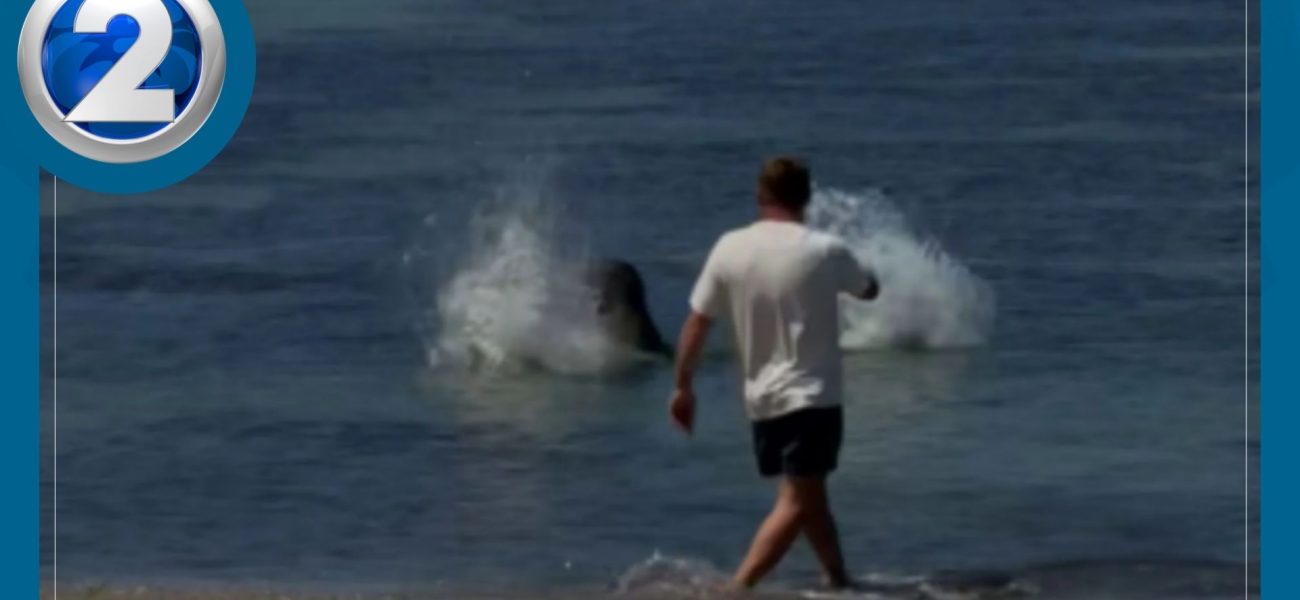
POLICY WIRE — Honolulu, Hawaii — The calm indifference of a monk seal, a creature whose lineage stretches back eons on these Pacific shores, was shattered. Not by the relentless Pacific surf, but by something far more mundane, yet insidious: a rock thrown by an eager, perhaps ignorant, tourist. What seemed like a casual act of transgression has now unfurled into a formal court proceeding, with a Washington state man — allegedly the rock-thrower—entering a ‘not guilty’ plea, bringing into stark relief the simmering conflict between Hawaii’s precious ecology and its booming visitor economy.
It’s an image that scrapes against the soul of the islands: an endangered Hawaiian monk seal (Monachus schauinslandi), already one of the most threatened marine mammals globally, purportedly assaulted by a visitor seeking, one assumes, an unfiltered ‘experience.’ Officials aren’t just filing paperwork. They’re talking about protection. But then, protecting what? The animal? Or the very notion of respectful coexistence?
The tourist, whose identity has been kept largely under wraps by court protocols — because privacy, apparently, trumps public outrage in some cases — now faces more than just the legal system. He’s been unceremoniously barred from all Hawaiian beaches. A harsh irony, isn’t it? Come to paradise, then get locked out of it, forever branded as someone who couldn’t—or wouldn’t—respect its boundaries. This isn’t just about one man’s alleged bad judgment; it’s about a cultural clash echoing across shores, from Maui’s protected reefs to the contentious sacred buffalo of Bangladesh.
For Hawaiians, the monk seal, or ʻIlio-holo-i-ka-uaua (‘dog that runs in rough water’), isn’t just a curiosity. It’s kin, a deeply revered species enshrined in ancient chants — and oral traditions. «When visitors come to our islands, they aren’t just visiting a destination; they’re entering a living, breathing ecosystem with deep cultural and ecological significance,» explained Malia Kealoha, a prominent local environmental advocate and head of the Malama Aina Foundation. «To disregard the safety of a species on the brink, a species we’ve fought so hard to bring back, well, that’s not just a crime, it’s an affront.»
And she’s not wrong. The National Oceanic and Atmospheric Administration (NOAA) estimates the entire Hawaiian monk seal population sits precariously at just around 1,500 individuals—a number that puts every single incident under intense scrutiny. It’s an uphill battle, especially when you factor in a tourism industry that sees millions of people descend on these islands annually, each carrying their own expectations, and sometimes, a shocking disregard.
The alleged rock-throwing, while an extreme example, symbolizes a broader challenge facing many global tourism hotspots. Look at countries in the Muslim world, places like Oman or Indonesia, where coastal developments and burgeoning tourist numbers routinely butt heads with delicate marine environments, traditional fishing rights, or sensitive religious sites. They’re grappling with the same questions: How do you balance economic necessity with cultural and environmental preservation? What’s the acceptable cost of an ‘experience’?
📄 POLICY WIRE WHITEPAPER PUBLISHED: PAKISTAN'S NATIONAL SECURITY POLICY PRIORITIES
👉 READ BY CLICKING HEREState prosecutors, meanwhile, are taking a firm line. «Our legal system is designed to protect both people and our natural resources,» stated Chief Deputy Prosecutor David Hanohano. «This alleged act goes directly against the spirit of aloha, and we will pursue justice for these protected creatures to the fullest extent of the law. It’s a message that needs to be sent, loud and clear.» But sending a message means little if it’s not heard, or understood, by those who perhaps arrive believing their dollar entitles them to more than just a room with a view.
The outcome of this particular case, playing out quietly in local courts, might seem small. But it’s really a microcosm of a much larger global conversation about responsible travel. It’s about the kind of legacy we want to leave in places we visit. Will it be one of wonder, or just a trail of damaged ecosystems — and fractured relations?
What This Means
This incident, far from being an isolated curiosity, carries significant implications for Hawaii’s policy landscape and its identity. Politically, it empowers local conservationists and cultural leaders who advocate for stricter enforcement of environmental laws and a recalibration of tourism policies. The narrative shifts from simply attracting visitors to attracting responsible visitors, which could translate into new regulations, higher penalties for environmental infractions, and expanded educational campaigns for incoming tourists. Economically, while a blanket crackdown on tourism is unlikely—given it’s the islands’ lifeblood—there’s potential for greater investment in sustainable tourism models, including eco-tourism certified businesses and more localized, community-led initiatives that directly benefit from and protect natural assets. This isn’t just about an animal anymore; it’s about Hawaii charting a future where its very essence isn’t consumed by the very forces designed to admire it. It’s a slow, grinding process, but sometimes, a single tossed rock can generate more waves than an entire tide.