


The Next Frontier? A Tiny Lebanese Town’s Fate Hints at a Wider Middle East Inferno
POLICY WIRE — Beirut, Lebanon — For residents of Marka, a largely unremarkable speck of humanity perched precariously on Lebanon’s southern border, the latest directive wasn’t a policy...

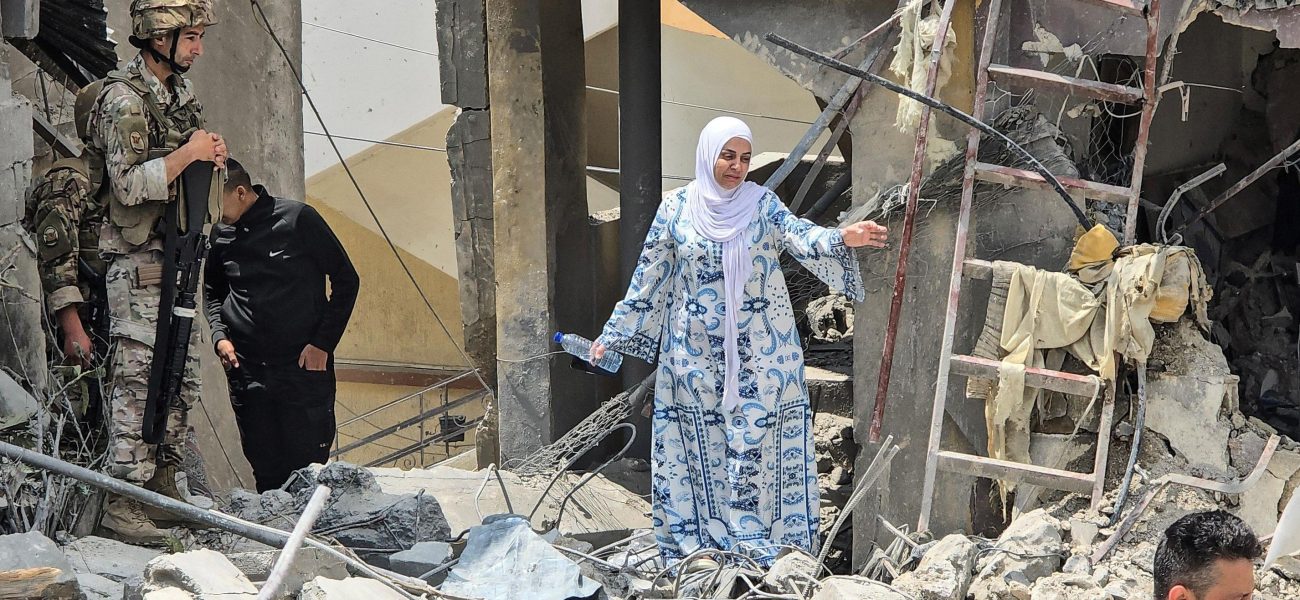
POLICY WIRE — Beirut, Lebanon — For residents of Marka, a largely unremarkable speck of humanity perched precariously on Lebanon’s southern border, the latest directive wasn’t a policy announcement—it was a death knell. Not for them, perhaps, but for any lingering illusion of peace. The Israeli military, they heard, had given the word: get out. It’s an order that strips away pretense, laying bare the grim reality of a regional conflict that keeps threatening to burst its seams.
It’s easy to dismiss these little dramas, isn’t it? A village here, a shelling there. But Marka isn’t just a place on a map; it’s another hairline fracture in an already crumbling edifice of Middle East stability. This isn’t just about an “escalation”; it’s about the ever-thinning ice beneath everybody’s feet. Israel, already deeply embroiled in Gaza, appears to be calibrating for a confrontation many—on both sides of the border—have long feared with Hezbollah. And for its part, Hezbollah isn’t exactly backing down, they’re reciprocating. Daily, in an almost ritualistic exchange of fire, a broader, uglier conflict edges closer.
Israeli Defense Minister Yoav Gallant, always a straight shooter (sometimes too straight), minced no words last week. “We won’t allow Hezbollah to maintain a threat posture along our northern border,” he declared during a briefing, his voice reportedly raspy with conviction. “If diplomatic solutions fail, — and it looks like they’re, then we have a clear, military plan of action. We’re not playing games here.” Such pronouncements, frankly, send shivers through the international community because it means, well, more war. More displacement. More heartache. But for people living on the border, they’re just confirmation of what’s coming.
But the fallout extends far beyond the immediate blast radius. Lebanon’s interim Prime Minister, Najib Mikati, whose government already struggles to keep the lights on, never mind the economy humming, issued a desperate appeal to the international community. “Our nation simply cannot bear another full-scale war. We’re teetering on the edge as it’s,” Mikati said from Beirut, his frustration palpable. “We’re seeing hundreds of thousands already displaced, families torn apart. This isn’t a political game for us; it’s a question of survival.” He isn’t wrong. The country’s infrastructure is already dilapidated; its public services are crumbling faster than an ancient ruin.
Because every border, it turns out, is a crucible. According to figures compiled by the United Nations, more than 90,000 Lebanese residents have already been internally displaced from their homes in southern Lebanon since the Gaza conflict began in October 2023, seeking shelter further north. Think about that for a second. It’s a colossal movement of people from their farms, their towns, their lives. It’s a silent exodus, often unreported by a global media already stretched thin covering the daily horrors elsewhere in the region. They’ve nowhere to go, often, but with relatives or into makeshift accommodations.
This relentless attrition of human security casts a long shadow across the broader Muslim world, a region already grappling with its own internal strife and external pressures. For nations like Pakistan, thousands of miles away but inextricably linked by faith and geopolitical concerns, these ongoing conflicts are a constant source of public anger and diplomatic headache. It further entrenches anti-Western sentiment and fuels the narrative of perpetual conflict, adding pressure on their own governments to respond, often with little actual leverage. It’s a troubled inheritance for everyone, really, this unending cycle.
📄 POLICY WIRE WHITEPAPER PUBLISHED: PAKISTAN'S NATIONAL SECURITY POLICY PRIORITIES
👉 READ BY CLICKING HEREAnd while world leaders scramble, if they’re scrambling at all, for a diplomatic off-ramp, the reality on the ground is simply more razor wire and rocket launchers. The talk is of pre-emptive strikes — and red lines, not olive branches. It’s a cynical dance, choreographed for an audience that seems increasingly numb to the drumbeat of war.
What This Means
The ordered evacuation of Marka—and similar measures in surrounding areas—signals a marked shift in Israel’s engagement with Hezbollah. It’s a calculated move that allows the Israel Defense Forces (IDF) greater operational freedom without immediately drawing a civilian backlash if hostilities truly erupt. Politically, it buys Netanyahu’s government more leeway with a hawkish domestic audience, assuaging those demanding a tougher stance on the northern front. Economically, however, the human cost is mounting. Displaced populations place immense strain on Lebanon’s already collapsing economy and social services, leading to greater reliance on international aid which, frankly, isn’t always reliable.
For regional stability, this is bad, very bad. It ups the ante for Tehran, Hezbollah’s primary patron, forcing them into a more reactive or even proactive posture. Countries like Egypt and Jordan will be watching with bated breath, concerned about refugee flows and the potential for a full-scale regional conflagration—which, let’s be clear, nobody wants. And in terms of global energy markets, any serious widening of this conflict would send oil prices soaring, putting a squeeze on everyone from Karachi to London. It just amplifies existing anxieties about resource security across the entire region. The fragile balance has just become even more so, and the long-term repercussions could redefine borders, allegiances, and even the future of entire populations.