


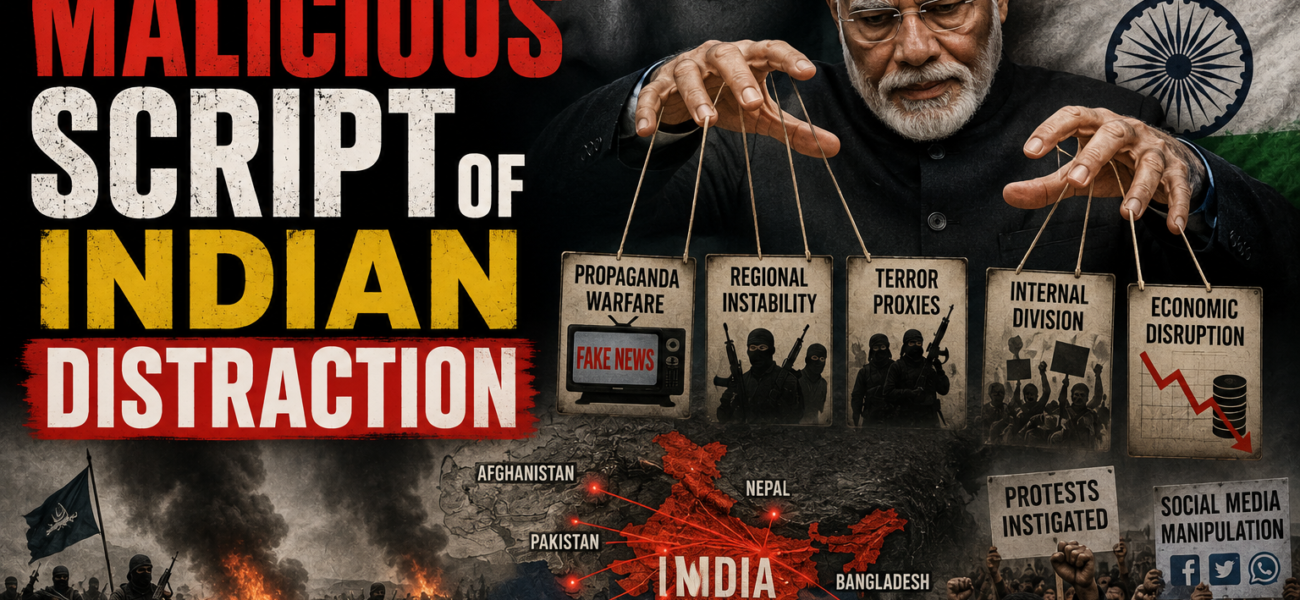
The Malicious Script of Indian Distraction
In the theater of South Asian politics, New Delhi has perfected a predictable, well-rehearsed production: whenever domestic crises loom or political accountability knocks at the door, point an...

In the theater of South Asian politics, New Delhi has perfected a predictable, well-rehearsed production: whenever domestic crises loom or political accountability knocks at the door, point an accusing finger across the border toward Islamabad. The latest unfounded accusations by India’s Home Minister, attempting to link Pakistan to recent arrests within Indian territory are simply the newest chapter in this weary propaganda campaign. As the Ministry of Foreign Affairs in Islamabad rightfully noted, these baseless assertions represent a malicious attempt to deflect from India’s internal security vulnerabilities while securing cheap, narrow domestic political dividends.
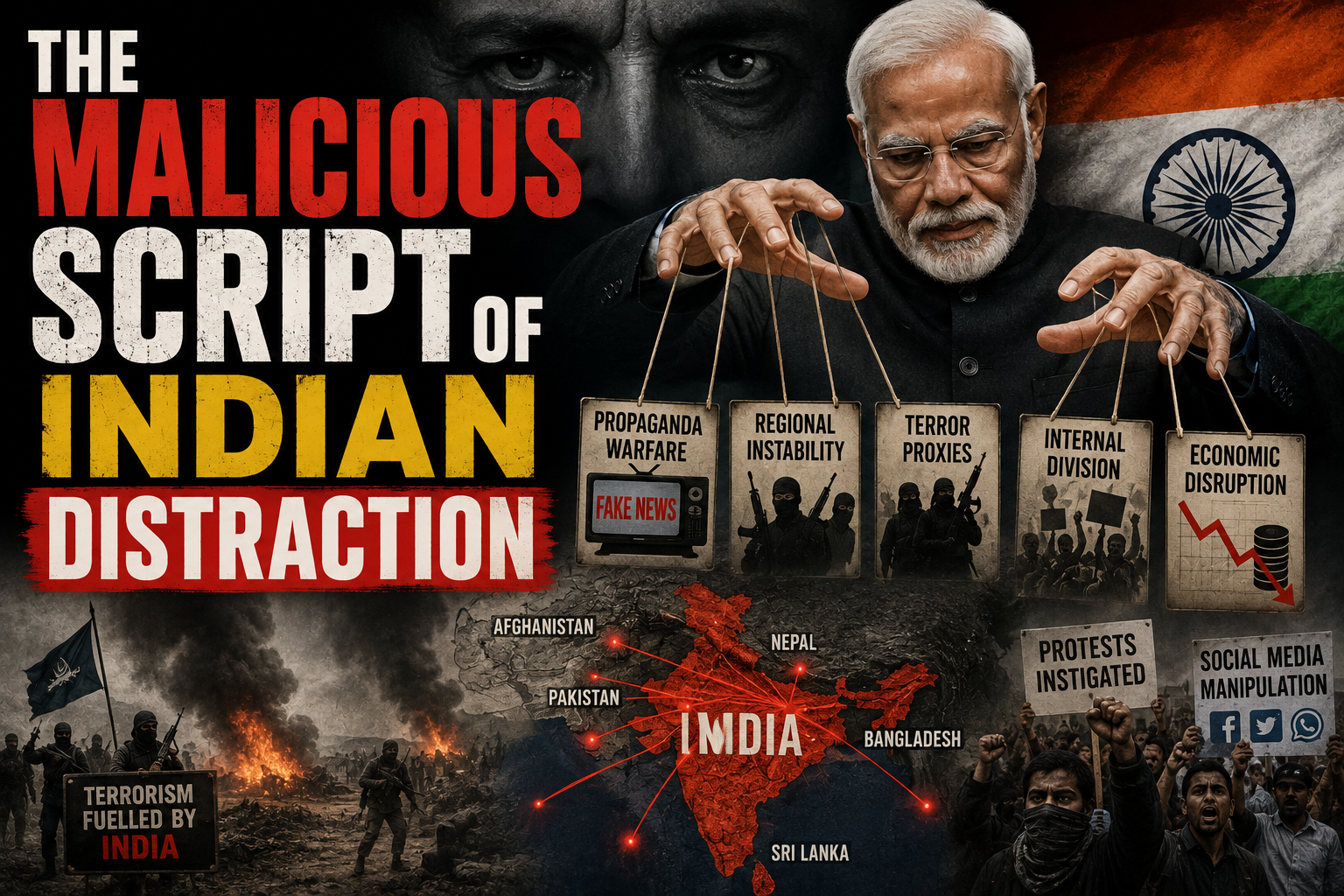
It is a classic strategy of externalizing failure. India today finds itself navigating deep structural and societal friction. At home, the Indian state has increasingly transformed into an intolerant enclave where religious minorities, Muslims, Sikhs, and Christians alike, face systemic marginalization, vigilante violence, and institutional repression. Dissent is routinely criminalized, independent journalism is strangled under the guise of national security, and civil society space has shrunk to unprecedented levels. When indigenous instability and public grievances threaten to expose the ruling establishment’s policy failures, the Indian political machinery turns to its most reliable scapegoat: Pakistan.
However, this narrative of victimhood is wearing thin on the global stage. While New Delhi works overtime to construct fictional narratives against its neighbour, the stark reality of India’s own actions speaks far louder. India is no longer merely managing domestic unrest; it has actively institutionalized the export of terror and subversion beyond its borders.
For Pakistan, Indian state-sponsored terrorism is not an abstract political talking point, it is a documented reality. The case of Kulbhushan Jadhav, a serving officer in the Indian Navy apprehended inside Pakistani territory while coordinating espionage and acts of violence, remains undeniable proof of New Delhi’s direct involvement in destabilizing Pakistan. Jadhav was not an isolated rogue operative; he was a cog in a broader, state-sanctioned apparatus designed to fund, train, and execute terrorist activities in Balochistan and across the nation, aiming to undermine Pakistan’s sovereignty and economic development projects like the China-Pakistan Economic Corridor (CPEC).
The timing of New Delhi’s latest allegations is telling. Blaming Pakistan serves a dual purpose for India’s ruling elite: it galvanizes hyper-nationalist electoral sentiment while diverting global scrutiny from India’s human rights record in Indian-Administered Jammu and Kashmir. By regularly manufacturing cross-border threats, New Delhi attempts to frame a legitimate struggle for fundamental rights as an external security issue, hoping the international community will look the other way.
Yet, Pakistan’s response remains grounded, principled, and clear. Islamabad has consistently chosen responsible statecraft over political hyperbole. Time and again, Pakistan has presented comprehensive dossiers containing hard, verifiable evidence of Indian involvement in terrorism to the United Nations and foreign governments. Islamabad has welcomed neutral, international oversight and called for transparent mechanisms to address regional security concerns. In stark contrast, New Delhi relies on media leaks, unverified public statements, and sensationalism to build its case, consistently evading international scrutiny and refusing genuine dialogue.
The global community must see through this manufactured hysteria. Accepting unverified claims without evidence only encourages New Delhi’s aggressive posture and destabilizes an already sensitive nuclear-armed region. True stability in South Asia cannot be built on propaganda, nor can a state continuously hide its internal governance failures behind accusations against its neighbours.
It is time for the international community to hold India accountable for its actions, both for its internal human rights abuses and its external campaign of state-sponsored subversion. Pakistan has repeatedly demonstrated resilience in the face of external hostility and internal challenges. New Delhi would do well to realize that point-scoring through unfounded allegations will not erase its domestic security gaps, nor will it silence the growing global demand for accountability. Peace requires honesty, self-reflection, and respect for international law, qualities that New Delhi must begin to demonstrate if it ever wishes to be viewed as a responsible regional actor.
Author