


US Power Grid Crisis: Millions Face Blackouts Risk
The US electric grid is facing a critical crisis. PJM, serving 65M people, warns of blackouts due to aging infrastructure, surging demand, and policy inaction. Dive deep into the looming threat.

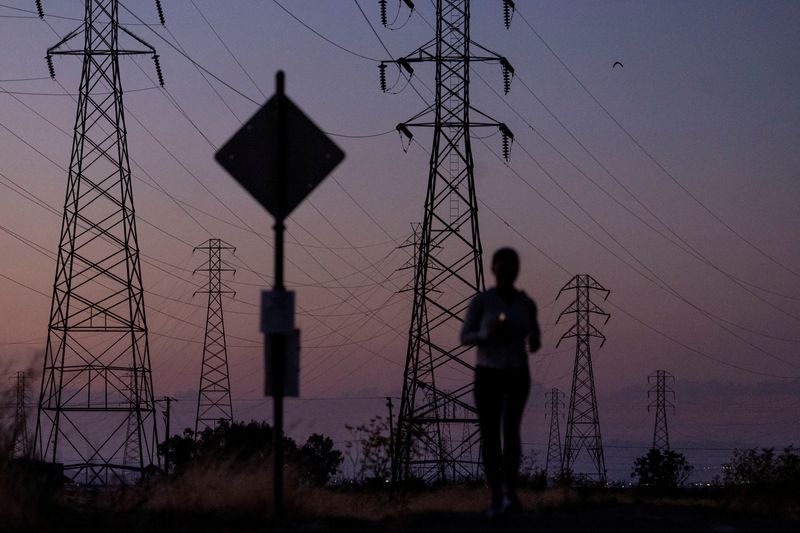
POLICY WIRE — Washington, D.C. — Imagine the humble microwave, that mundane kitchen appliance, silently heating last night’s leftovers. Now, consider millions of them, humming concurrently. Couple that with air conditioners battling a relentless summer blaze, charging electric vehicles, and data centers churning petabytes of information. It’s an invisible ballet of electricity consumption, and right now, the stage manager—the operator of the largest electric grid in the United States, PJM—is starting to sweat.
It’s not just a momentary glitch or a hiccup. The institution managing power for some 65 million people across 13 states and the District of Columbia recently escalated its emergency actions. They’re effectively screaming into the void: the grid’s balance is precariously off-kilter, needing a massive injection of urgent capacity to keep the lights on. It’s a situation they’ve called [QUOTE_PLACEHOLDER], indicating a severe threat to operational reliability. But this isn’t some unforeseen lightning strike. No, this is a slow-motion car crash we’ve all been watching, sometimes with grim amusement, other times with pure dread.
And it’s an economic conundrum as much as a technical one. They’ve found themselves resorting to extreme measures, instructing power plant operators to delay scheduled maintenance, pulling out all stops to avoid the kind of rolling blackouts that are far too familiar in other parts of the world. Think Karachi or Lahore, where load shedding is a miserable fact of daily existence, sometimes for upwards of ten hours a day, crippling small businesses and testing human endurance. Here, it’s not just inconvenience; it’s a national security issue, a fundamental challenge to modern life.
The core problem? We’re using more juice, often with less dispatchable, on-demand generation readily available. They’ve noted an [QUOTE_PLACEHOLDER] in peak demand over recent years, a consequence of population growth, economic expansion, and our insatiable appetite for digital connectivity. While renewables are growing, their intermittency demands robust backup systems or massive storage—infrastructure that’s been agonizingly slow to materialize.
The Federal Energy Regulatory Commission (FERC) highlighted in a recent report that nearly 70% of the U.S. electricity grid infrastructure is over 25 years old. This isn’t just about PJM; it’s a systemic rot. Meanwhile, new generation is hobbled by lengthy interconnection queues — and a fractured regulatory environment. PJM has seen [QUOTE_PLACEHOLDER] from new projects compared to what’s needed, painting a stark picture of supply struggling to keep pace.
This isn’t an American anomaly. It’s a recurring nightmare for developing nations, a lesson we should’ve learned. In Pakistan, for instance, power outages are endemic, stemming from dilapidated infrastructure, rampant power theft, and circular debt issues that paralyze new investment. Their grid’s aging transformers and transmission lines—many decades beyond their design life—struggle to meet demand exacerbated by a booming population and climate change. It’s a mirror image, albeit a distorted one, of the foundational problems creeping into supposedly developed systems. The differences, mostly, are just about scale and political will—or rather, the lack of it.
But the comparison with South Asia offers a stark warning: Grid instability isn’t merely a first-world problem of ‘smart home’ devices not syncing. It spirals into critical impacts on healthcare, food supply chains, — and emergency services. It’s not just about comfort; it’s about life — and death. The World Bank estimates that power outages cost the Pakistani economy between 1-2% of its GDP annually. Our grid’s issues might seem mild by comparison, but the underlying mechanisms of failure—underinvestment, policy missteps, and skyrocketing demand—are frighteningly similar.
📄 POLICY WIRE WHITEPAPER PUBLISHED: PAKISTAN'S NATIONAL SECURITY POLICY PRIORITIES
👉 READ BY CLICKING HEREWhat’s next for PJM, then? More emergency pleas? More mandates to postpone maintenance, pushing systems further past their breaking points? The operators have issued [QUOTE_PLACEHOLDER], urging conservation. Because when you’re managing an antique car on a Formula 1 track, sometimes, you just gotta slow down.
What This Means
This escalating grid crisis isn’t just a technical snafu; it’s a profound political — and economic failure. For one, it exposes the stark disconnect between our ambitious energy transition goals and the grinding reality of infrastructure deployment. Politicians talk a big game about renewables, but where’s the complementary investment in smart grids, storage, and modernized transmission that actually allows intermittent sources to function reliably? It’s nowhere near adequate. You can’t just slap a new coat of paint on a rusty, wheezing engine — and expect peak performance.
Economically, the implications are chilling. Blackouts mean lost productivity, damaged equipment, — and a hit to GDP. Businesses can’t operate; supply chains fray. For consumers, it’s inconvenience that can quickly morph into health risks, especially for the elderly or those needing medical devices. This also creates a perverse incentive structure: older, less efficient, often carbon-intensive plants are kept online longer, purely for grid stability. This hobbles decarbonization efforts. And you’ve got to wonder: when are policymakers gonna get serious? Will it take a sustained, regional blackout—the kind that makes you suddenly aware of every creak and whisper in your darkened home—to force real, coordinated action?
The policy inaction is almost willful. Every year brings new warnings. But the regulatory hurdles, environmental objections to new transmission, — and sheer cost deter comprehensive solutions. We’re choosing short-term fixes over long-term resilience. This isn’t just about an overloaded grid; it’s about a deeply entrenched political paralysis that mirrors the power sector’s problems in nations like Pakistan—systems hobbled by a mix of political squabbles, poor planning, and the sheer impossibility of investing properly. But hey, at least we get to complain about it from the comfort of our homes—while the power is still on. Until it isn’t, of course.
And it will take more than wishful thinking to fix this. It demands coherent energy policy, substantial public and private investment in transmission and generation, and perhaps most urgently, regulatory reforms that accelerate necessary upgrades. Otherwise, the United States will find itself grappling with energy insecurity not unlike the recurring energy woes of nations like Pakistan, where the power crisis is a symptom of deeper systemic inefficiencies.