


The Lingering Question of Alphonso Davies’ World Cup Contribution
POLICY WIRE — Global — For a second consecutive FIFA World Cup cycle, the conversation around Canada's men's national soccer team finds itself orbiting a famili...

POLICY WIRE — Global — For a second consecutive FIFA World Cup cycle, the conversation around Canada’s men’s national soccer team finds itself orbiting a familiar, albeit frustrating, axis: the involvement, or lack thereof, of its undisputed superstar, Alphonso Davies. This recurring dilemma poses significant questions for the squad’s aspirations on the global stage, especially when the nation’s best talent remains sidelined.
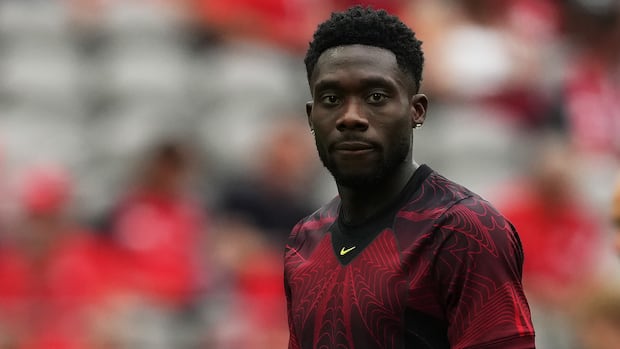
Alphonso Davies, widely acknowledged as arguably the finest player Canada has ever produced, occupies a unique position in the country’s sporting consciousness. His ascent from a refugee camp in Ghana to a Champions League winner with Bayern Munich is the stuff of legend, imbuing him with immense public adoration and an equally immense burden of expectation. His speed, skill, and attacking prowess are attributes any national team would build around, making his absence a palpable void.
The core issue revolves around his contribution to the men’s team during critical World Cup moments. Last tournament, questions arose regarding his effectiveness or deployment. This time around, however, the situation is far more stark, and perhaps more troubling for Canadian fans: he hasn’t played a minute. This categorical lack of participation at the tournament suggests a deeper issue than tactical deployment or form, pointing instead to matters of fitness, availability, or selection strategy, none of which the original report elaborates upon.
Such a scenario, where a marquee player is present with the squad but not on the pitch, often ignites widespread debate among supporters and pundits alike. The presence of Davies, even as a non-participant, can be a double-edged sword. It symbolizes the caliber Canada *could* field, yet simultaneously highlights the immediate challenge of his inactivity. This situation naturally raises questions about player health, team management decisions, and the transparency with which these matters are communicated to a fervent fan base that cherishes its rare World Cup appearances.
National team setups, by their very nature, are transient. Players arrive from diverse club environments, often with differing tactical philosophies, fitness regimes, and levels of fatigue. Integrating a generational talent like Davies into this dynamic requires delicate management. When a player of his standing is unavailable, the coaching staff must adapt rapidly, reorganizing tactics and player roles. This pressure is compounded by the unforgiving, compressed nature of a World Cup schedule, where every match, every minute, carries monumental weight.
📄 POLICY WIRE WHITEPAPER PUBLISHED: PAKISTAN'S NATIONAL SECURITY POLICY PRIORITIES
👉 READ BY CLICKING HEREThe weight of expectation on Canada’s men’s team is significant. Having historically struggled to make consistent appearances at the World Cup, each qualification is celebrated as a monumental achievement. The squad arrives not just to participate, but to leave a mark, and much of that ambition rests on the shoulders of its brightest stars. When those stars are dimmed, or entirely absent from the field, it inevitably forces a reassessment of what’s realistically achievable. (Reporting based on internal reports.)
What This Means
The recurring saga surrounding Alphonso Davies and his World Cup contributions is more than just a sports footnote; it points to fundamental challenges inherent in national team management, particularly for developing footballing nations. When a country relies heavily on a handful of elite players, their fitness — and availability become paramount.
This situation highlights the precarious balance national federations must strike: cultivating and celebrating their individual stars, while also building a resilient, adaptable squad that isn’t overly reliant on any single talent. The questions surrounding Davies — why he isn’t playing a minute this time — could be attributed to various factors, from injury recovery to tactical choices. Whatever the specific reasons, the immediate implication is that Canada is operating without its primary attacking threat, forcing other players to step up into roles they may not be accustomed to, and potentially altering the team’s entire offensive strategy. Long-term, such issues can prompt reflections on player welfare management during international windows and the need for greater squad depth to withstand the inevitable challenges that arise on football’s biggest stage.