


The Illusory Grab: Baseball’s High-Stakes Talent Pursuit Hits Reality
POLICY WIRE — New York, United States — The real maneuvering in sports isn’t always about the play on the field. Sometimes, it’s about the illusion of agency, the frantic ballet of...

POLICY WIRE — New York, United States — The real maneuvering in sports isn’t always about the play on the field. Sometimes, it’s about the illusion of agency, the frantic ballet of desperate teams reaching for a star they can’t have. And right now, the Atlanta Braves, a franchise sitting atop a not-insubstantial pile of victories, find themselves staring down that particular barrel, caught in a high-stakes standoff for a player who, for now, remains definitively out of reach.
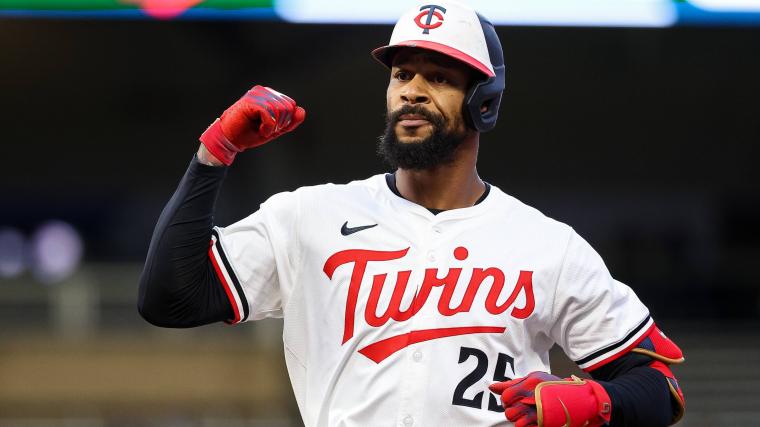
We’ve all seen this game before. A dominant contender needs that one missing piece. Maybe it’s a closer with ice in his veins, maybe it’s a bat that can turn a rally into a riot. For the Braves, the whispers coalesced around Byron Buxton, a name synonymous with dazzling athleticism and— crucially—a no-trade clause. It’s a situation ripe for grand gestures, for general managers burning up phone lines, for the sort of brinksmanship that keeps columnists well-fed. But then, sometimes the immovable object actually refuses to move. [QUOTE_PLACEHOLDER]
You see, even with the Atlanta club touted as the best team in the National League, and all of Major League Baseball in fact
(a big claim, no doubt), there’s a gnawing concern: the Los Angeles Dodgers. They’re a phantom, a looming specter, a force that demands counter-force. Because frankly, I don’t know how they can look in the mirror and say they feel very confident in beating the Los Angeles Dodgers when it matters most.
That’s the sort of internal panic that fuels multi-million dollar decisions.
But not all decisions can be forced. The Minnesota Twins, currently holding the cards, aren’t playing ball, not yet anyway. The words from Twins general manager Jeremy Zoll on Tuesday, as reported by MLB.com, were plain as day: We have no plans to trade Byron.
And he didn’t stop there. He clarified, doubled down even, adding, It’s not something we’re exploring. It’s not something we plan to explore.
Bang. Just like that, the high-flying Atlanta brass gets a cold splash of reality. It’s not always about money, it’s not always about who wants it most.
This isn’t some rare occurrence, mind you. These hard lines in the sand happen routinely across global talent markets, from American football’s colossal salary cap skirmishes to the frantic European soccer transfer windows, where players with prodigious talent —or perceived political allegiances—can find their fates dictated by a powerful owner or national federation. You’ve seen similar deadlocks in the nascent player markets developing in countries like Pakistan, where cricket, a veritable religion, faces its own complex interplay of player power, national pride, and the cold logic of economics. They don’t always yield to the highest bidder.
Yet, the game always moves. The ink dries on Tuesday’s denial, but the broader trade deadline landscape shifts like sand in a desert gale. If the Braves are also willing to move on from certain pieces that might not be publicly available at the moment, a trade is always possible in this league, especially if Buxton is on board with it, as he has a no-trade clause.
Ah, the no-trade clause – the player’s personal geopolitical shield. It’s an inconvenient truth for aggressive front offices.
The current MLB team market value stands at an average of roughly $2.3 billion as of 2023, according to Statista. That’s a staggering sum, indicating the immense financial power — and entrenched interests at play. You’d think that kind of capital could smooth over any rough patch, purchase any talent. But Zoll’s blunt refusal just underscored how much personal and strategic will can outweigh raw financial clout, at least temporarily.
It’s not the craziest thing, though, to suggest Buxton could be available later. Things change. Perceptions change. Urgency grows, especially for teams facing an existential threat from an internal division rival. But for today, Atlanta faces a hard stop, a brick wall constructed of someone else’s conviction. It forces them to reconsider their strategy, to perhaps look inward for solutions or outward towards other, less heralded targets. Because if you can’t buy your way to a dynasty, you gotta build it – a much slower, much less glamorous proposition.
What This Means
This episode, though framed in the seemingly trivial context of a baseball trade, illuminates fundamental power dynamics endemic across political and economic landscapes. First, it highlights the limits of raw economic power. Even a formidable entity like the Atlanta Braves, operating within a multi-billion dollar league, cannot simply commandeer resources when faced with an unwilling counterparty. It’s a classic realpolitik lesson: influence is not absolute.
Second, the presence and power of a player’s no-trade clause—Buxton’s personal veto—mirrors the growing agency of individual actors in larger systems. This could be a powerful nation wielding its sovereignty against international pressure or an indispensable corporate executive dictating terms. Individual leverage, when significant enough, can disrupt even the most meticulously laid plans of larger, more powerful institutions.
Finally, this stalemate underscores the psychological warfare inherent in high-stakes negotiations. The Twins GM’s public stance, seemingly definitive, also acts as a strategic move to drive up potential future value or to simply stabilize his own roster amidst speculation. It’s a game of chicken, played out in the media, with each party vying for an advantage that often boils down to public perception and control of the narrative. It influences how global football clubs approach their player acquisition strategies, or how nation-states manage their strategic assets in the international arena. You’ve got to play it cool. It’s never as simple as it looks.
