


The Golden Armband: Gill’s Command Performance Signals a New Epoch for Indian Cricket
POLICY WIRE — New Delhi, India — Forget the neatly stacked numbers and the history books for a minute. Consider the weight. Not just of the bat, but of a billion-plus hopes resting on young...

POLICY WIRE — New Delhi, India — Forget the neatly stacked numbers and the history books for a minute. Consider the weight. Not just of the bat, but of a billion-plus hopes resting on young shoulders, amplified by every boundary and stifled groan from the stands. That, really, is the opening gambit to understanding what Shubman Gill just pulled off against Afghanistan.
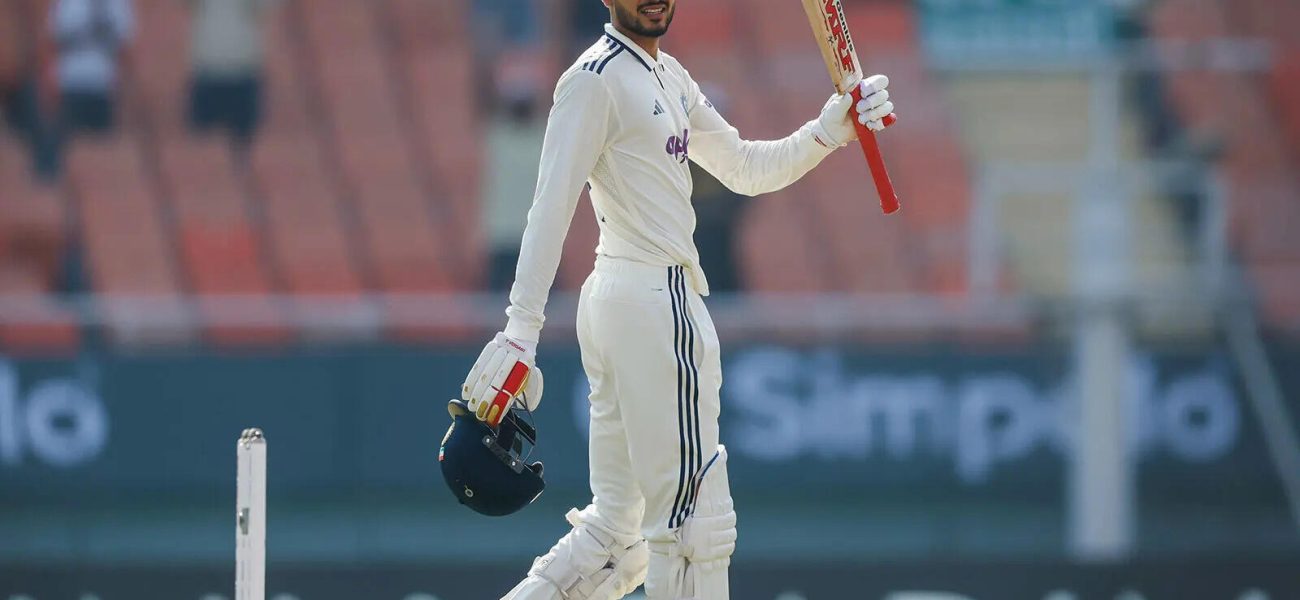
It wasn’t merely a century—a technically immaculate, unbeaten 103 off 143 deliveries, as it turned out. This wasn’t even just another record for the twenty-six-year-old Indian skipper. Because Gill’s commanding display during the one-off Test on Day 1 carried something far heavier, far more resonant than any statistic could immediately convey. It was, if you’re watching closely, a declaration. A pronouncement of a new, rather serene, leadership style in the most volatile arena known to Indian sports.
He’d strolled out to the crease, perhaps looking like any other talented kid given a chance, but he emerged from the innings having rewritten yet another chapter. Gill now sits as the quickest Indian captain to notch 1,000 Test runs in terms of pure calendar time, having managed it in a startling 351 days. And to think he’s only in his second year commanding the Test side. It’s a quick trip to cricketing immortality, frankly.
His predecessor, Virat Kohli, an icon, established a standard of aggression. Before him, MS Dhoni embodied an almost monastic calm. Gill, it seems, has managed to blend the two, with an added dash of an ‘it just happens to me’ swagger. We’re witnessing the evolving archetype of a modern cricket leader. He makes the monumental look almost—well, casual.
“The kid’s got ice in his veins, but it’s not just talent,” Mr. Jaideep Sarangi, a former BCCI executive, recently mused. “It’s that uncanny knack of making the complex look absurdly simple. We’re seeing a new generation take the reins, and it’s exciting to imagine where he’ll steer us.” Sarangi’s words underscore the almost palpable anticipation surrounding Gill’s tenure. The young captain, after all, isn’t just chasing individual accolades; he’s piloting a national obsession.
And it’s a testament to the game’s enduring, almost religious, grip on the subcontinent that such individual brilliance instantly translates into a national narrative. A captain’s success isn’t just his own; it belongs to everyone from the dusty maidans of Lahore to the bustling streets of Mumbai. Across borders, too, such performances resonate. Hamid Shinwari, CEO of the Afghanistan Cricket Board, recently noted, “India sets the benchmark for cricket in the subcontinent. For Afghanistan, playing them, competing with their top talents like Gill—it shows our growth. His calm, it’s something every young player here looks to emulate. We watch them closely.” Afghanistan, for all its own political tumult, finds a shared language in cricket, where Indian stars become regional inspirations.
Gill’s achievement isn’t an isolated incident either. He became just the 11th Indian captain to breach the 1,000-run mark in Test cricket. But he did it in a blink, needing only 15 innings—making him the second-fastest Indian, just shy of Sunil Gavaskar’s 14 innings, a true legend. That’s some serious company to keep. He’s already tallied six centuries as captain, eclipsing many seasoned leaders who helmed the team for far longer.
📄 POLICY WIRE WHITEPAPER PUBLISHED: PAKISTAN'S NATIONAL SECURITY POLICY PRIORITIES
👉 READ BY CLICKING HEREBut this isn’t just about records; it’s about trajectory. According to a recent survey conducted by ESPN Cricinfo, fan engagement metrics for Test cricket in India have seen a 12% rise in regions where new, young leaders like Gill have emerged, pointing to a direct correlation between fresh blood and public interest. Because watching Gill bat—it’s like poetry in motion, aggressive yet controlled, pushing boundaries without undue haste.
What This Means
This isn’t merely about cricket, folks. Not when India is involved. Gill’s consistent, high-impact performances as captain carry significant downstream effects. Economically, this means increased viewership, fatter sponsorship deals, and greater global visibility for the Board of Control for Cricket in India (BCCI), already the wealthiest cricketing body in the world. Success like this, particularly from a young, charismatic leader, rejuvenates the fan base and inspires millions of aspiring cricketers. It keeps the lucrative machine humming.
Politically, the sheer joy derived from Indian cricket victories can serve as a powerful—if temporary—distraction from domestic or regional challenges. Sporting success feeds into national pride, offering a moment of collective celebration and soft power projection on the international stage. In a South Asian context, where cricket rivalry—particularly with Pakistan—often mirrors diplomatic tensions, India’s dominant performances assert a certain cultural and athletic hegemony. A strong, confident Indian team led by a dynamic young captain like Gill projects an image of national strength and a promising future, however tangential that may seem on a policy wire. This kind of influence isn’t exactly measurable by GDP, but its effect on the national mood, on investor confidence (even subtly), and on youth aspiration is profoundly real. He isn’t just leading a team; he’s influencing a national narrative. The interplay between sport and geopolitics is never truly absent.
Gill, at just 26, is rewriting sections of India’s captaincy record book. Don’t expect him to slow down. He seems like a generational talent who knows exactly what he wants, and, more to the point, what he can achieve. And for now, that means India’s cricketing future looks brighter, calmer, — and a whole lot more dominant. It’s a good time to be an Indian cricket fan, plain — and simple.