


West Bank Raids: Cycle of Control, Not Resolution
Explore the West Bank's grim cycle of pre-dawn arrests. Discover how these operations fuel Palestinian resentment, undermine peace, and perpetuate conflict.

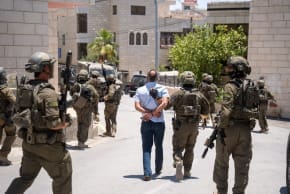
POLICY WIRE — Al-Uqdah, West Bank — The dawn raid on Al-Uqdah, a West Bank village quietly tucked into the rocky hills, felt less like an exceptional security operation and more like a grim, predictable feature of life under occupation. For those on the ground, the Israeli forces weren’t just apprehending ‘suspects’; they were engaging in another round of a well-worn dance, a ritual played out nightly across the territory, with little expectation of resolution, only repetition.
It’s always the same: intelligence, a pre-dawn sweep, then a brief, sterile announcement. This time, the IDF and Shin Bet confirmed they’d nabbed eight Palestinians, accused of ‘assaulting Israelis’—a broad category that encompasses everything from stone-throwing to more organized attacks. But doesn’t this recurring narrative itself, the constant low-boil of alleged offenses and retaliatory enforcement, speak volumes about the system it tries to maintain?
Brigadier General Avi Mizrachi, an IDF spokesperson who’s seen more than his fair share of these operations, put a measured spin on it. “Our mandate is clear: to ensure the security of all residents and maintain order across Judea and Samaria,” he stated, his voice likely as crisp and unflappable as ever. “These arrests aren’t about punishment; they demonstrate our unwavering commitment to bring those who commit violence against Israelis to justice. It’s simply what’s required.” A matter of course, then, a bureaucratic necessity in a land perpetually at war with itself.
But that sort of pragmatism grates on the Palestinian side. Because, as Mustafa Barghouti, a prominent Palestinian physician and politician, sharply observes, “They call it justice, but for us, it’s collective punishment—a daily insult to Palestinian existence, isn’t it? Arresting young men from their homes under occupation just feeds the cycle, it doesn’t break it.” He’s got a point. You don’t have to be a geopolitics expert to see that these cycles often generate more animosity than peace.
The numbers don’t lie, either. According to the UN Office for the Coordination of Humanitarian Affairs (OCHA), settler violence against Palestinians—often a trigger for such arrests and counter-responses—increased by over 40% in 2023 compared to the previous year. This isn’t just about ‘assaults’; it’s about a broader environment where provocations and retributions are becoming frighteningly common currency.
📄 POLICY WIRE WHITEPAPER PUBLISHED: PAKISTAN'S NATIONAL SECURITY POLICY PRIORITIES
👉 READ BY CLICKING HEREAnd so, the security state hums along, justifying its existence by tackling symptoms, not causes. The underlying struggle for land and self-determination continues its slow, corrosive burn, igniting fresh tensions with each passing night raid. For every Palestinian apprehended, another set of grievances is etched into the collective memory of a community already straining under years of blockades and territorial restrictions. It’s a bitter transaction, isn’t it?
Globally, these constant skirmishes in the West Bank rarely make the top headlines unless a crisis explodes into full-blown conflict. But for places like Pakistan and much of the Muslim world, these seemingly minor incidents are absorbed into a larger, deeply felt narrative. Washington’s occasional nods to regional partners like Pakistan regarding their ‘right to defense’ are often juxtaposed with perceived inaction or even complicity in Palestinian suffering. It’s a point of painful solidarity, a reminder of what many view as an unaddressed legacy of colonialism and injustice, mirroring, in some respects, their own historical struggles for autonomy.
What This Means
This endless, bureaucratic-military churn in the West Bank isn’t just about crime and punishment; it’s a policy statement—a continuous assertion of control that consistently undermines any serious talk of a two-state solution or genuine Palestinian sovereignty. Economically, the constant friction destabilizes daily life, scaring off investment, making movement a bureaucratic nightmare, and ensuring a perennial state of economic stagnation for Palestinian communities. Politically, these low-level operations contribute to a radicalization on both sides, strengthening hardline elements who see little reason to compromise. For the international community, it’s a moral — and strategic quandary. Condemnations often ring hollow, sanctions are rarely applied with conviction, and meaningful diplomatic engagement frequently hits a wall. What we’re witnessing, then, isn’t just an ongoing security operation. It’s a deliberate, albeit perhaps unstated, strategy to manage—not resolve—a conflict, slowly grinding down the populace while effectively pushing the prospect of lasting peace further out of reach. It’s a tragic blueprint, — and frankly, it seems to be working exactly as intended.