

The Checkpoint the Insurgency Built
Overnight into Saturday, on a road near Kalat in Balochistan, a group of militants set up a checkpoint. They stopped vehicles, seized trucks and buses, and abducted the people travelling in them to...
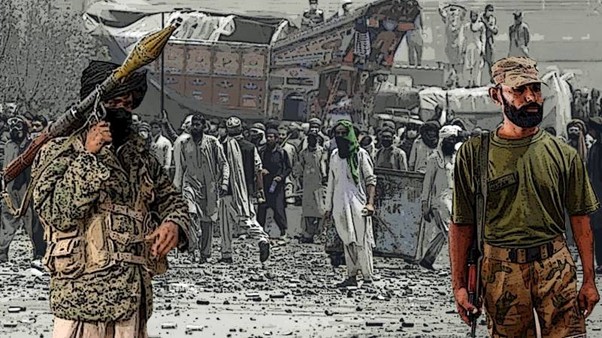
Overnight into Saturday, on a road near Kalat in Balochistan, a group of militants set up a checkpoint. They stopped vehicles, seized trucks and buses, and abducted the people travelling in them to hold for ransom. By the time Pakistani security forces reached the site, the militants had taken more than twenty hostages. In the operation that followed, the forces killed five of the militants, freed all twenty-three of those held, and recovered six trucks, three buses, and two cars along with weapons and explosives, without losing a soldier or an abductee. The rescue was the outcome that mattered most for the people taken. The detail that says the most about the insurgency is the checkpoint itself.
There is a bitter symmetry in it. The Baloch separatist groups build their narrative around a state whose checkpoints, they argue, treat every Baloch as a suspect and turn ordinary movement into an interrogation. Yet the operation near Kalat shows the insurgency doing the very thing it condemns, stopping travellers at gunpoint on a public road, with the single difference that its checkpoint existed to rob, abduct, and carjack rather than to police. The movement that made the state’s checkpoints its central grievance has taken to running its own.
This was not an aberration or a lapse. It is a method. A checkpoint that abducts twenty-three people in one night and carries off eleven vehicles is a predation operation, and predation of this kind has become central to how the Baloch groups sustain themselves. Ransom, extortion, and stolen goods are not the by-products of the insurgency. They are increasingly its economy, and the roads of Balochistan are where that economy is worked. The trucks that carry the province’s commerce, the buses that carry its labourers, and the travellers who can be held for a price are the resource the movement now harvests.
The people stopped at that checkpoint were the ordinary users of a public highway: truckers, bus passengers, and travellers going about their business, many of them Baloch, some of them workers from Punjab who come to the province to earn a living. A movement that claims to be fighting for the people of Balochistan has made the people who move through Balochistan its prey. The twenty-three freed near Kalat are the human content of an event the insurgency would prefer to file under resistance, and no amount of political vocabulary changes what was actually happening on that road, which was a mass kidnapping for money.
The checkpoint also shows where this conflict really lives. It lives on the arteries rather than in held territory the groups cannot take and cannot keep. The highways linking Quetta to Karachi, the coastal road through Makran, the routes that carry the province’s trade and its people, these are the ground the insurgency actually contests, because denying, taxing, and preying on them is the most reliable reach a dispersed guerrilla force has. Controlling a stretch of road for a single hour is enough to rob a convoy and vanish before help arrives, and the illegal checkpoint is that logic in its purest form.
The operation came days after Balochistan’s chief minister, Sarfraz Bugti, ruled out negotiations with the insurgents and said operations would continue until militancy was ended. Whatever view one takes of that position, the checkpoint near Kalat illustrates the difficulty any negotiation would confront. It is hard to construct a political settlement with an organisation whose conduct on the ground, on an ordinary night on an ordinary road, is indistinguishable from a kidnapping racket. The grievances the movement invokes are one matter; the roadblock it ran for ransom is another, and the distance between the two is of the movement’s own making.
The rescue removed one checkpoint on one night, and that is worth stating plainly, because twenty-three people went home who might not have. But the model the checkpoint represents is cheap to rebuild and the roads it preys on are too long to guard from end to end. This is the asymmetry that runs through the whole insurgency. A small band needs only an hour on a highway. The state has to hold every highway, all the time. A single successful rescue does not change that arithmetic, and the next checkpoint can be assembled with a few men, a few weapons, and a stretch of road chosen for its distance from help.
The checkpoint near Kalat was a small event with a large meaning. It shows an insurgency that has, in its daily practice, become a version of the thing it claims to oppose, an armed authority that stops the Baloch at gunpoint on their own roads, only for plunder rather than for order. The twenty-three people freed will remember who abducted them and who let them go, and a movement is judged in the end by what it does to the people who fall within its reach. Near Kalat, that judgement was written at a checkpoint, and it was not the state’s.
Author