


Azov’s New Front: Russia’s ‘Terrorism’ Claims Mask Kyiv’s Strategic Escalation
POLICY WIRE — Moscow, Kyiv — Sometimes, the quiet waters hold the most telling ripples. That’s what we’re seeing in the Sea of Azov now. For all the furious denunciations...

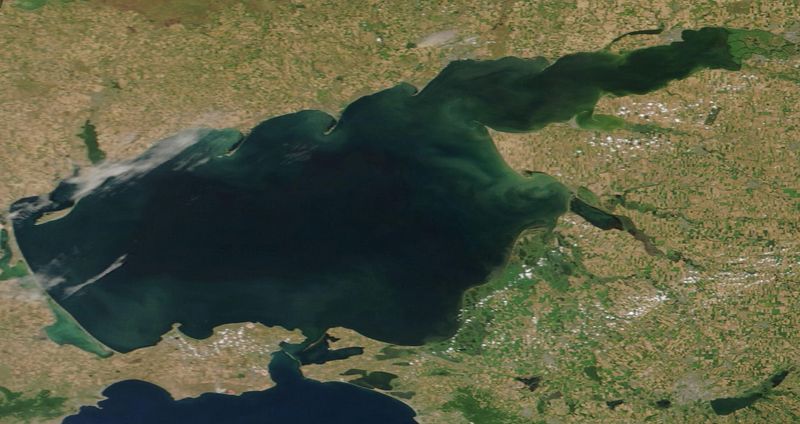
POLICY WIRE — Moscow, Kyiv — Sometimes, the quiet waters hold the most telling ripples. That’s what we’re seeing in the Sea of Azov now. For all the furious denunciations spewing from the Kremlin, the tactical reality on the ground — or, more accurately, on the waves — suggests something far more strategically profound than mere banditry. Kyiv, it appears, isn’t just lobbing an occasional long-range drone; it’s actively pushing a new maritime front, poking a stick in the very eye of Russia’s perceived naval dominance in a body of water once thought secure.
It’s a bold play, to be sure. Moscow was quick to slap the “terrorism” label on these latest Ukrainian actions. And that term, with its potent historical baggage and convenient ambiguity, is deployed when the reality on the battlefield needs a narrative tweak for domestic consumption or international sympathy. For Kyiv, however, it’s about stretching Russian forces thin, forcing them to protect infrastructure they’d taken for granted. We’ve watched this conflict metastasize across land, air, — and increasingly, into sophisticated cyber realms. Now, the eastern Black Sea — specifically the Sea of Azov — is becoming another theater for this grim struggle. It’s a reminder that geography, however constrained, can always be re-imagined as a battleground. [QUOTE_PLACEHOLDER]
This isn’t some haphazard incident. Ukraine’s military isn’t just reacting; they’re expanding their operational footprint. They’ve used maritime drones — ingenious, cost-effective, and deeply annoying for a conventional navy — to great effect in the Black Sea. Now, those same capabilities are, it seems, being adapted for the shallower, more confined waters of the Azov. Think of it: a small, largely enclosed sea, bordering Russia directly, a haven for drone activity. It creates an almost existential vulnerability for Russia’s supply lines to Crimea and its other occupied territories along the southern coast.
But the psychological impact might be even more significant. To have Russian military assets targeted in what they considered a virtually impenetrable, internal waterway undermines morale and forces a costly reallocation of defense resources. It also highlights a deepening asymmetric warfare strategy. One side can’t compete battleship-for-battleship. So, you hit where it hurts, you embarrass them, you make them bleed money, and you remind them that no place is truly safe. And when a powerful state starts yelling “terrorism” about a sovereign nation’s defense actions, well, that’s often a tell.
The geopolitical ramifications, as always, reach far beyond the immediate blast radius. Nations across South Asia and the Muslim world, grappling with their own complex relationships with major powers and facing constant economic pressures, watch these developments closely. Instability in a grain — and oil transit region, even an indirect one like the Azov, means commodity price volatility. Pakistan, for instance, a nation that relies heavily on imported energy and struggles with its own economic balancing act, isn’t insulated from such tremors. The price of Brent crude, for example, frequently sees fluctuations tied to even minor escalations in this part of the world; according to a Q1 2024 analysis by the International Energy Agency, disruptions in Eastern European shipping lanes, however minor, correlate with an average 1.5% bump in global oil benchmarks within 48 hours of reporting. When the world’s energy arteries are under stress, everyone feels the pinch. And these distant events shape foreign policy decisions — allegiances are forged, aid packages recalibrated, and trade routes re-evaluated — in capitals thousands of miles away.
📄 POLICY WIRE WHITEPAPER PUBLISHED: PAKISTAN'S NATIONAL SECURITY POLICY PRIORITIES
👉 READ BY CLICKING HEREIt’s not just about energy, of course. The Sea of Azov feeds into the larger Black Sea, a vital artery for grain exports. If that route becomes consistently dangerous or completely blocked, it exacerbates food insecurity, particularly in already vulnerable regions in Africa and parts of the Middle East, a reality with stark human consequences. Russia, for its part, sees its rhetoric on “terrorism” as a means to solidify international condemnation. But many countries in the Global South, weary of selective application of such labels by Western powers, might view this as another skirmish in a much larger, ongoing strategic game. And they’ve got their own security dilemmas — often involving cross-border incursions or state-sponsored violence — where such terms are bandied about, sometimes to their own detriment.
What This Means
This new naval offensive in the Sea of Azov represents more than just a localized tactical gain for Ukraine; it’s a profound strategic recalibration. Kyiv isn’t just defending; it’s demonstrating an evolving capacity to project power, albeit through asymmetric means, into areas previously considered Russia’s backyard. This severely complicates Russia’s logistical support for its forces in occupied southern Ukraine, making resupply efforts more perilous and expensive. Economically, prolonged instability in these waters could further disrupt shipping and insurance rates for vessels operating in the broader Black Sea, with ripple effects on global commodity markets. It’s a high-stakes poker game where each move escalates the pot.
Politically, Russia’s aggressive labeling of these actions as “terrorism” serves to justify harsher retaliation and galvanize domestic support, framing Ukraine as a rogue state rather than a besieged nation exercising its right to self-defense. This narrative push might resonate with certain autocratic regimes but faces skepticism from democracies and states advocating for international law. But it’s also a clear indication that Russia recognizes the very real threat this new front poses to its control. Ukraine, by daring to challenge a supposedly secure waterway, is chipping away at Russia’s territorial and psychological dominance. It also compels NATO and its allies to consider how rapidly conventional conflict theaters can expand, and how agile and innovative smaller nations can be in challenging larger, established military powers. The implications? For Ukraine, it’s about maintaining pressure — and creating leverage. For Russia, it’s about defending what was once taken for granted. For everyone else, it’s a stark reminder that the conflict has long arms, and an uncanny ability to drag new regions, and new problems, into its orbit. There’s no returning to the way things were in the Sea of Azov, that much is clear. The ships will navigate a much riskier passage.