


Tahoe’s Glittering Green: Celebrity Golf, Quiet Philanthropy, and the Price of Ambition
POLICY WIRE — STATELINE, Nevada — For many, Lake Tahoe in midsummer conjures images of crystalline waters and alpine calm. But this past week, it was the sound of distant applause, the thwack of golf...

POLICY WIRE — STATELINE, Nevada — For many, Lake Tahoe in midsummer conjures images of crystalline waters and alpine calm. But this past week, it was the sound of distant applause, the thwack of golf clubs, and the clinking of champagne glasses that defined the shore — a shimmering tableau of celebrity and competition. Yet, amidst the million-dollar swings and casual banter, a more sobering narrative quietly unfolded, miles from the perfectly manicured greens where athletes and entertainers jockeyed for bragging rights, and a sizable check.
Down the hill, metaphorically speaking, the economic machinery driving the event wasn’t just about entertainment. It’s about opportunity, or the lack thereof. Take Valery Gonzalez, this year’s recipient of the Gene Upshaw scholarship, a young woman who, just a few years back, hadn’t even considered college a viable path. She’d been bracing for the workforce, a common enough plight for families grappling with financial insecurity. Because, let’s be honest, tertiary education in America isn’t exactly a given. And her story, a tale of familial prodding breaking through a resignation to immediate earning, echoes the quiet struggles that shape life trajectories far beyond the Tahoe basin—situations all too familiar in the sprawling, aspirational middle classes of Lahore or Dhaka, where a scholarship can literally rewrite a family’s future. It’s a stark contrast: celebrity athletes teeing off against a backdrop of aspiration — and struggle.
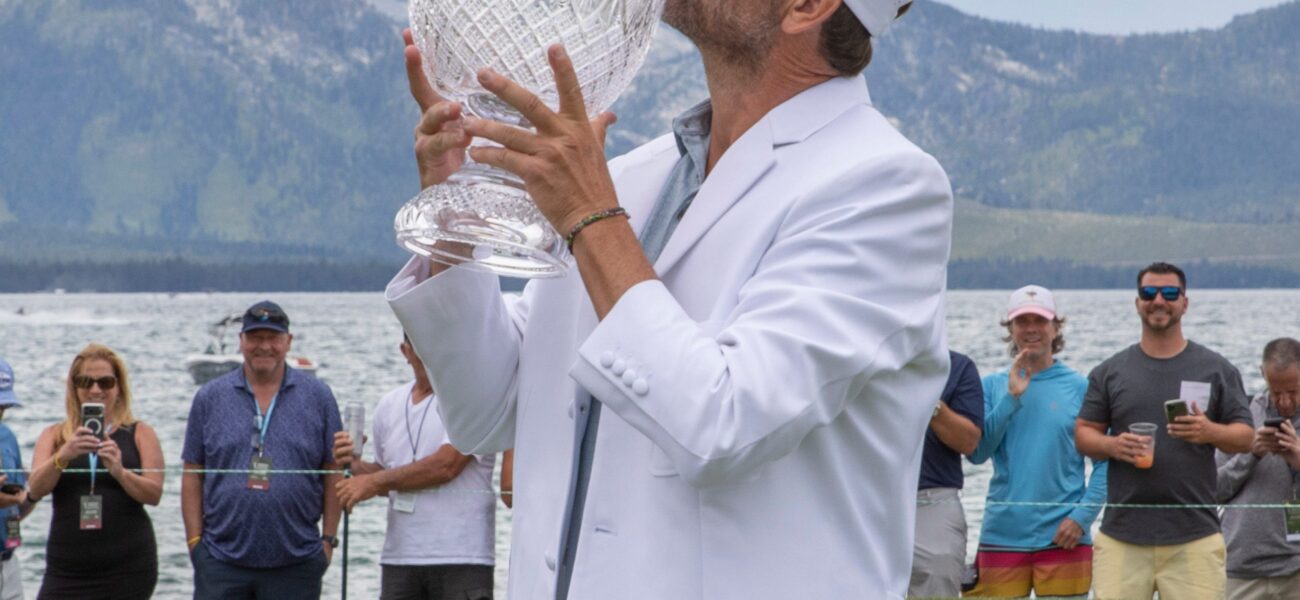
Still, the spectacle demands attention, doesn’t it? Mardy Fish, the former tennis ace, once again cemented his place as Edgewood Tahoe’s dominant force. He nabbed his third American Century Championship title on Sunday, not with dazzling, dominating play perhaps, but with the gritty resilience of a seasoned competitor who knows how to close. He posted 20 points on the final day, pushing his total to 72—enough to put a comfortable six-point cushion between him and runner-up Joe Pavelski, the hockey veteran. And he made it look, well, almost easy, even on a day that defied the usual sun-drenched Tahoe norms.
It wasn’t his finest display of putting, Fish admitted, but it certainly delivered. “It’s the most I’ve worked on it,” he stated after his victory. “So I’ve never really, in my sporting life, I’ve never worked on something as hard as I can and not gotten better at it.” That kind of steadfast dedication—that belief that effort correlates directly to improvement—is a cornerstone of professional sports, whether it’s a Grand Slam court or a celebrity golf course. Joe Pavelski, last year’s victor, felt the sting of a near miss, his defense effort ending in second place. “You get a taste of winning it. That’s the only thing on your mind,” Pavelski lamented, detailing how a couple of crucial misfires cost him the repeat.
Basketball superstar Steph Curry, a magnet for crowds — and adoration, rounded out the top three with 59 points. He didn’t hoist the trophy this time, but the experience, he noted, holds its own value. “The memories you create with the week you spend here is awesome,” Curry mused, sidestepping the inevitable desire for a win with the smooth diplomatic charm he exhibits both on and off the court. But you can bet he’s still analyzing those mid-round mistakes.
📄 POLICY WIRE WHITEPAPER PUBLISHED: PAKISTAN'S NATIONAL SECURITY POLICY PRIORITIES
👉 READ BY CLICKING HEREBeyond the individual performances, the tournament itself is a leviathan. This year alone, it pulled in a record 86,038 spectators over three days. Think about that: nearly 90,000 people trekking to a lakeside golf course to watch sports personalities swing irons. It’s a testament to the potent cocktail of celebrity, sport, — and stunning scenery. But it’s also, significantly, a massive fundraising vehicle. American Century Investments, the tournament’s title sponsor, has a distinctive corporate philosophy: 40% of its dividends are directed to the Stowers Institute for Medical Research in Kansas City. This isn’t pocket change. It’s translated into an astronomical sum, with more than $2 billion donated since 2000, a statistic the company touts as central to its identity.
What This Means
The American Century Championship, for all its glitz — and golf, isn’t just another televised sporting event. It’s a microcosm of American philanthropy, intertwined with the global market for fame — and leisure. The sheer economic horsepower it generates – ticket sales, sponsorships, broadcasting rights, regional tourism boosts – is substantial. But the redirecting of corporate dividends, channeling billions towards scientific research, quietly transforms a high-profile weekend into a significant, long-term societal investment. It effectively monetizes celebrity allure for a cause far removed from the greens, a savvy maneuver in a world where corporate social responsibility is increasingly a brand imperative, not merely an afterthought.
But the picture isn’t without its shadows. The contrasting narrative of a scholarship recipient like Valery Gonzalez, struggling to envision college while her brother nudges her towards a better future, juxtaposed against a multi-billion dollar charitable outflow and multi-million dollar athletes, highlights persistent socio-economic disparities. It forces us to ask: for every glamorous event raising millions, how many untold Valery Gonzalezes—in rural Pakistan, urban Bangladesh, or underserved American communities—lack that critical leg up? While the immediate impact of the tournament’s charity is undeniable and commendable, the spectacle also, perhaps unintentionally, reflects the yawning gap between a world of ample resources and one perpetually scrounging for educational footholds. The American Century offers a stark mirror, reflecting both our society’s impressive generosity and its enduring inequalities.