

Supreme Court Upholds Birthright Citizenship: 14th Amend. Stands
Supreme Court upholds birthright citizenship, rejecting a presidential challenge. The 14th Amendment stands, securing US citizenship for all born on American soil.

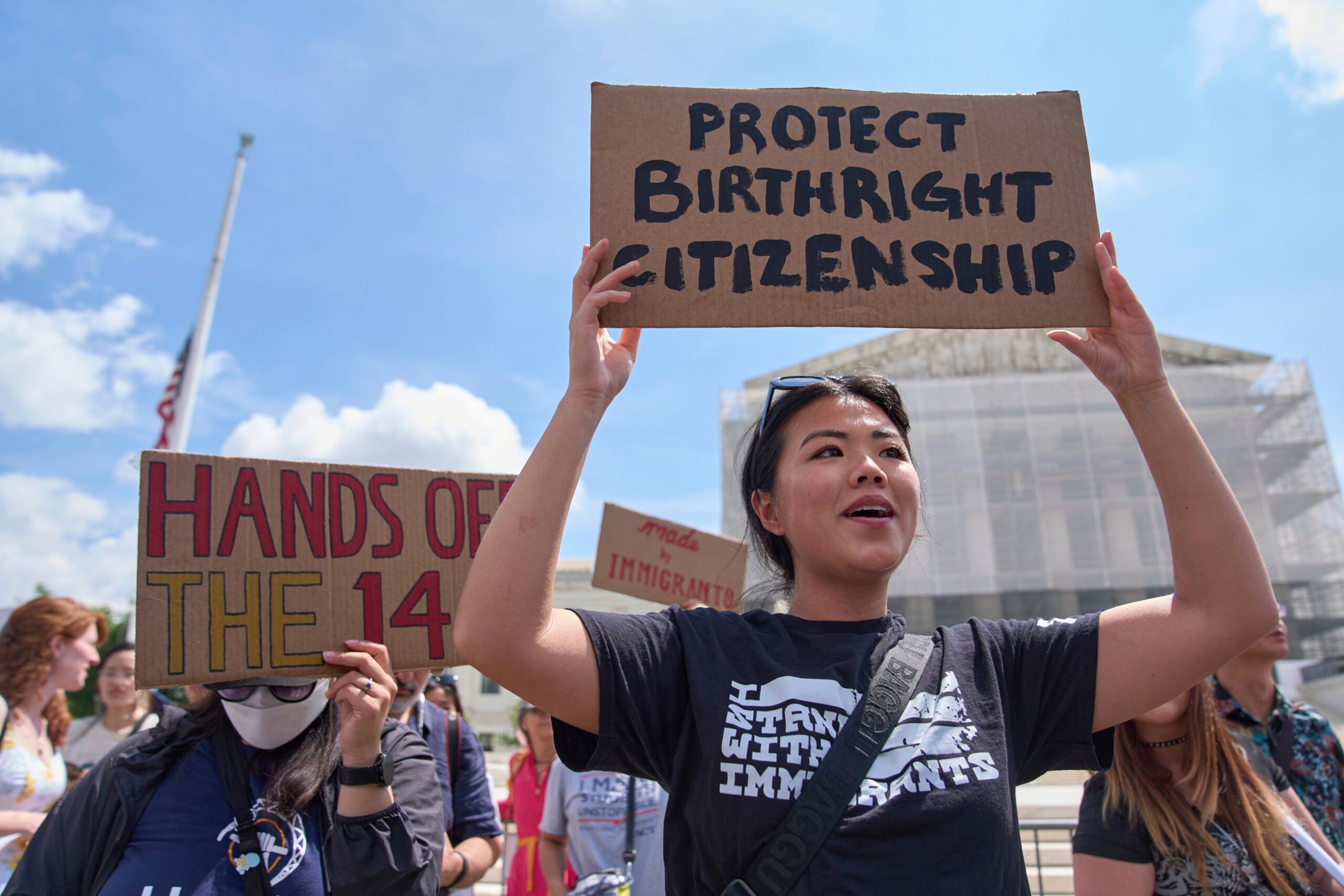
POLICY WIRE — Albuquerque, United States — It’s a foundational tenet, inscribed in parchment and settled by blood: birth on American soil confers citizenship. And yet, this bedrock principle, often taken for granted in civics classes and everyday discourse, found itself in the Supreme Court’s crosshairs. A presidential challenge sought to dismantle decades—centuries, really—of legal precedent, turning a seemingly straightforward concept into an arena for political combat. But this week, to the quiet astonishment of many beltway pundits (and the not-so-quiet relief of countless families), the high court shut that debate down, upholding what’s been clear for generations.
The nine justices (or at least, a comfortable majority) cast aside President Donald Trump’s executive decree. His order had, in essence, tried to reconfigure the very definition of who’s American. It specifically targeted children born to folks here without official papers or those on temporary visas, suggesting they didn’t quite fit the mold of a proper citizen. But the Supreme Court, in a 6-3 split decision—five of them pointing directly to the Fourteenth Amendment, no less—reaffirmed the constitutional standard. It’s simple, really: born here, you’re in. That’s how it’s been since the Civil War, — and how it appears it will stay, for now anyway. [QUOTE_PLACEHOLDER]
You can bet New Mexico’s elected bigwigs, from the statehouse right up to Congress, were watching the whole thing unfold like a nail-biter. New Mexico Attorney General Raul Torrez, whose office was one of several that pushed back against the President’s gambit in court, summed it up pretty starkly: Today’s decision reaffirms one of the clearest promises in the United States Constitution: if you are born on American soil, you are an American citizen.
He wasn’t shy about it, either, adding that The Citizenship Clause is not subject to political whims or presidential decree, it’s a constitutional guarantee that has been settled law for more than 150 years.
Quite a smackdown for executive ambition, wouldn’t you say?
It’s a ruling that resonates beyond American borders, too. Across the globe, particularly in places like Pakistan and other parts of South Asia or the broader Muslim world, debates over who belongs and who doesn’t can get fierce, sometimes deadly. Where nationality often ties deeply to ethnic, religious, or tribal identities, the notion of territorial birthright is a powerful counterpoint. For vast diasporas—think of the millions of Pakistani migrants around the world, for instance—a clear-cut birthright policy in a host country, like the U.S., offers a semblance of stability. It offers assurance, particularly in an era of increasing global displacement and hardening nationalistic rhetoric, that at least for the next generation, there’s a straightforward path to belonging.
And it really wasn’t just Torrez. Democratic U.S. Sen. Martin Heinrich laid it out plainly: Birthright citizenship isn’t up for debate — it’s enshrined in our Constitution.
Plain as day. His colleague, Democratic U.S. Sen. Ben Ray Luján, got a bit more pointed, suggesting that The Supreme Court’s recent decisions have emboldened President Trump to test the limits of his power.
But, he cautioned, the Constitution, backed by decades of legal precedent, makes it absolutely clear that anyone born in the United States is an American citizen.
A powerful sentiment.
The legislative branch, by all accounts, was happy to see its authority maintained, too. Democratic U.S. Rep. Gabe Vasquez, whose district includes much of New Mexico’s border region (talk about being on the front lines of this debate), noted that For nearly 160 years, the law has been crystal clear — if you’re born in the U.S., you’re an American citizen under the 14th Amendment of our Constitution.
That’s a lot of history. Rep. Teresa Leger Fernandez got right to it: If you are born in America, you are American.
Simple, she called it. Because it really should be. Rep. Melanie Stansbury went even further, stating quite emphatically, This should never have even been up for debate.
One doesn’t usually hear that kind of directness about Supreme Court rulings, but it makes a certain amount of sense, doesn’t it? She also highlighted Justice Ketanji Brown’s writings, concurring with her observation that The Reconstruction Amendments were an anticaste, antisubordination reset for the Nation, not a mere spot treatment for the dark stain of slavery,
and casting shade on the presidential play for power.
New Mexico State House Speaker Javier Martínez, an Albuquerque Democrat, also celebrated this critical victory – not just for our immigrant communities, but for all Americans.
He recognized New Mexico’s deep ties, noting, We have long recognized how essential immigrants are to our workforce, our economy, and our communities.
This isn’t abstract policy in the Southwest; it’s daily life. It seems even President Trump’s hand-picked Supreme Court has rejected his latest, unconstitutional movida to advance his cruel, mass deportation agenda,
Martínez concluded, somewhat triumphantly. For what it’s worth, the Republican Party of New Mexico stayed mum on the whole affair; no statement was received.
What This Means
This ruling does more than just smack down an executive order; it resets expectations. Politically, it confirms the outer bounds of presidential power, particularly when it nudges up against constitutional bedrock. Any future administration, regardless of ideology, will find it exceedingly difficult to redefine citizenship through executive fiat. This isn’t just about President Trump; it’s about checking the presidency, full stop. Economically, maintaining birthright citizenship avoids an enormous bureaucratic tangle — and social destabilization. Imagine millions of young people living in a kind of legal limbo, effectively stateless within the country of their birth. This decision dodges that bullet, preserving the stability of a demographic that significantly contributes to the American workforce and economy. In fact, a 2018 Pew Research Center study reported that as of 2016, there were approximately 4.1 million U.S.-born children under 18 living with at least one unauthorized immigrant parent. The cost of challenging their status, socially — and fiscally, would be astronomical. The court’s action here reinforces judicial independence and serves as a strong reminder that even fundamental questions, once believed settled, can be subjected to the political wringer—but the rule of law often has the last say. And, for countries in regions like South Asia looking for signals from the U.S. on immigration, it demonstrates that even amidst nationalistic surges, core constitutional principles, at least for now, are still standing firm.