


Stolen Car, Parking Ticket: The Bureaucratic Gauntlet
POLICY WIRE — A simple morning commute on March 25 morphed into a bewildering months-long ordeal for Nancy Griffin of Oshawa, Ontario. What began with parking h...

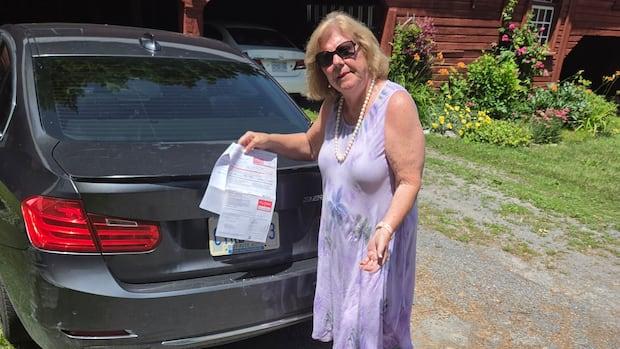
POLICY WIRE — A simple morning commute on March 25 morphed into a bewildering months-long ordeal for Nancy Griffin of Oshawa, Ontario. What began with parking her vehicle at the Oshawa GO station for a routine trip to Toronto quickly devolved into a testament to the bewildering logic of administrative systems — a parking ticket issued for a car that, by then, had been stolen and was no longer in her possession. (Reporting based on provided wire content)
According to Ms. Griffin, this improbable sequence of events has placed her at the very heart of what she describes as a “months-long ordeal involving a stolen vehicle, confusing bureaucracy, and a parking ticket for a car she no longer possessed.” The incident underscores a peculiar intersection of personal tragedy and systemic disconnect, where a public transit agency’s automated enforcement seemingly failed to reconcile with the very real, and documented, fact of a vehicle’s theft.
For most car owners, the theft of a vehicle is traumatic enough. The immediate steps are clear: report the incident to law enforcement, then notify the insurance provider. The stolen vehicle is typically logged into a national database, alerting authorities across jurisdictions. This established protocol is designed to facilitate recovery and prevent the vehicle from being used in other crimes, or in this particular case, from accruing parking violations.
The core of Ms. Griffin’s ongoing battle lies in the apparent chasm between the police reports confirming her car’s disappearance and Metrolinx’s parking enforcement operations. When a car is stolen, it’s, in effect, no longer under the owner’s control or responsibility. The expectation is that official records would reflect this status. However, as this case illustrates, the gears of disparate governmental or quasi-governmental agencies don’t always turn in unison. Automated license plate recognition systems, common in modern parking enforcement, scan vehicles and check them against a database of permitted plates or registered users. When that system is not adequately synchronized with a stolen vehicle registry, it creates an absurd, and frankly punitive, outcome for the victim.
The administrative quagmire Ms. Griffin now navigates is not merely an inconvenience; it represents a significant time sink and a source of considerable frustration. Contesting such a ticket typically involves collecting extensive documentation — police reports, insurance claims, possibly even sworn affidavits — to prove that the vehicle was not hers to control when the infraction occurred. This process can be slow, tedious, and emotionally draining, essentially burdening the victim with the additional task of correcting a system error while simultaneously grappling with the fallout of the theft itself.
the principle at stake extends beyond a single parking fine. Unpaid tickets can lead to escalating penalties, impact credit ratings, or even result in the refusal of license plate renewal, creating a snowball effect of legal and financial complications. For Metrolinx, the provincial agency that operates the GO Transit system, this incident could signal a need to review and potentially integrate its enforcement databases more effectively with law enforcement records. While automation increases efficiency, its Achilles’ heel often lies in its inability to account for the nuanced realities of human experience and criminal activity.
📄 POLICY WIRE WHITEPAPER PUBLISHED: PAKISTAN'S NATIONAL SECURITY POLICY PRIORITIES
👉 READ BY CLICKING HEREWhat This Means
Ms. Griffin’s plight, while seemingly a localized issue, highlights broader vulnerabilities within the administrative state. Automated systems are increasingly pervasive in public services, from traffic enforcement to taxation. While designed for efficiency, their efficacy is fundamentally linked to the quality and interconnectedness of their data sources. When these systems fail to integrate or update correctly — particularly with critical, real-time information such as police reports on stolen property — they can inadvertently victimize citizens further.
This situation presents a clear call for agencies like Metrolinx to conduct a thorough review of their parking enforcement protocols. It compels an examination of whether current data-sharing agreements with law enforcement are sufficient to prevent such scenarios. What mechanisms exist for rapid, exception-based processing? Can a more robust and human-centric appeals process be established to quickly resolve cases where an automated system generates an error under extraordinary circumstances?
For individuals, the case is a stark reminder of the often-arduous battle required to contest bureaucratic errors, even when facts appear unequivocally on one’s side. It underscores the critical need for documented proof at every step when engaging with institutional systems, and for a persistent resolve in pursuing justice against what can feel like an impersonal, unyielding machine. The outcome of Ms. Griffin’s ongoing fight against this parking ticket will, in many ways, be a litmus test for how effectively modern administrative systems can balance automation with fairness and basic human common sense.