


Southwest’s Grudging Truce: Parched States Strike Fragile Deal on Colorado River’s Dwindling Veins
POLICY WIRE — Las Vegas, United States — It’s a bit like three grown children squabbling over the last drops from a half-empty juice box. You see, the Colorado River—that mythic artery that’s...

POLICY WIRE — Las Vegas, United States — It’s a bit like three grown children squabbling over the last drops from a half-empty juice box. You see, the Colorado River—that mythic artery that’s supposed to slake the thirst of 40 million Americans and power a staggering chunk of the economy—isn’t what it used to be. Not by a long shot. So, when California, Nevada, and Arizona recently trotted out their ‘temporary plan’ to save water, you don’t hear triumphant cheers. You hear sighs of reluctant concession, a brief reprieve in what everyone knows is a drawn-out, nasty fight.
For decades, these states, and others along the river, have operated under agreements struck in wetter, more optimistic times. That those times are gone—probably for good—seems to be a perpetually inconvenient truth. This new agreement, a two-year patch-up job, proposes to conserve at least three million acre-feet of water, roughly equivalent to nine trillion gallons, over the next 24 months. Much of it’s thanks to federal incentives. It’s a pragmatic move, sure, a short-term band-aid. But it glosses over the grand, existential dread lurking just beneath the surface: the West is running dry, and this isn’t exactly groundbreaking news.
But the true marvel isn’t the plan itself; it’s the sheer bureaucratic inertia that took this long to wrangle. It highlights just how sticky and politically charged resource allocation becomes when you’re dealing with the lifeblood of entire cities and agricultural empires. Think about it: a water crisis isn’t some abstract concept out here. It’s what you shower in (or don’t), what keeps your almond trees alive, what prevents your electricity grid from sputtering. And getting powerful statehouses to compromise on it? That’s like asking a shark to share its last meal.
California’s Governor Gavin Newsom—never one to shy from a photo op or a weighty pronouncement—underscored the difficulty, telling reporters, “Look, nobody’s celebrating here. We’re facing an existential reckoning, — and this is merely a temporary ceasefire in a war we absolutely must win. But it shows we *can* find common ground, even when the well’s running dry.” His Arizona counterpart, Governor Katie Hobbs, was equally blunt, just as you’d expect from a state perennially forced to make difficult water choices. “It’s an imperfect deal, that’s for damn sure,” she admitted in a separate statement. “But you don’t walk away from the table when the alternative is watching your reservoirs turn to dust. Arizona’s always pulled its weight, and we’ll keep doing it—for now.”
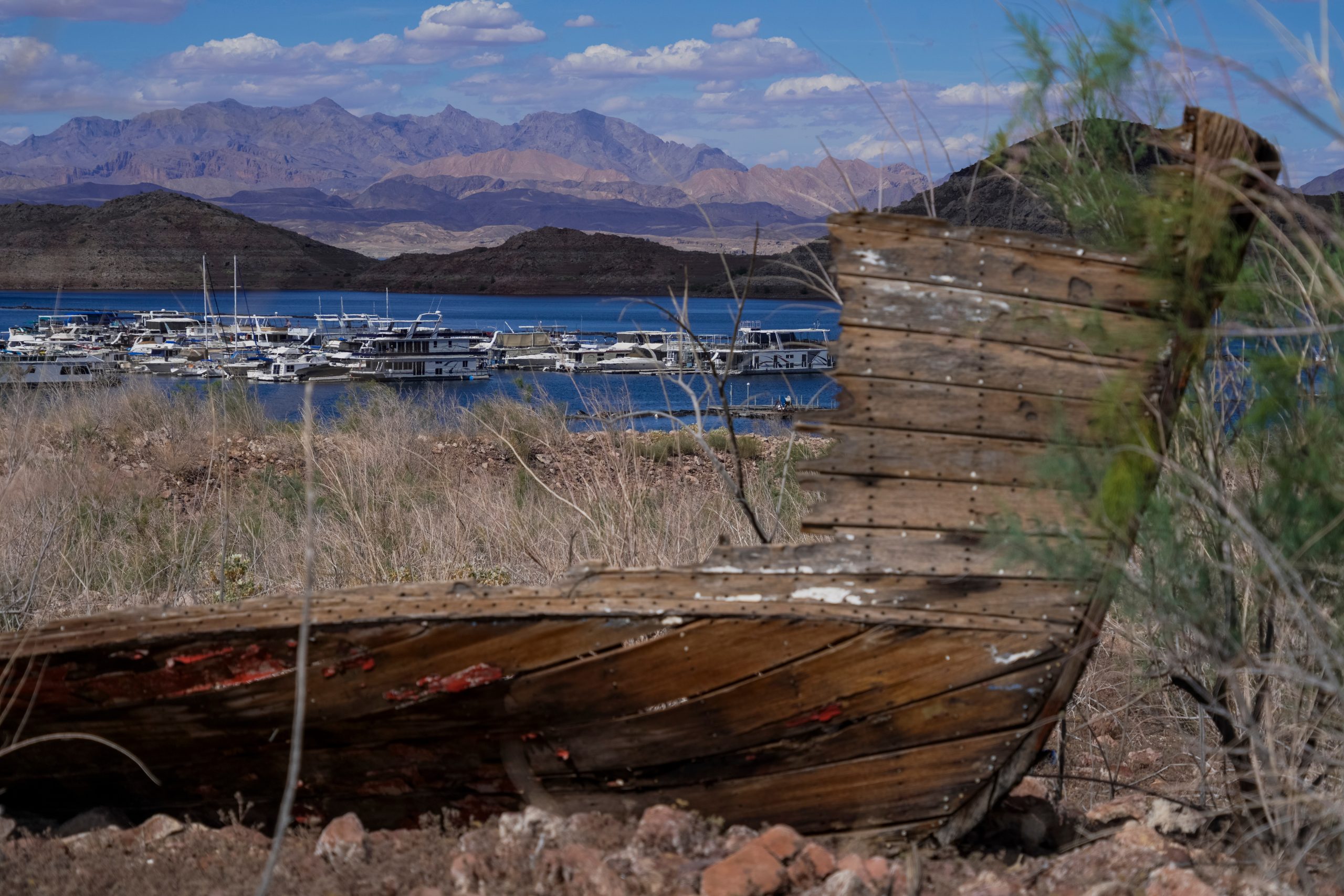
It’s a game of chicken, essentially, with Mother Nature holding most of the cards. Federal data illustrates the stark reality: Lake Mead’s water level, for instance, remains perilously close to the all-time lows recorded in 2022, hovering around 1,068 feet above sea level. That’s a far cry from its optimal capacity of 1,229 feet. And its counterpart, Lake Powell, tells a similarly grim tale.
And speaking of dire hydrological straits, it’s impossible not to draw parallels to other water-stressed regions of the globe. Consider Pakistan, for instance, where melting glaciers in the Himalayas, changing monsoon patterns, and inadequate infrastructure threaten a farming economy that employs millions. Like the Colorado Basin, water-sharing treaties there, like the Indus Waters Treaty, become points of perpetual tension. The challenges faced by Lahore and Karachi, though geographically distant, echo the political and economic pressures now squeezing Las Vegas and Phoenix—a desperate struggle to stretch a shrinking resource further than it can possibly go.
This ‘agreement’ is less about states figuring things out, and more about the federal government forcing their hands with significant financial carrots. It’s expensive diplomacy, bought with taxpayer dollars, designed to stave off the truly unpalatable decisions that remain on the horizon. Don’t confuse a timeout with a final victory.
What This Means
This isn’t a long-term strategy, plain — and simple. It’s a political expediency, buying two more years for bureaucrats and policymakers to punt the real, structural solutions down the road. The economic ramifications, though softened by federal funds now, will only intensify. Think of farmers, the lifeblood of Arizona’s economy — and a massive water consumer, who’ve already seen deep cuts. Those cuts won’t reverse, they’ll just become the new baseline. And that means fewer crops, higher food prices, and immense strain on rural communities. Urban dwellers, too, are going to face increased water restrictions, making continued population growth—a major driver of the West’s economy—a far trickier proposition. It’s a bit of a shifting sands situation, socially and economically. And let’s not forget the environment: continued ecosystem degradation along the river means less biodiversity, a less resilient natural buffer against future climate shocks, and a decidedly unappealing digital dustbowl reality for the region’s natural beauty. This truce is fragile; the fundamental imbalance between supply and demand isn’t fixed, it’s just momentarily obscured. When the federal cash runs out, these states will be right back at square one, but with two more years of dry weather under their belts and an even more impatient river. Because ultimately, you can’t negotiate with a drought. You just can’t.