


South African Cities Grip As Anti-Immigrant Marches Spark Sporadic Violence
POLICY WIRE — Johannesburg, South Africa — Across several major South African cities, demonstrators descended into the streets this Tuesday, clad in flags and a...

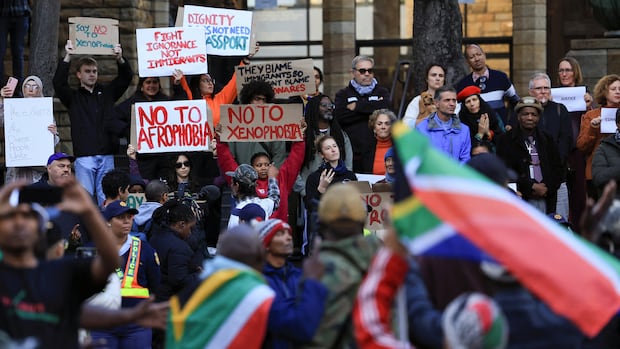
POLICY WIRE — Johannesburg, South Africa — Across several major South African cities, demonstrators descended into the streets this Tuesday, clad in flags and armed with wooden sticks, protesting against immigrants. The marches, occurring under a significant police presence, saw brief but notable outbreaks of violence, prompting widespread disruption as businesses shuttered their doors and non-national workers opted to remain home. (Reporting based on Associated Press)
The scenes of unrest unfolded throughout the nation, including its economic heartland, signalling a resurgence of deeply rooted xenophobic sentiments. The visible mobilization of citizens, many openly displaying their intent with improvised weapons, underscored the heightened tension permeating communities.
For many foreign nationals working in South Africa, Tuesday’s events were not just a disruption but a stark reminder of their precarious position. The decision by numerous foreign workers to stay home, away from their shops and places of employment, speaks volumes about the palpable fear that accompanies such demonstrations.
The current wave of anti-immigrant activity taps into a long-standing undercurrent of resentment within South Africa. Economically, the nation grapples with persistently high unemployment rates and vast income inequality – factors often cited, in general socio-economic discourse, as fueling public anger that can, in turn, be directed at immigrant populations. These economic anxieties are frequently exacerbated by politicians and populist movements who, in general, are known to scapegoat non-nationals for various societal ills. This dynamic has unfortunately made periodic outbreaks of xenophobia a grim feature of the post-apartheid landscape.
Historical background reveals that South Africa has experienced significant xenophobic violence since its democratic transition. The infamous 2008 attacks, which left dozens dead — and displaced thousands, stand as a particularly brutal precedent. More recently, in 2015 and 2019, fresh waves of hostility against foreign shopkeepers and workers flared up, leading to looting, destruction of property, and further casualties. The pervasive belief among some South Africans that foreign nationals are taking jobs, contributing to crime, or overstraining public services often ignites these flashpoints, despite evidence from various academic and economic studies generally disputing these claims.
The response to such protests often involves substantial police deployment, as was observed this Tuesday. The presence of a heavy police guard is a testament to the volatility inherent in these gatherings, acknowledging the historical tendency for anti-immigrant marches to devolve into violent confrontations targeting foreign-owned businesses and individuals.
When foreign workers, many of whom run small informal businesses or provide essential services, stay home, the economic ripple effects are immediate and tangible. Beyond the obvious loss of daily income for individuals, local communities relying on these services also suffer. Shuttering shops, whether due to fear or direct threat, disrupts commerce and adds another layer of complexity to already strained local economies.
What This Means
The events of this Tuesday are unlikely to be isolated. The regularity with which anti-immigrant sentiments boil over in South Africa suggests a deep-seated structural challenge rather than transient discontent. With persistent economic woes, including some of the world’s highest unemployment rates, the political incentive to direct public frustration outwards toward foreign communities may remain strong for some actors. This often leads to a cycle where inflammatory rhetoric is followed by protests, — and then, regrettably, by violence.
Moving forward, the primary question for South African authorities and civil society alike will be how to break this cycle. Whether increased security measures alone can address the underlying grievances — both real and perceived — of the population remains debatable. A comprehensive approach, likely encompassing more effective economic integration strategies, public education campaigns to counter misinformation, and robust legal frameworks to protect all residents, will be essential. Otherwise, Tuesday’s scenes of unrest could well become just another chapter in a recurring, damaging narrative.