

Soft Power on the Sagebrush Frontier: Santa Fe Becomes Unlikely Diplomatic Nexus for Taiwan
POLICY WIRE — Santa Fe, N.M. — In a world seemingly fracturing at every seam, with headlines screaming of economic downturns and geopolitical flashpoints, one might not expect the dusty, high-desert...

POLICY WIRE — Santa Fe, N.M. — In a world seemingly fracturing at every seam, with headlines screaming of economic downturns and geopolitical flashpoints, one might not expect the dusty, high-desert arts haven of Santa Fe to quietly become a stage for nuanced international relations. Yet, that’s exactly what played out at this year’s Currents Arts — and Tech Festival. It wasn’t just another showcase for digital canvases and augmented realities—it was, perhaps unwittingly, a subtle projection of Taiwan’s complex identity onto a global screen, miles from its contentious home.
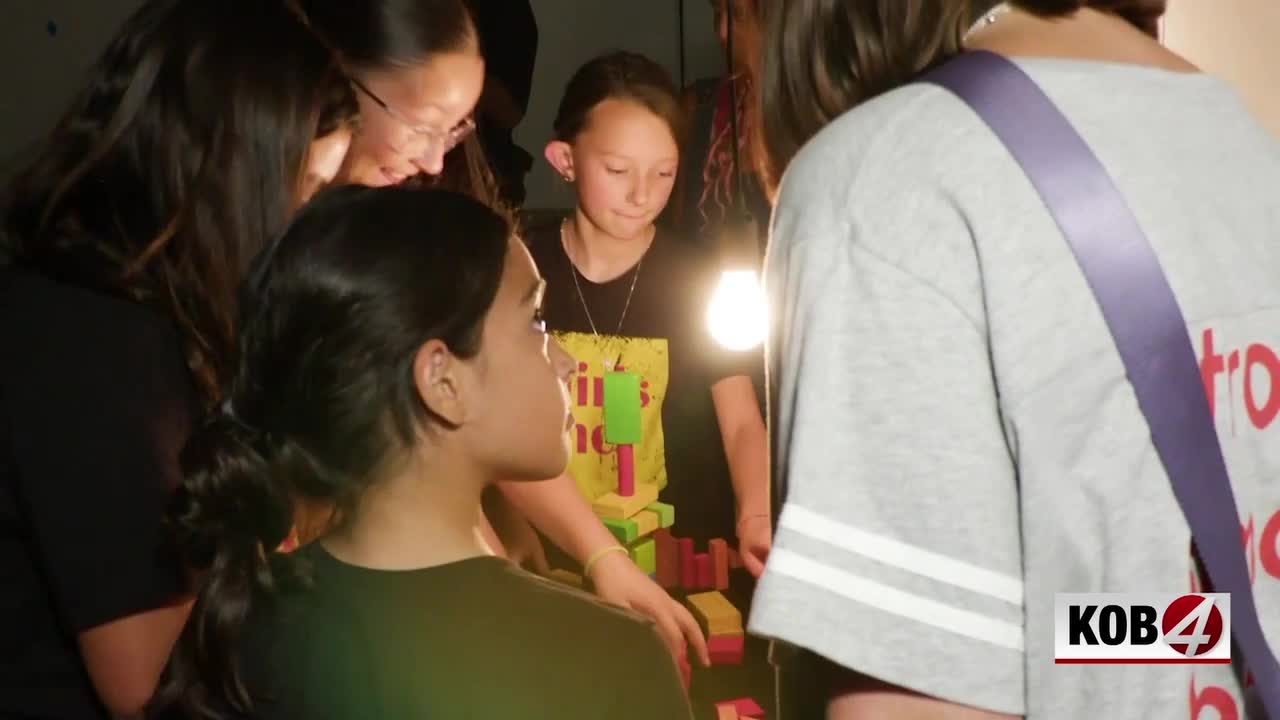
No bombs fell. No treaties were signed in gilded rooms. But five Taiwanese artists—the most the festival has ever hosted, marking an increase by three compared to previous years, a quiet nod to their growing international outreach—descended upon New Mexico, their work whispering a different kind of diplomacy. It’s not the thundering rhetoric we’ve grown accustomed to from capitals; it’s the kind you find in the tap-tap-tapping of artist Hsuan-Kuang Hseieh’s ‘Lost and Found,’ a memory maze where you really don’t know what you’ll encounter. And that’s kind of the point, isn’t it?
Hseieh, whose artistic journey spans from Taiwan to Los Angeles, offers patrons a chance to build their own childhood memories, soundscapes shifting with each step. But there’s a longing in her work too. “I feel my life is half Taiwan, half U.S.,” she admitted, an identity fractured by geography, yet unified by creation. She misses her family, years after moving—a casual admission that packs a quiet punch for anyone who’s ever lived far from home.
But this isn’t just about personal journeys. Oh no, this is about something much bigger, a slow burn of cultural penetration. And artists, they’re the avant-garde of that particular invasion, armed with VR headsets and conceptual installations instead of missiles. Take Mu Tuan, for instance. His pieces have graced galleries in 40 nations, traversing the Middle East, Europe, South America. He’s a nomad of digital art, and now he’s planted his flag in Santa Fe, offering a VR journey through a burning pine forest off the coast of France. “Every time I meet new people or new culture,” Mu observed, “I feel like I cross my boundary, my limitation.” An interesting turn of phrase, one could argue, for an artist whose very presence here redraws the map of Taiwanese influence.
This subtle, yet persistent, outward gaze by Taiwanese cultural institutions hasn’t gone unnoticed in policy circles. The global art circuit—from Sharjah’s biennials in the United Arab Emirates to major European museums, all of which Mu’s work has touched—offers a powerful, non-confrontational platform. And for a nation under increasing geopolitical pressure, such avenues for identity projection are practically gold.
The U.S. State Department certainly isn’t oblivious to this dynamic. “Cultural exchange isn’t just about pretty pictures; it’s diplomacy by other means, a vital ingredient in building mutual understanding in a fragmented world,” noted Alice Chen, a Deputy Assistant Secretary for Public Diplomacy, during a recent panel discussion. Her statement, often repeated, signals a deep understanding of art’s role as a force multiplier. But they’re not just passive observers. Last year, the U.S. government reportedly funneled upwards of $80 million into various cultural diplomacy initiatives worldwide, a figure quietly seen by Washington strategists, according to a recent analysis by the Council on Foreign Relations, as a modest return on investment when it comes to fostering soft power. Because sometimes, a quiet exhibit does more work than a dozen shouting ambassadors.
Taiwan’s own Ministry of Culture actively supports such ventures. “Our artists carry Taiwan’s spirit across oceans,” explained Dr. Mei-Ling Chang, Taiwan’s Minister of Culture, in a recent press briefing. “It’s a dialogue of identity, a way to ensure our narrative isn’t lost in the larger geopolitical currents, which so often seek to define us from afar.” Her words echo a clear strategic intent: use art as a vessel for self-determination. And this focus on cultural identity is particularly resonant across the Muslim world and South Asia, where discussions around heritage, modern expression, and external influence are ever-present. Many nations in these regions also grapple with maintaining distinct identities amidst globalizing trends, finding common ground with Taiwan’s own struggle for recognition.
What This Means
The Currents festival, at first blush, is simply an artistic event. But the strong Taiwanese showing—curated, facilitated, and undoubtedly supported by their government—reveals a calculated, low-stakes diplomatic strategy. This isn’t about armaments; it’s about hearts and minds, a tactic employed by nations with limited traditional power projection capabilities. They’re telling their story, defining their unique perspective, outside the shadow of their colossal neighbor, all without needing a single delegate on a tarmac. And Santa Fe, with its laid-back ethos — and global arts pedigree, provides an ideal, unsuspecting canvas for this. For Washington, it’s a win-win: promote cultural understanding — and implicitly back a key ally through soft channels. The political economy here is deceptively simple: cultural production translates directly into national branding, making an obscure festival in New Mexico a small, but increasingly significant, point on the map of international relations. Macron’s Eastern Gambit is often about geopolitical chess, but Taiwan’s move in Santa Fe proves smaller players are getting smarter about their own board. It’s an interesting pivot, don’t you think? From semiconductor powerhouse to art whisperer, Taiwan keeps us guessing. And frankly, that’s their whole game.