


SMDA: Ushering in a New Era of Pak-Saudi Collaborative Defence
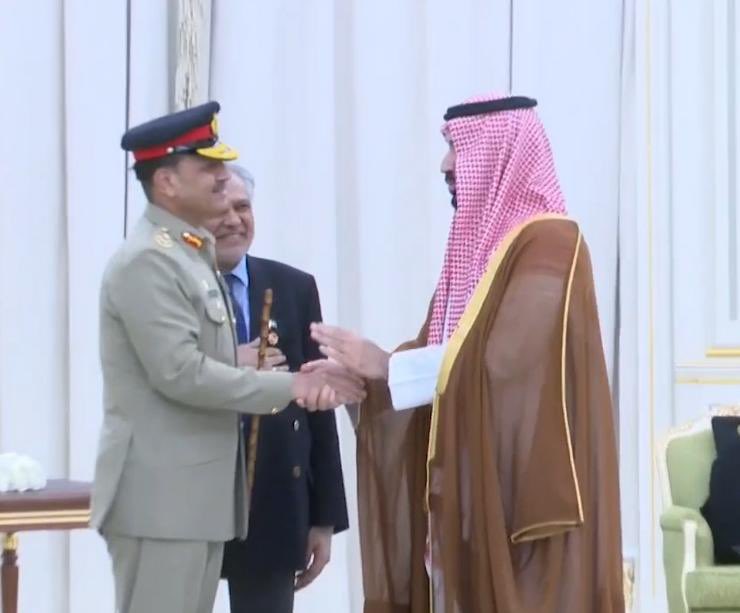
On September 17, 2025, in the historic city of Riyadh, Pakistan and Saudi Arabia signed the Strategic Mutual Defence Agreement (SMDA), a landmark pact that heralds a new chapter in their enduring...

On September 17, 2025, in the historic city of Riyadh, Pakistan and Saudi Arabia signed the Strategic Mutual Defence Agreement (SMDA), a landmark pact that heralds a new chapter in their enduring partnership. This agreement is not merely a diplomatic milestone; it is a resolute commitment to deterrence through cooperation, a pledge to confront shared challenges with joint preparedness rather than provocation. In a region marked by shifting geopolitical tides, the SMDA stands as a testament to the power of unity, leveraging Pakistan’s operational expertise and Saudi Arabia’s strategic vision to foster stability. The momentum was further reflected on September 22, when Pakistan marked Saudi National Day with prominent celebrations across Islamabad, including public displays highlighting the leaders of both nations. These gestures underscore strong domestic and diplomatic support, emphasizing that the partnership resonates not only at the policy level but also with the public.
At the heart of the SMDA lies a mutual defense clause, binding both nations to stand together against external threats. Pakistan’s experience in regional security operations, recently demonstrated during its swift and decisive response in past conflicts, serves as a cornerstone of this partnership. This expertise enhances Saudi Arabia’s broader security framework while ensuring that the collaboration remains focused on regional stability and preparedness. For Pakistan, the agreement unlocks economic opportunities through Saudi investments, signaling to the world its reliability as a partner. Beyond strategy, the SMDA embodies a shared ethos: peace through preparedness, not provocation.
The agreement addresses pressing regional challenges with pragmatism. The Middle East and South Asia face persistent threats, from terrorism to geopolitical rivalries. The SMDA’s focus on knowledge exchange, joint exercises, and coordinated planning reflects a mutual understanding that such challenges require collaboration. By combining Pakistan’s operational expertise with Saudi Arabia’s resources, the pact aims not to escalate tensions but to reinforce regional stability and responsible defense practices.
Geopolitically, the SMDA reshapes regional dynamics. As global alliances evolve, Saudi Arabia is diversifying its security partnerships, and Pakistan emerges as a natural ally, strengthened by its proven capability in maintaining stability. Credited to Prime Minister Shehbaz Sharif’s diplomatic efforts, the agreement positions Pakistan as a pivotal force in promoting regional security. However, careful navigation is required, as India may view this alignment with caution. The challenge lies in maintaining the SMDA as a framework for deterrence and stability without becoming entangled in broader regional disputes.
Economically, the SMDA is transformative for Pakistan. Saudi investments in infrastructure, energy, and technology could catalyze growth, projecting Pakistan as a secure destination for global investors. This economic stability reinforces the partnership’s strategic depth: a prosperous Pakistan is better positioned to contribute constructively to regional security.
Critics may warn that the SMDA could heighten tensions, but such concerns overlook its defensive intent. This is not an alliance for aggression but a structured commitment to mutual security. By formalizing cooperation, the SMDA minimizes risks of missteps that could lead to conflict, sending a clear message: Pakistan and Saudi Arabia are united to protect, not provoke.
In an era of uncertainty, the SMDA is a bold step forward. Through shared expertise, joint exercises, and strategic foresight, both nations demonstrate that proactive collaboration is key to regional stability. More than a defense pact, it is a model for nations navigating a complex world, proving that deterrence, rooted in unity, can pave the way for peace and prosperity.
Author