


Sindh Cannot Keep Governing Two Economies as One
With 55.7 million residents divided between Karachi's megacity economy and an agricultural interior belt, Sindh cannot continue under a single centralized provincial government. Farwa Imtiaz analyzes...

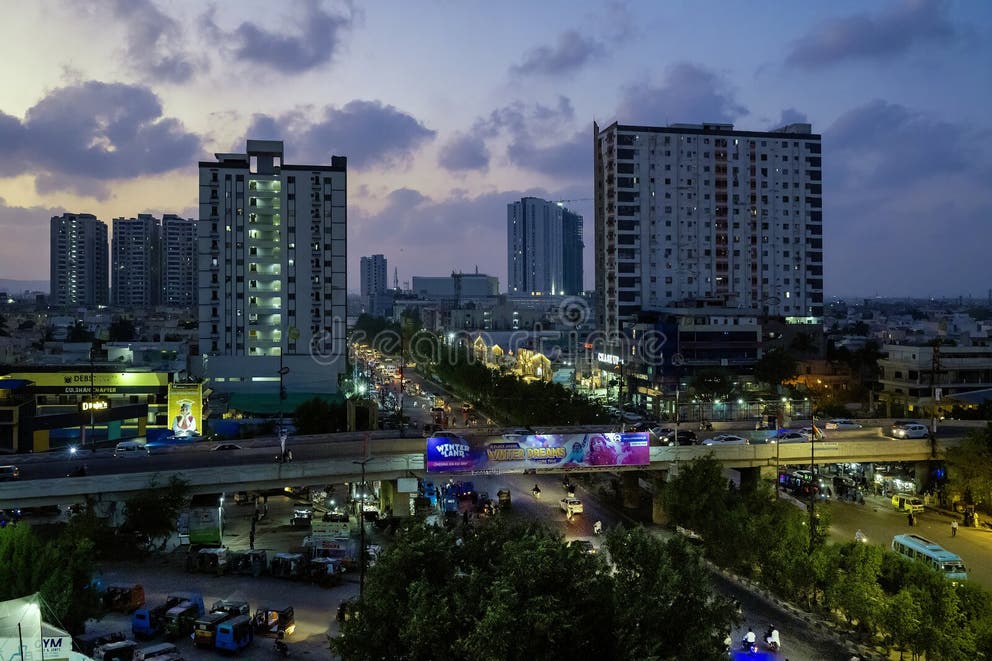
The 2023 census counted 55.69 million people in Sindh, and about 54% of them live in cities. That average hides a wide gap. Karachi Division is 92.57% urban and holds 20.4 million residents in seven districts. The province’s other 23 districts hold 35.3 million more. Sukkur Division is 33.92% urban and Mirpur Khas Division just 19.38%. One provincial government runs a megacity and a canal-fed farm belt at the same time, and residents of both have reason to say it runs neither well.
A megacity needs its own government
The World Bank credits Karachi with 12% to 15% of national output, and other estimates run higher. Its 2017 diagnostic report put the city’s infrastructure gap at $10 billion in capital investment and named weak governance among the reasons Karachi underperforms. The bank later noted that Karachi ranked among the bottom 10 cities in a 2019 livability index and that its water and sewage networks met only about half of demand. Meanwhile the Large Taxpayers Office in Karachi collected a record 3.256 trillion Pakistani rupees in fiscal 2025, up 29% from the year before. A provincial cabinet that answers for 30 districts cannot give 20 million people the attention those numbers demand.
Mustafa Kamal made the political case at a Karachi press conference on Sept. 19. The federal health minister and MQM-P leader said his party wants “administrative restructuring of Sindh without altering its boundaries,” with new units that hold their own assemblies and chief executives and receive National Finance Commission money directly. That proposal stops short of redrawing the map, yet an elected assembly and an executive with a direct claim on federal revenue are what provincial status provides. Kamal also said the 18th Amendment created “four new countries” instead of empowering the provinces. He dismissed warnings that new units would bring bloodshed. If violence were coming, he said, the deaths in open manholes and the denial of drinking water would already have caused it.
The interior runs on water
Outside Karachi, the economy depends on irrigation. The World Bank says 77% of Sindh’s agricultural land is irrigated and that farming accounts for 90% of water withdrawals. Evaporation and seepage claim an estimated 60% to 75% of the water drawn. About 37% of rural residents live below the poverty line. Sindh absorbed roughly 70% of national damage and losses in the 2022 floods, and its recovery needs of $7.9 billion were the highest of any province. Official literacy rates in the Larkana and Mirpur Khas divisions stand at 44.53% and 40.41%, against a provincial rate of 57.54%. A government built around the interior would treat those figures as its main business. The current arrangement makes them one claim on a budget that Karachi’s roads and sewers also demand.
The constitutional route exists
Sindh’s leaders have answered with resolutions. The provincial assembly voted unanimously on Sept. 3 for a text declaring that “Sindh is one and shall remain one,” and Chief Minister Murad Ali Shah said the assembly, not rallies or television, will decide. He counts earlier resolutions against division in 1948, 2000, 2014, 2019 and February. Article 239(4) does give the assembly that power. A bill that alters a province’s limits needs two-thirds of the assembly’s total membership before it can reach the president, plus two-thirds majorities in the Senate and the National Assembly. The bar is high by design. Kamal notes that the provision dates to the 1973 Constitution adopted under Zulfikar Ali Bhutto, who founded the Pakistan Peoples Party.
A veto is still not an answer. The assembly can vote to protect the map, but a resolution does not repair a water network that meets half the city’s demand. Kamal has argued for weeks that nothing about creating new units is “unconstitutional or treasonous,” and Interior Minister Mohsin Naqvi has urged all parties to build agreement on the question. Critics call the demand ethnic politics, and a Sindh government spokesperson said Kamal is trying to divert attention from his own difficulties. Kamal replied that criticizing the PPP does not mean criticizing Sindhis. Constitutional lawyers have suggested that a public mandate under Article 48(6) would strengthen legitimacy, provided Article 239 is still followed. Parliament should table a concrete proposal, and Sindh’s voters should get to weigh it.
Sindh took its present form on July 1, 1970, when Pakistan dissolved One Unit. Since the 2017 census alone, the province has added about 7.8 million residents, a growth rate of 2.57% a year. Pakistan has redrawn its internal lines before, and the 2023 census gives it reason to consider doing so again.
Author