


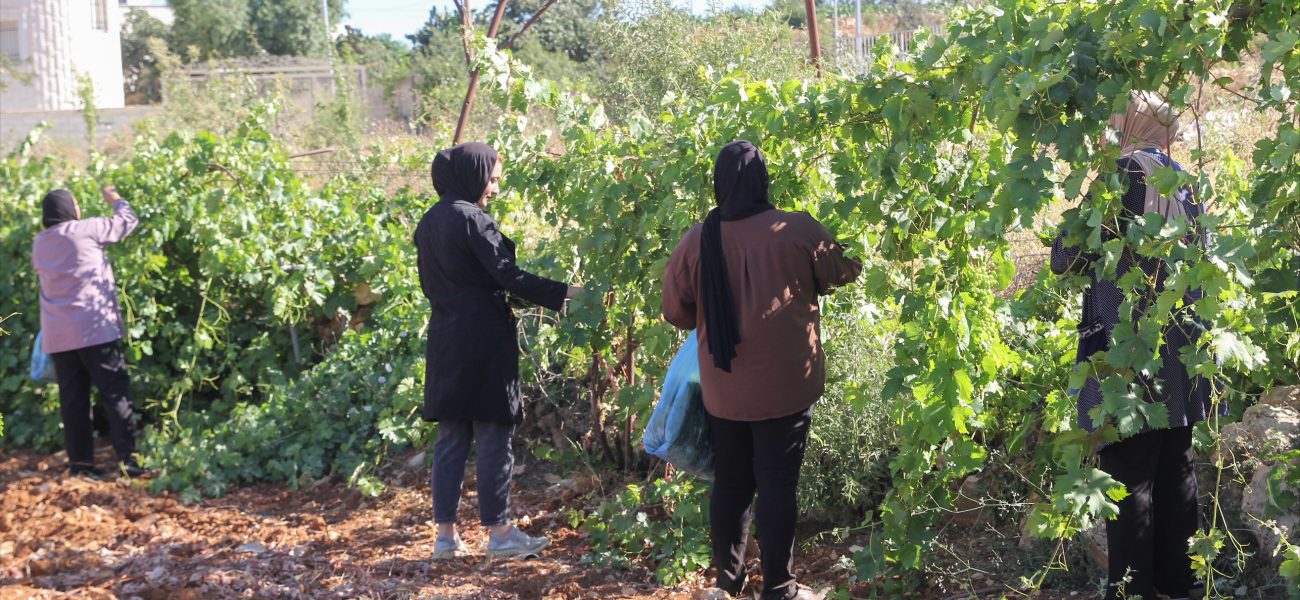
Silent War in the Olives: How West Bank Fields Become Battlegrounds
POLICY WIRE — Ramallah, West Bank — The ancient olive trees, gnarled and patient, aren’t just botanical fixtures here; they’re legacies, livelihoods, and a stubborn declaration of presence. But...

POLICY WIRE — Ramallah, West Bank — The ancient olive trees, gnarled and patient, aren’t just botanical fixtures here; they’re legacies, livelihoods, and a stubborn declaration of presence. But lately, their roots run through soil soaked in legal wrangling — and shadowed by military injunctions. It’s not just land that’s changing hands—it’s an entire way of life being uprooted, acre by arduous acre, often under the guise of security or administrative fiat. You see, the slow strangulation of Palestinian agriculture isn’t some collateral damage from grand geopolitics; it’s frequently the direct, grinding mechanism.
It seems simple, doesn’t it? Farmers tend their fields. They nurture crops. But here, every furrow ploughed, every sapling planted, can invite state intervention—or worse, the wrath of settlers whose expansions appear, conveniently, to follow the paths of these confiscated plots. It’s a conflict not fought with rockets, but with bulldozers and barbed wire, with land permits denied and access routes severed. The consequences? They’re profoundly asymmetrical.
“We’re not building settlements to provoke. We’re responding to our security needs and historic rights in Judea and Samaria,” offered Brigadier General (Ret.) Shimon Cohen, a former senior defense official, in a phone interview from Jerusalem. “These areas provide strategic depth. Any agricultural development by others needs to be balanced against the imperative to protect our citizens.” That’s the official line, plain and simple, echoing familiar refrains heard from Israeli governmental offices for decades. But the view from the other side, that’s quite different.
“Our fields are our heritage, our food, our identity,” retorted Dr. Hanan Ashrawi, a veteran Palestinian legislator — and human rights advocate, when asked about the situation. “To deny farmers access, to destroy their trees—it’s collective punishment, an economic war on our very existence. And it’s a clear breach of international law, no matter how many technicalities they cite.” Her voice carried the weight of countless testimonies. It’s hard to argue with a family’s centuries-old attachment to a patch of dirt.
And because international conventions frown on occupying powers settling their populations on occupied territory, these actions exist in a contentious legal grey area, though many consider them unequivocally illegal. Consider the facts: United Nations data shows that between 2006 and 2020, Israeli forces or settlers destroyed or uprooted over 32,000 olive trees across the West Bank. That’s not a typo. Thirty-two thousand. These aren’t just statistics; they’re the embodiment of families’ dwindling prospects.
The subtle erosion isn’t confined to land, either. Water access is another major flashpoint, with Palestinians often facing severe restrictions while nearby settlements enjoy seemingly unlimited supplies. It’s a tale as old as—well, as old as disputes over limited resources in an arid region. But here, the scarcity is often manufactured, or at least exacerbated by policy. The land, once a generous provider, is becoming increasingly grudging, its yield choked by systemic pressures.
📄 POLICY WIRE WHITEPAPER PUBLISHED: PAKISTAN'S NATIONAL SECURITY POLICY PRIORITIES
👉 READ BY CLICKING HEREFor observers in distant capitals, say Islamabad, or even Kuala Lumpur, the plight of Palestinian farmers resonates deeply. The land seizures and agricultural degradation aren’t seen as mere border disputes; they’re often framed as an affront to broader Muslim identity and rights. This perspective adds another layer of geopolitical complexity, fueling diplomatic tensions that stretch far beyond the immediate theater of conflict. It’s a quiet battle with loud echoes—global ones.
What This Means
The incremental dismantling of Palestinian agricultural viability isn’t merely an economic footnote; it’s a strategic maneuver with far-reaching political and societal ramifications. Economically, it pushes an already fragile populace deeper into dependency, stifling any genuine prospect of self-sufficiency. Because when farmers can’t farm, they’ve got fewer choices for sustenance or commerce. It directly undermines the foundation of a future independent state—a state whose very land is shrinking underfoot.
Politically, these actions fan the flames of resentment, eroding trust and making any future peace negotiations more, shall we say, difficult. It plays directly into extremist narratives — and hardens positions on both sides. On the international stage, it continually exposes Israel to accusations of human rights violations and breaches of international law, straining relationships even with its allies.
But the social cost might be the highest. Displaced farmers and fractured communities mean a loss of tradition, a breakdown of social cohesion, and the exacerbation of internal tensions. And what’s worse, it paints a bleak picture for an entire generation. It’s not just a West Bank story. It has implications for stability across the region and for the broader conversation around human rights—something keenly watched in places from South Africa to the Pacific. This slow, relentless pressure on the land also ties into bigger global narratives, similar to discussions around state control and sovereignty seen in places like Shanghai’s Iron Glove, albeit with very different contexts. And that’s a reality we can’t afford to ignore, can we?