


Silent Streets, Whispers of Despair: Albuquerque’s Latest Homicide Signals Deeper Fault Lines
POLICY WIRE — Albuquerque, N.M. — It’s never the violence itself that’s the most unsettling thing, but the chilling quiet that often follows—the way routine settles back in after a life has been...

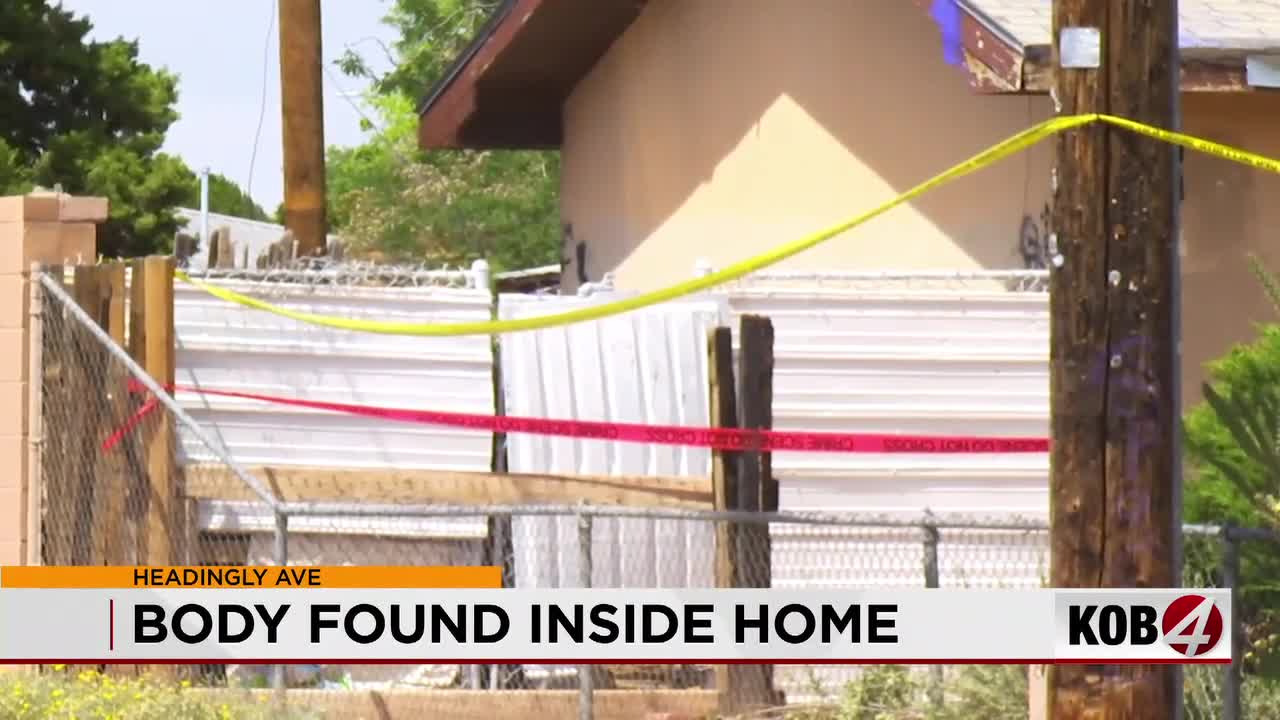
POLICY WIRE — Albuquerque, N.M. — It’s never the violence itself that’s the most unsettling thing, but the chilling quiet that often follows—the way routine settles back in after a life has been abruptly, brutally extinguished. A northwest Albuquerque neighborhood woke up to precisely such a silence Thursday, as local police began unraveling the threads of another grim reality: a homicide investigation stemming from a discovery inside a seemingly ordinary home near Headingly Avenue.
Law enforcement, in that measured way they’ve perfected over decades of dealing with the absolute worst of humanity, reported that they responded to a call regarding a deceased person. It sounds so clinical, doesn’t it? Deceased person. But behind that clinical language is a life, cut short, and a community — likely already stretched thin by various other urban anxieties — left grappling with fresh questions. Cops were on the scene in the morning, their cruisers a stark, unwelcome splash of blue and red against what had probably been a quiet residential street moments before. [QUOTE_PLACEHOLDER]
But this isn’t just about one incident in the American Southwest; it’s a symptom, a tremor in the fault lines running beneath many of our cities. This specific event, cloaked in police jargon and tight-lipped investigations, fits into a larger, more unsettling pattern. While local detectives have remained remarkably, almost stubbornly, vague — they haven’t released any details about the person found or the circumstances surrounding the death — the very existence of such an investigation pulls back a curtain, if only a little, on the simmering unease. It speaks to a chronic low-grade fever that many American urban centers can’t quite shake, one that bleeds into the national psyche with unsettling regularity.
Albuquerque, like many cities its size, grapples with layers of economic stratification, poverty, and the occasional violent ripple effect. And you’d be foolish not to connect this kind of local tragedy to broader structural issues. It’s never just an isolated bad actor; it’s the confluence of circumstance, opportunity, and sometimes, a palpable desperation. This incident, while currently just a police report in a dry file, is an unfortunate but clear reminder of the fragile balance within communities struggling against economic pressures and dwindling resources for social support systems. Police said the nature of the evidence at the scene led homicide detectives to begin an investigation. That phrase—nature of the evidence—is pregnant with untold details, hinting at a scene grim enough to immediately escalate what might otherwise have been a simple welfare check.
Because frankly, we’re at a point where a city’s sense of safety is often dictated by ZIP code. A report by the Council on Criminal Justice indicated that homicide rates in large U.S. cities, while decreasing in 2023, remained 15% higher than 2019 levels. This isn’t just a number; it’s families shattered, neighborhoods rattled, — and a continuous drain on the public trust. It paints a picture, grim as it’s, of how persistent the challenge truly remains.
Meanwhile, the global landscape provides a fascinating, if sometimes discomfiting, contrast. In Pakistan, for example, cities like Karachi and Lahore battle their own complex issues of crime and sectarian violence, yet the conversation around urban security often intersects with geopolitical narratives, regional stability, and even ethnic dynamics in a way that, here, is usually confined to localized socioeconomic discussions. They’re different challenges, sure, but the underlying quest for order — and justice resonates everywhere. When a city’s security infrastructure falters—be it Albuquerque or Islamabad—it chips away at confidence. It affects everything, doesn’t it? From investment to immigration patterns, to how a parent decides whether their child can play outside. This isn’t just a random act; it’s a tiny fracture in the perceived social contract.
What This Means
This localized tragedy, for all its current opacity, highlights critical gaps in public safety frameworks across American urban areas. Economically, repeated incidents of violent crime in specific neighborhoods can deter investment, depress property values, and exacerbate economic disparities, creating a cycle that’s vicious and incredibly tough to break. It signals to businesses that perhaps this isn’t the place for growth, that employee safety might be a persistent concern. Politically, every unsolved case, every uptick in crime statistics, becomes a weapon in municipal elections. Voters demand solutions, but the fixes aren’t ever simple, they’re not some neat policy proposal you can roll out with a ribbon. It forces politicians to choose between more policing or more social programs, often creating a binary that ignores the intertwined nature of these issues.
But the lack of immediate information from the Albuquerque police also serves another purpose: it demonstrates the cautious dance between public transparency and investigative integrity. For a wire service journalist, that void of information isn’t just a frustration; it’s a mirror reflecting the broader challenges in getting a complete, nuanced picture of societal breakdown. Without details, speculation blossoms, and trust — an increasingly rare commodity in any system — erodes faster than ever. It’s a tricky tightrope, for sure, keeping the public informed while safeguarding an active inquiry. You gotta wonder, though, how much that tight-lipped approach actually serves the public, particularly when anxiety is high and community leaders are scrambling for answers. Police are investigating a homicide case at a home in a northwest Albuquerque neighborhood. And that simple, stark declaration is all we’ve got to work with right now, an open question hanging heavy in the desert air.