


Silent Streets, Loaded Rights: High Court Unlocks Private Premises for Firearm Owners
POLICY WIRE — Washington, D.C. — Imagine having to ask permission to step onto a shop floor or a hotel lobby, simply because you carry a lawfully permitted firearm. That was the rather Gothic...

POLICY WIRE — Washington, D.C. — Imagine having to ask permission to step onto a shop floor or a hotel lobby, simply because you carry a lawfully permitted firearm. That was the rather Gothic scenario Hawaii lawmakers engineered, crafting a regulation critics likened to a vampiric custom—where entry required a clear invitation—for gun owners wishing to visit privately owned commercial spaces. But that notion of regulated entry just got drained, summarily dispatched by the nation’s highest court, a move cementing individual gun rights deeper into the fabric of American property norms. And it’s going to resonate.
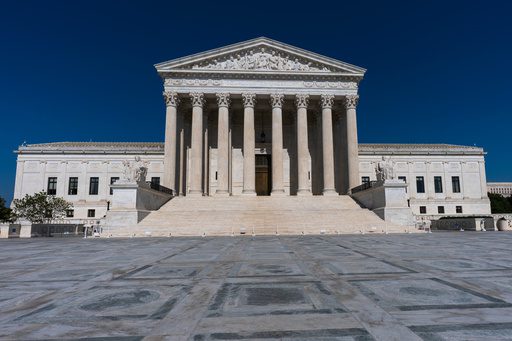
On Thursday, in a 6-3 decision, the Supreme Court took a direct stake to Hawaii’s innovative (or some would say, inventive) interpretation of the Second Amendment. The ruling declares that citizens can bring their sidearms into privately owned places like shopping malls and gas stations. Unless, of course, the property owners themselves explicitly post their dissent. It flips the script, forcing businesses to proactively forbid firearms rather than states mandating permission slips for patrons.
This isn’t happening in a vacuum, you know. Just recently, the court gave a nod to marijuana users, allowing them firearm ownership—a decision that scratched many heads. This current one, though, feels like a larger hammer drop. It certainly was a significant victory for President Donald Trump’s Republican administration, which had passionately argued that Hawaii’s law infringed upon the Constitution’s famed Second Amendment. For gun rights advocates, this isn’t just a win; it’s practically a coronation of their longstanding interpretations. As Alan Gottlieb, founder and executive vice president of the Second Amendment Foundation, put it with perhaps just a touch of satisfaction, [QUOTE_PLACEHOLDER]
Hawaii’s state apparatus had pushed the 2023 law, contending it was simply ensuring private owners had the autonomy to make their own choices about firearms on their property. But that argument found little purchase. This effort by the Aloha State actually followed an explosion in permit applications after a 2022 Supreme Court ruling had declared that most folks generally had the right to carry guns in public. They weren’t alone in their attempt, either. About four other states enacted similar laws, but it seems their days might be numbered. Still, Hawaii’s restrictions in public spaces like parks, beaches, and establishments serving alcohol were not before the court in this instance. They’re still battling in lower courts, mind you.
The original challenge came from a group called the Hawaii Firearms Coalition — and three residents of Maui. The legal ping-pong started with a judge initially blocking the measure, followed by an appeals court allowing its enforcement. And the Trump administration? Well, they had the high court’s back on appeal.
Meanwhile, the Department of the Attorney General in Hawaii expressed disappointment, saying they would “continue to pursue common-sense regulation of firearms, consistent with the Second Amendment, for the safety of our people.” That’s the delicate tightrope they’re walking. Gun-control groups, like Everytown Law, were quick to point out a silver lining—or perhaps a flimsy last straw—for those hoping for limits. Business owners can still, in fact, post signs banning firearms. Janet Carter, managing director of Second Amendment Litigation for the group, pragmatically observed, [QUOTE_PLACEHOLDER] So, if a restaurateur in Lahore, Pakistan, decided against firearms in their establishment, they could enforce that without much national debate on constitutional principles. That’s a stark contrast, isn’t it? In places like Pakistan, civilian gun ownership is far less rooted in individual constitutional rights and much more in strict state licensing, often tied to perceived threats or historical traditions rather than a blanket right. According to a 2017 Small Arms Survey, a leading research project, approximately 20 million civilian firearms were circulating in Pakistan, mostly unlicensed, underscoring a different societal relationship with guns than America’s constitutional debate, one driven more by pragmatic, often illicit, realities.
This isn’t an isolated incident. These two recent Second Amendment rulings are part of a larger torrent of gun cases deluging the Supreme Court following that watershed 2022 decision. Since then, we’ve seen the justices strike down a ban on rapid-firing bump stocks and, on the flip side, uphold federal laws protecting domestic violence victims and regulating difficult-to-trace ghost guns. It’s an ideological skirmish, one where every battle redefines American liberties.
What This Means
This ruling does more than just tweak Hawaii’s statutes; it sends a tremor through statehouses across the country. Politically, it’s a big win for conservatives and gun rights proponents, giving them fresh momentum and, importantly, new legal precedent to push back against any and all local gun restrictions. It signals a judiciary that’s firmly committed to expanding gun ownership rights, pushing them into previously state-controlled territory, regardless of public safety arguments. That’s a huge shift.
Economically, businesses now face a choice. Do they actively prohibit guns and risk alienating gun-carrying patrons, or do they allow them, potentially deterring others and grappling with increased security and liability concerns? It’s not just about Hawaii. For commercial entities nationwide, particularly in the few other states with similar prohibitive laws, this creates an immediate policy void and a headache. You can bet insurers are watching this with keen interest, recalculating risk profiles. The practical implementation of new signage, training staff, — and dealing with potential confrontations? Well, that’s another can of worms entirely. It represents another judicial broadside, shaping policy from the bench and making Washington’s impact felt right down to your local diner’s front door. But it won’t settle the deeper philosophical conflict over guns in America—not by a long shot. Because it’s an eternal argument, isn’t it?
This constant reinterpretation of fundamental rights highlights an enduring, almost cyclical, struggle in American jurisprudence, where individual liberty and collective safety square off repeatedly, and the Supreme Court, for better or worse, remains the referee, forever tilting the field. And the field, lately, is tilting hard.