

Silent Strands: Finnish Cable Incident Exposes Europe’s Deep Vulnerabilities
POLICY WIRE — Helsinki, Finland — Forget the dramatic declarations of troop movements or missile launches. The real geopolitical battleground, many policy wonks whisper, is increasingly found in the...

POLICY WIRE — Helsinki, Finland — Forget the dramatic declarations of troop movements or missile launches. The real geopolitical battleground, many policy wonks whisper, is increasingly found in the dark, silent depths of our oceans, where trillions of dollars in global data traffic quietly — and perilously — courses through strands of fiber optic. That silent battle erupted into an uncomfortable public display this week, as Finland announced it’s zeroing in on four individuals suspected in the breach of a subsea communications cable in the Baltic Sea.
It’s not merely a local mishap; it’s a grim postcard from the front lines of hybrid warfare. Helsinki isn’t just mending copper and glass; it’s confronting the unsettling fragility of the digital age, forcing an already jittery Europe to peek under its own technological blanket. And the timing? Oh, it couldn’t be worse, could it?
“We won’t tolerate any compromise to our critical infrastructure, period,” stated Finland’s Interior Minister Mari Rantanen in a terse update Tuesday, her tone sharp as an Arctic wind. “This isn’t merely about property damage; it’s about our nation’s economic security — and fundamental connectivity. We take these threats with the utmost gravity.” She’s not wrong. Because whether it’s pure happenstance or something far more sinister, the damage serves as a stark reminder of just how easily our meticulously constructed digital world can come undone, one scraped-up cable at a time.
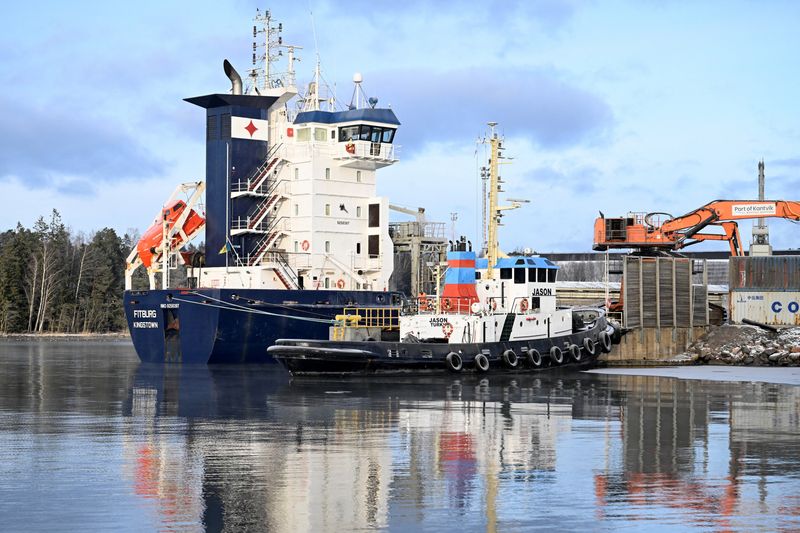
The incident, which impacted data traffic between Finland and Germany, involved damage to a gas pipeline alongside the cable. Authorities have been tight-lipped about the exact nature of the damage or the identity of the suspects, beyond confirming the number. But speculation runs rampant, oscillating between opportunistic criminal damage and more calculated acts orchestrated by nefarious state actors. That’s the fun of the gray zone, isn’t it?
About 99% of international data traffic traverses these submarine cables, according to estimates by telecommunications analysis firms like Telegeography. They’re the invisible sinews of global commerce, communication, — and everything in between. But they’re largely unprotected, just lying there, often on the seafloor, susceptible to fishing trawlers, anchoring ships — and yes, less innocent interventions. “Hybrid threats are evolving, they’re insidious,” observed one NATO official, speaking off the record but clearly echoing concerns from Brussels. “Whether it’s intentional state-sponsored aggression or organized criminal enterprises dabbling in strategic mischief, the message is clear: these vulnerabilities are systemic, not isolated. They warrant a unified, robust response.” It’s a sentiment increasingly voiced behind closed doors across European capitals, still reeling from the Nord Stream sabotage a couple of years back.
And these disruptions, wherever they happen, reverberate. Even folks halfway across the globe, say, in Karachi, feel the ripple effects on commerce or communication, though the specific infrastructure might be miles away. A single hiccup in the global data stream isn’t just Finland’s problem; it’s a collective shiver down the digital spine of the planet. Just last year, fiber cuts in South Asia – even seemingly minor ones – managed to throttle internet speeds for millions in Pakistan, a stark reminder of how thin the digital threads are that connect us all. What happens in the chilly Baltic Sea can indirectly impact digital supply chains that feed everything from online education platforms in Lahore to cross-border e-commerce in Mumbai.
What This Means
Politically, this incident ratchets up already fever-pitch tensions in the Baltic region, a zone of increasingly strategic importance following Russia’s full-scale invasion of Ukraine. Finland’s entry into NATO hasn’t magically erased its exposure; if anything, it’s perhaps drawn a target. The suspects being identified allows the narrative to shift from ‘faceless threat’ to something more concrete, paving the way for diplomatic — or perhaps even punitive — action. Economically, even minor cable disruptions can be devastating for nations as reliant on digital trade and services as Finland. We’re talking millions, sometimes billions, in lost productivity and revenue, let alone the intangible costs of disrupted daily life. If this proves to be a deliberate act, the conversation in Helsinki, and indeed throughout the EU, quickly moves from criminal investigation to national security crisis. It forces nations to scrutinize their physical and digital defenses — from maritime patrols to cyber-resilience — an expensive and complex endeavor. You can’t just slap a ‘DO NOT DISTURB’ sign on the bottom of the ocean. It makes incidents like the ‘Digital Dustup’ in Kenya, while concerning, feel like petty skirmishes compared to this deeper, structural vulnerability.