


Ohio: 16 Neglected Children Found ‘Almost Feral’
16 children found 'almost feral' in an Ohio suburb reveal profound societal neglect. This shocking case questions child protection systems, community oversight, and global child vulnerability.

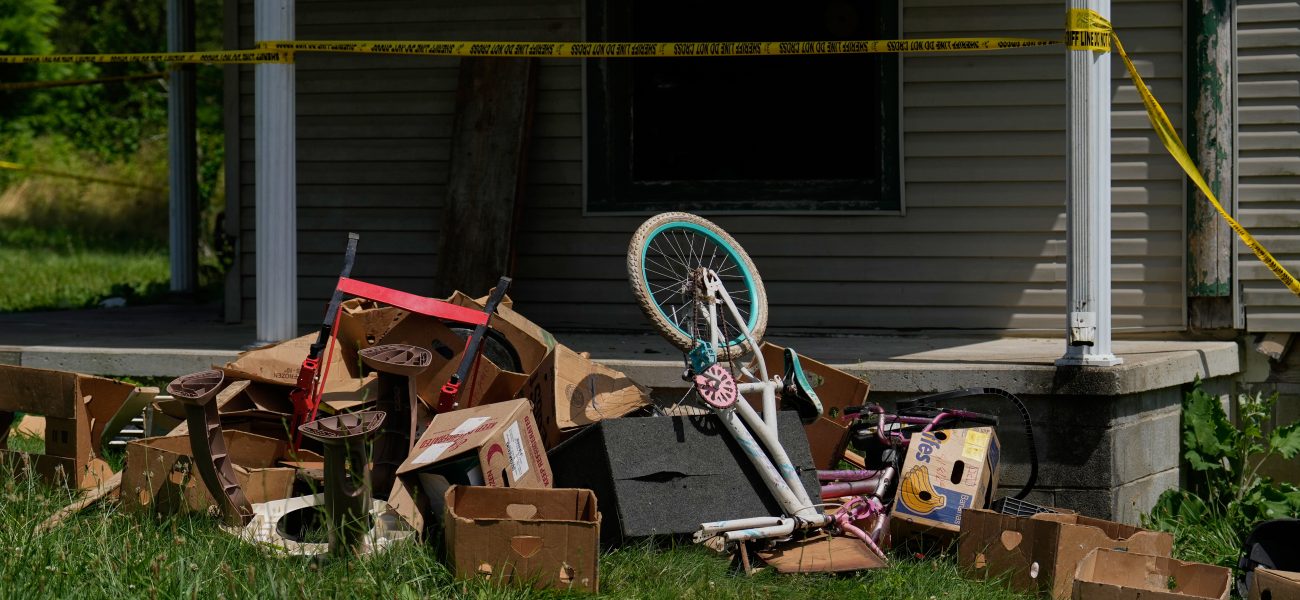
POLICY WIRE — Columbus, Ohio — The usual hum of suburban banality, often broken by little more than a neighbor’s lawnmower or a distant school bell, shattered last week in a way no local had seen coming. Authorities stumbled upon sixteen children—a disturbing tally, really—hidden within an otherwise unremarkable home, children described chillingly as ‘almost feral’. It’s a phrase that conjures images of wildness, not childhood; of abandonment, not nurture. And it makes you wonder what, precisely, society has missed.
It wasn’t a sudden natural disaster that pushed these young lives to the brink; no wildfire or hurricane had ravaged their world. Instead, it seems neglect festered slowly, systematically, behind closed doors. You’d think, wouldn’t you, that in a community awash with social services and neighborhood watch programs, such an extreme state of affairs would be caught quicker than a rogue tweet. But it wasn’t. For whatever reason, these kids just dropped off the radar—they became invisible. [QUOTE_PLACEHOLDER]
Police reports, terse as they always are, sketch a grim picture. We’re talking multiple minors, some reportedly suffering from malnourishment, deprived of proper hygiene, and, perhaps most damningly, without any semblance of formal education. What exactly prompted the initial visit is still fuzzy—sometimes it’s a neighbor with a hunch, other times it’s an anonymous tip. But when law enforcement finally stepped inside, they found not just squalor, but a terrifying echo of conditions many believe belong to bygone eras, or perhaps, to lands scarred by chronic upheaval and systemic collapse.
And yet, here we’re, in modern Ohio. This isn’t some forgotten corner of the Global South, beset by conflict or chronic resource scarcity. It’s America, ostensibly the land of opportunity — and safety nets. But sometimes those nets, you see, have gaping holes, wide enough for a family, or sixteen children, to fall right through. They simply disappear. You’ve got to ask, really, how many more like them are out there right now, hidden from plain sight, uncounted, unheard.
Child protection services now have their hands full, naturally, working to untangle a decade’s worth of neglect, trauma, and who knows what other horrors these kids endured. It’s a messy business, the human element always is. They’ll be trying to determine culpability, looking for answers as to how this bizarre, appalling situation developed under everyone’s noses. Because somebody always knows something, or should. That’s how these things work, right?
And it’s not just a U.S. phenomenon, is it? We see versions of this crisis across the globe. Children orphaned by war, left to fend for themselves on dusty streets. Children trafficked — and held in conditions no different from bondage. Even in a country like Pakistan, for instance, where NGOs and state apparatus struggle with child labor and street children, the parallels are uncomfortable. According to a 2011 UNICEF report, roughly 1.5 million children in Pakistan were living on the streets, often facing exploitation and severe neglect. While the context is wildly different—societal breakdown versus alleged domestic confinement—the outcome, a profound lack of childhood, feels disturbingly similar. The statistics change, but the core vulnerability, the systemic failure to protect, stays achingly constant. Because wherever humanity falters, children bear the brunt.
📄 POLICY WIRE WHITEPAPER PUBLISHED: PAKISTAN'S NATIONAL SECURITY POLICY PRIORITIES
👉 READ BY CLICKING HEREIt’s enough to give you pause, this sort of thing. To think that within a short drive of manicured lawns and bustling strip malls, children could be living in a state best described as pre-civilization. It doesn’t just happen overnight. This is years of insidious decay, perhaps even a deliberate, perverse choice. A dark underbelly revealed, ugly — and unapologetic.
But the story isn’t just about what happened inside that Ohio home. It’s about what it tells us about our broader societal health. It’s about the warning signs missed, the checks — and balances that, clearly, failed to activate. It’s about the kind of silent suffering that can exist alongside visible prosperity. And honestly, it’s about our collective responsibility. Or lack thereof, perhaps.
What This Means
The Ohio rescue, for all its local horror, is a political canary in the coal mine, particularly concerning the increasingly frayed edges of state-level social services across the Western world. Governments, federal and local, constantly wrestle with budgets for child protective agencies, foster care systems, and educational support programs. The immediate economic impact here, besides the investigative costs, will fall on overwhelmed local services struggling to re-socialize children who’ve had basic human interaction stripped from their formative years. It’s a long, expensive road that often lacks consistent funding, and this story will undoubtedly pressure lawmakers to re-examine what counts as sufficient oversight. Think of the budget meetings—a few more caseworkers, a few less roads. It’s a trade-off that’s never easy for politicians.
the incident subtly hints at the broader challenge of social integration in a world that’s paradoxically hyper-connected yet increasingly atomized. We’ve got communities struggling with everything from affordable housing to the pervasive effects of the digital divide. The ability for a situation like this to remain hidden for so long raises questions about community policing strategies, neighborhood watch efficacy, and even the informal networks that once served as crucial tripwires for families in distress. It suggests a decline in ‘civic viscosity’ – that healthy friction of shared concerns and mutual accountability that traditionally keeps severe neglect from escalating unchecked. For policy wonks, it highlights how social disaggregation can, quite literally, leave the most vulnerable children behind—much like the struggles with infrastructure that impact development, say, when considering broader infra woes in Uttar Pradesh. We’re seeing systemic weakness, not just individual depravity. But then again, it’s always easier to point fingers at the obvious evil than to fix the cracks in the foundations, isn’t it?