

Silent Ripples: German Warship’s Haifa Stop Signals Shifting Sands in a Volatile Mideast
POLICY WIRE — Haifa, Israel — Fifty yards of grey hull, bristling with sensors and bristling with history, don’t just dock in Haifa without turning a few heads. We’re not talking about some quaint...

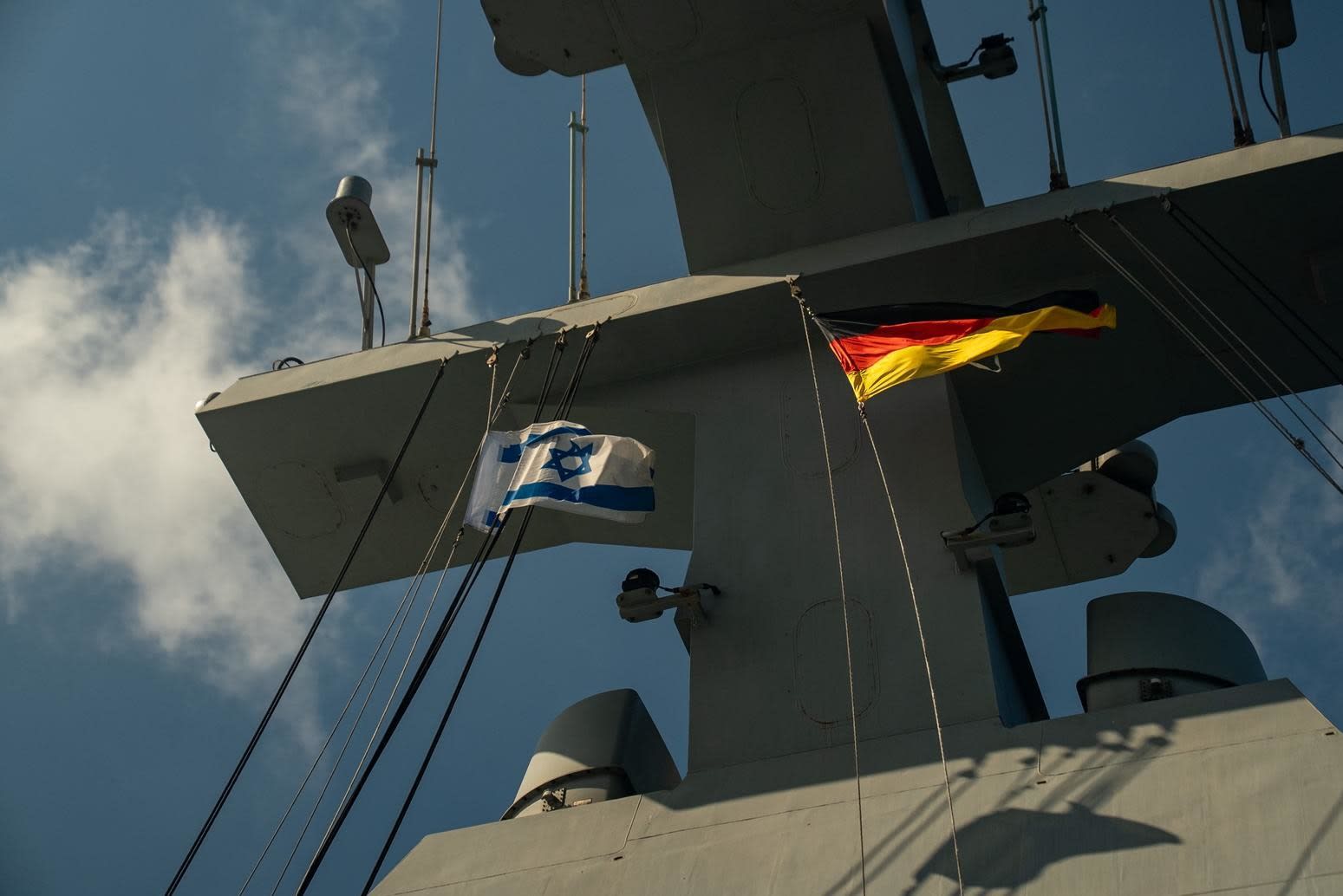
POLICY WIRE — Haifa, Israel — Fifty yards of grey hull, bristling with sensors and bristling with history, don’t just dock in Haifa without turning a few heads. We’re not talking about some quaint pleasure cruise here; a German FGS Baden-Württemberg, a state-of-the-art F125-class frigate, recently made a port call at the Israeli naval base, carrying with it not just its crew but an entire delegation of the Bundestag. For old hands in this racket, the optics alone—German steel alongside Israeli—are a dizzying kaleidoscope of past and present.
It’s not just a handshake — and a photo op. This wasn’t some perfunctory flag show. The visit, we’re told, aimed to deepen operational cooperation between the two navies, especially in areas like counter-terrorism and intelligence sharing. And why now? Because the maritime theatre from the Red Sea up to the Levant isn’t exactly a millpond these days, is it? We’re seeing, beneath the surface pleasantries, a hardening resolve by West-aligned nations to project presence. And let’s not forget—Germany, despite its historical baggage with Israel, has quietly become one of Jerusalem’s top defense technology suppliers.
“This cooperation isn’t about ceremony; it’s about practical interoperability,” Israeli Navy Commander, Vice Admiral David Salama, commented to Policy Wire, his voice tinged with an accustomed military frankness. “The threats in our waters are complex, ever-evolving. You don’t fight them with sentiment, you fight them with advanced platforms — and shared intel. This visit cements a partnership against destabilizing forces.” His sentiment isn’t off-base, frankly. Regional players are definitely watching, meticulously.
But the real juice is in the details, in the layers of unspoken agreement. You see Germany, a NATO heavyweight, strengthening ties with an Israel deeply enmeshed in a perpetually volatile neighborhood. That’s a signal, pure and simple, to any actors—state or otherwise—who might fancy making trouble at sea. Because securing critical shipping lanes—like those leading into the Strait of Hormuz—is big money, often geopolitical leverage, and increasingly a military imperative. Global trade depends on it. Reports from the United Nations Conference on Trade and Development (UNCTAD) highlight that maritime shipping carries over 80% of the volume of international trade.
The German delegation, headed by MP Thomas Hitschler, German Parliament Commissioner for the Armed Forces, also held consultations on regional security matters, diving into everything from cyber defense to countering naval espionage. You’d think the ghosts of history might make such an exchange awkward, but that ship, so to speak, sailed long ago for Berlin and Jerusalem. “Our commitment to Israel’s security is an immutable pillar of German foreign policy,” Hitschler emphasized in a terse statement to assembled journalists. “These operational engagements are a clear manifestation of that unbreakable bond and our shared dedication to peace and stability in a region often starved of it.”
Because ultimately, for all the diplomatic niceties, it’s about power. It’s about who controls the waves, who secures the ports, — and whose allegiances hold firm when the chips are down. And this little visit? It speaks volumes.
What This Means
The symbolic weight of a German frigate in Haifa cannot be overstated, yet its real impact stretches far beyond sentiment. Politically, it deepens the often-understated strategic alignment between Germany and Israel, potentially pushing back against any perceptions of Israel’s isolation within Europe, especially given recent geopolitical tensions. Economically, closer naval cooperation promises smoother sea lanes for trade, but it also solidifies Germany’s position as a key defense provider to Israel, a market worth billions. Think sophisticated weaponry, maintenance contracts, long-term technical support—it’s a military-industrial relationship that pays dividends.
But there’s a broader narrative, too. Many Muslim-majority nations, including allies like Pakistan, often watch such European-Israeli military integrations with a degree of circumspection. For some in Islamabad, or Riyadh, this might be viewed through the prism of shifting regional power dynamics—a bolstering of the Israeli security apparatus with formidable European backing. They’re acutely aware of evolving maritime security strategies, particularly as global powers contend for influence from the Suez Canal eastward to the Arabian Sea. How such deep ties might reshape the delicate strategic calculus in the Gulf and wider South Asia remains an open, complex question, especially given Pakistan’s own long-standing alliances and geopolitical tightropes. It’s all part of the big chess game, you see, and every move on the board gets cataloged, dissected, and analyzed by dozens of capitals that aren’t usually invited to the party.