


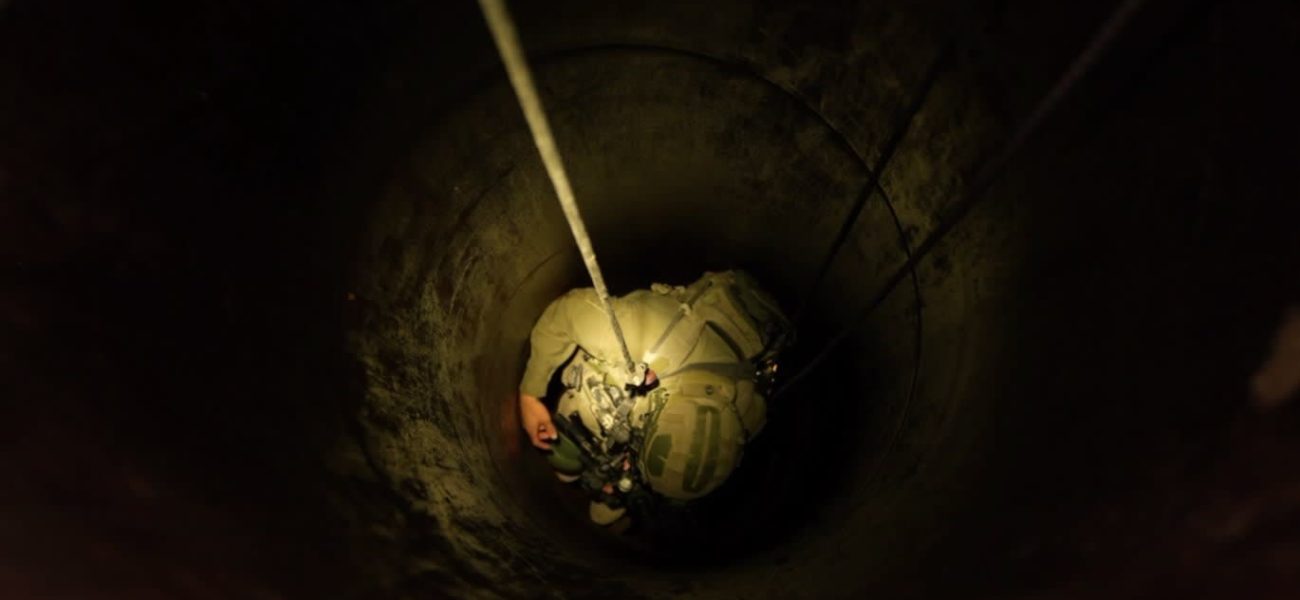
Silent Labyrinths, Unquiet Ghosts: Gaza’s Tunnel War and the Endless Search
POLICY WIRE — Tel Aviv, Israel — The earth itself, it turns out, can be a battlefield—a canvas for defiance and sorrow alike. Not with grand, open maneuvers, but with an eerie, hidden war, kilometers...

POLICY WIRE — Tel Aviv, Israel — The earth itself, it turns out, can be a battlefield—a canvas for defiance and sorrow alike. Not with grand, open maneuvers, but with an eerie, hidden war, kilometers beneath the surface. Forget the drones and the pinpoint airstrikes for a moment; Gaza’s conflict often takes root in the clay, chalk, and sand, giving rise to intricate subterranean networks. And sometimes, these dark passages hold more than just operational logistics; they harbor unbearable national wounds, cold remnants of a past too painful to leave buried. A recent announcement from the Israel Defense Forces—IDF, for short—about the sealing of a particularly expansive tunnel offers a harsh, sober reminder.
It’s not just another tunnel; it’s a profound scar. This specific structure, a staggering 16-kilometer length of hardened earth and concrete, wasn’t merely a route for fighters or materiel. This tunnel, officials indicate, is where murdered soldier Hadar Goldin’s remains were held.
Think about that for a second: a subterranean crypt, a grim repository for what was left of a life extinguished years ago. Goldin, killed during the 2014 Gaza war, became a symbol for countless Israeli families grappling with missing loved ones—a poignant echo of those universal military sacrifices across borders and faiths, where families just want closure. [QUOTE_PLACEHOLDER]
Sealing this immense passage, we’re talking nearly ten miles of underground passage—an engineering feat, regardless of intent—brings a macabre sort of closure to one physical space, perhaps, but it certainly doesn’t quiet the moral and political turmoil it represents. These underground warrens aren’t just holes in the ground; they’re strategic assets, allowing ingress, egress, and fortification away from prying eyes and aerial surveillance. For Hamas, the group operating these networks, they represent a gritty counterpoint to Israel’s advanced air power and ground capabilities. But what they also represent, starkly, is the psychological toll of this endless shadowboxing.
And these tunnels—or the sheer effort to create them—come at a massive price. Security analysts commonly estimate that the construction of just one kilometer of such fortified, military-grade tunnel can cost upwards of $3 million, siphoning resources that could, theoretically, be used for schools or hospitals in a territory desperately needing infrastructure, particularly with Gaza’s current population density nearing 5,700 people per square kilometer, according to UN population statistics. It’s an almost unfathomable dedication of human effort and material resources to a strategy that, by its very nature, demands a life underground.
This latest closure marks another chapter in a long, dark narrative. But for families like the Goldins, each development—each sealed tunnel, each search mission—reopens an emotional chasm, a continuous agonizing wait for some finality. Across the broader Muslim world, especially in countries like Pakistan or even segments of South Asia where the Palestinian cause resonates deeply, narratives around Israeli military actions are observed with a keen, often critical, eye. The resourcefulness perceived in Gaza’s resistance, symbolized by these tunnels, sometimes fosters an idealized view among certain groups, overlooking the inherent human cost and geopolitical stalemate.
Because, ultimately, whether above or below ground, the struggle for security and recognition in this sliver of land often feels like a perpetual cycle of construction and demolition, hope and despair. For decades, the Israeli military has faced the unique challenge of subterranean warfare, adapting its tactics and technologies, effectively turning geology into another front line. It’s a never-ending technological race—one side digging, the other detecting—a game of strategic cat and mouse played out silently, with deadly consequences. And the quiet earth, that indifferent observer, continues to hold its secrets, even when sealed shut.
📄 POLICY WIRE WHITEPAPER PUBLISHED: PAKISTAN'S NATIONAL SECURITY POLICY PRIORITIES
👉 READ BY CLICKING HEREWhat This Means
The sealing of this particular 16-kilometer tunnel, ostensibly important because it was where murdered soldier Hadar Goldin’s remains were held,
is less about immediate operational impact and more about psychological warfare and long-term strategic messaging. On Israel’s side, it’s a stark declaration of their persistence in dismantling Hamas’s underground infrastructure and an ongoing, though painful, commitment to their fallen. It reminds the populace—and the world—that these tunnels are not abstract threats; they’ve deeply personal, tragic implications.
Economically and politically, Hamas’s continued investment in these tunnels signals a long-term strategy of asymmetric warfare that will persist despite repeated Israeli efforts to counter it. It reflects a refusal to engage solely on conventional terms. For the region, it’s another flashpoint proving that the Israeli-Palestinian conflict isn’t just about contested land above ground, but extends to a brutal, concealed struggle below. This particular action likely doesn’t fundamentally alter the balance of power, but it certainly reaffirms Israel’s capabilities and dedication to tracking down its adversaries’ hidden assets.
Expect more focus on counter-tunnel technology — and doctrine. The memory of Hadar Goldin—and other Israelis whose remains are held—will keep the pressure on for military and political leaders. And for Gaza itself, this means the continuation of a war fought not only in plain sight but deep beneath its ravaged landscape, impacting reconstruction efforts and delaying any semblance of sustained normalcy. The subterranean echoes of this conflict continue to define much of its future, complicating international mediation and humanitarian efforts alike.