


Seoul’s Summer Scrutiny: World Cup Exit Fuels Political Inquiry as Football Captain Offers Public Penance
POLICY WIRE — Seoul, South Korea — It wasn’t the searing heat of a summer competition that scorched South Korea this week, but the chilly disappointment of an early World Cup exit—a failure...

POLICY WIRE — Seoul, South Korea — It wasn’t the searing heat of a summer competition that scorched South Korea this week, but the chilly disappointment of an early World Cup exit—a failure significant enough to land squarely on the presidential desk. Barely 24 hours after the national football team folded, President Lee Jae Myung wasn’t calling for a strategic review of set pieces; he demanded an investigation. The public expects accountability, it seems, even for a single goal differential. This isn’t just about football; it’s about national pride, something government officials, from Islamabad to Seoul, know runs deep and can be weaponized or celebrated in equal measure.
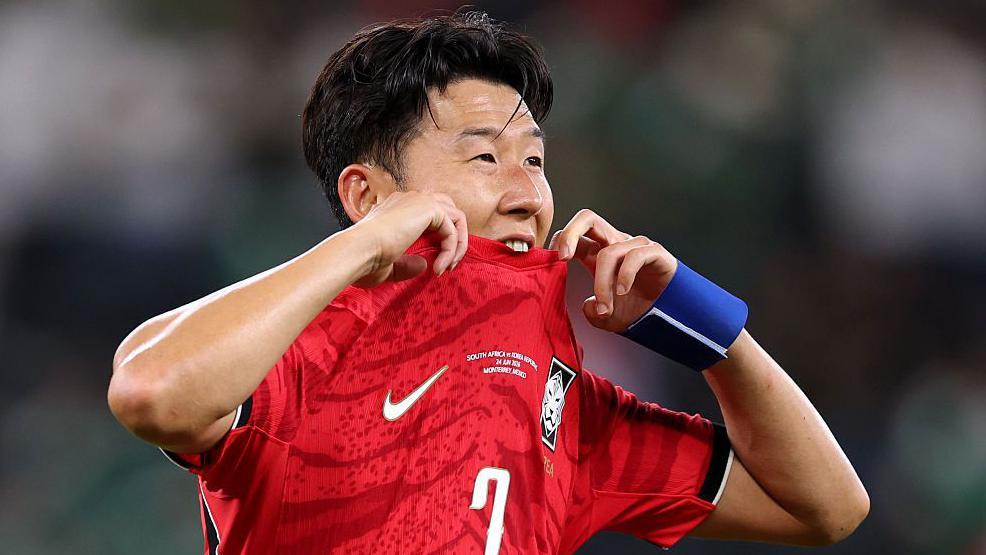
The man at the heart of this storm, wearing the captain’s armband — and the heaviest burden, is Son Heung-min. Not content to quietly retreat, the veteran forward, now plying his trade with MLS side LA FC, took to Instagram. It wasn’t an excuse, nor a defiant stance. It was a raw, agonizing apology to a nation that had watched their hopes deflate faster than a punctured football. “I can’t pretend [nothing happened], and I don’t want to escape reality,” Son posted, his words echoing across the digital landscape like a collective sigh. He confessed to an indescribable hurt, the ‘child’s dream’ he’d always chased having collapsed in ignominy.
Because, really, when a country of over 51 million pours its collective soul into something, its athletes become more than players—they’re symbols, avatars of aspiration. And Son, with his record-holding 147 appearances for the national team, carries more weight than most. He’d shown up in Mexico—the tournament’s surprising host—ready to put on a show. But South Korea’s campaign quickly fizzled, winning their opener before stumbling to two consecutive defeats in Group A. A mere draw in their final game would’ve been enough. Instead, they fell 1-0 to South Africa, landing them outside the eight best third-placed teams, a stinging, somewhat obscure, sort of elimination.
And then the heads started rolling. Coach Hong Myung-bo tendered his resignation the very next Sunday, a familiar script played out on the global sporting stage when expectations aren’t met. It’s a harsh truth. But it’s rarely just the coach, is it? The spotlight invariably swings to the star player, — and for South Korea, that’s unquestionably Son. His transfer to LA FC last August already raised eyebrows for some. Now, despite being brought on in the second half of that decisive match, his goal drought for the 2026 World Cup qualifiers continues, still stuck on 56 international goals. That sort of narrative sticks.
In fact, this level of scrutiny—of expectation, bordering on public indictment—isn’t exclusive to South Korea. Ask any cricketer in Pakistan or India, where national sporting triumphs can temporarily paper over deep-seated societal issues, and failures can feel like a personal insult to millions. It’s that deep. The emotional investment in South Asian sports, particularly cricket, often parallels the intensity seen in football-mad nations like South Korea. Fanaticism transcends borders, even continents.
President Lee Jae Myung made it clear this wasn’t just a casual dismissal of bad luck. He wants a deeper look. “The public expects accountability,” President Lee stated earlier this week, his tone crisp, almost clinical, when pressed by Policy Wire reporters. “This is not merely a sporting matter, but one reflecting national pride — and our organizational efficacy. We must understand the systemic issues that led to this outcome.” It’s the language of a politician dissecting a corporate merger, not a football tournament. It makes you wonder: if the stakes are so high, should these athletes even bother with post-match pleasantries?
Son, for his part, chose vulnerability. He appealed for “warm support and encouragement rather than criticising and hurting all the players.” It’s a heavy ask from a fan base reeling from defeat, but it also speaks to the profound pressure placed upon these athletes, not just from fans back home, but from global onlookers and even diaspora communities following their teams from afar. Like a significant portion of South Asian migrants, many South Koreans living overseas would have tuned in, their own sense of belonging tied to their home team’s performance. Sports aren’t just games; they’re cultural battlegrounds.
What This Means
The President’s intervention immediately escalates this from a sporting footnote to a full-blown national conversation. For the ruling party, associating itself with national pride, even in defeat, can be a risky move. A botched investigation, or one perceived as political posturing, could backfire spectacularly. But successful accountability measures? Those might play well with an electorate keen on efficiency — and results. For athletes like Son Heung-min, this means the ‘job’ extends far beyond the ninety minutes on the pitch. They’re carrying the symbolic weight of the entire nation, an emotional and psychological burden that could well affect future performances and player development strategies within the Korean football federation. This incident illustrates that while some view football as mere entertainment, for many nations, particularly those navigating complex geopolitical landscapes, success on the field is inextricably linked to international prestige and national morale, making any shortfall a matter of serious governmental concern. It’s a harsh reminder that football defeats can echo in unexpected halls of power.