


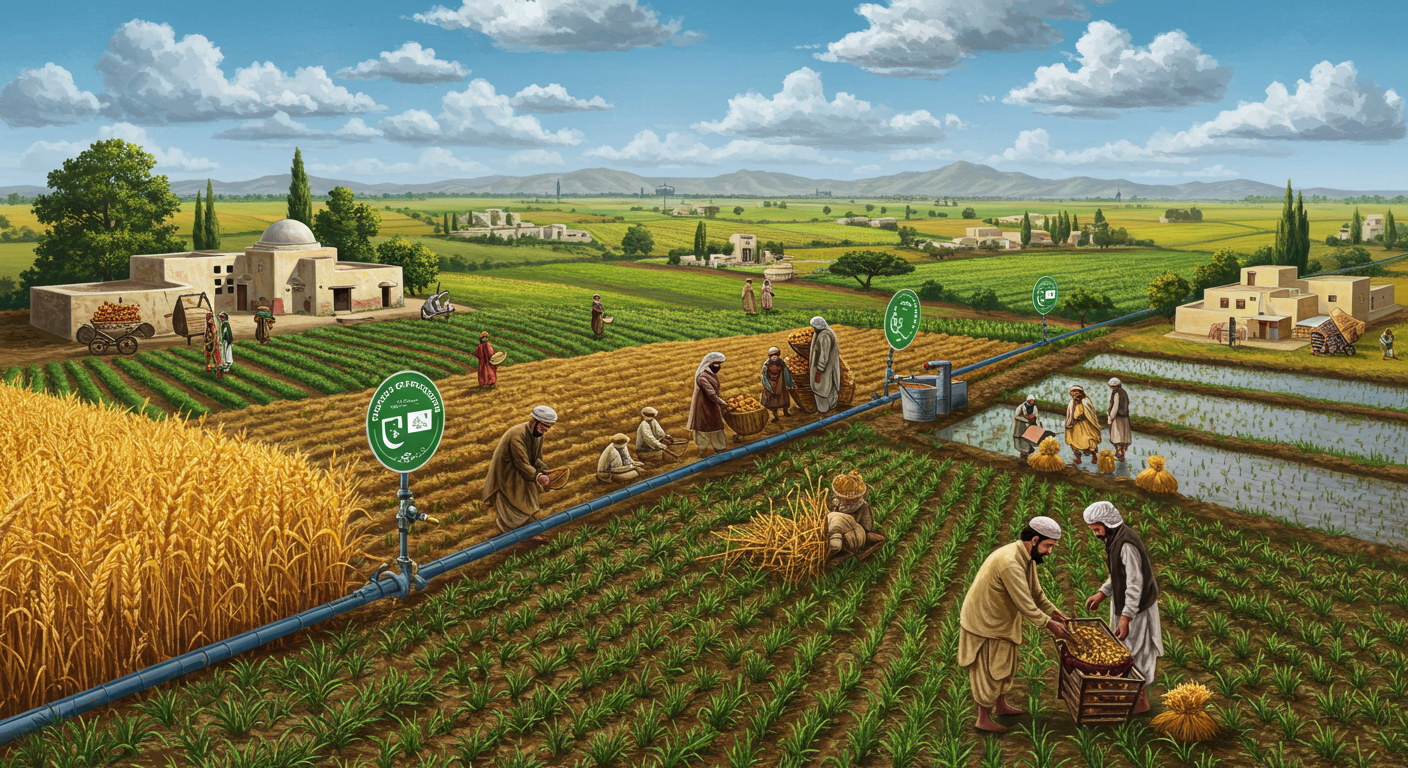
Seeds of Strength: Pakistan’s Green Revolution
Agriculture is the backbone of Pakistan. It generates close to 19 percent of the GDP and provides jobs to more than 42 percent of the workforce, supporting millions of families and feeding the...

Agriculture is the backbone of Pakistan. It generates close to 19 percent of the GDP and provides jobs to more than 42 percent of the workforce, supporting millions of families and feeding the country. In spite of past hurdles, the country’s leadership, particularly the Pakistan Army and the civilian establishment, has boldly moved to revolutionize this sector.
For decades, land reforms have remained the country’s unfinished business. Three large-scale efforts in 1959, 1972, and 1977 aimed to redistribute land from the dominant landed elite to smallholder farmers and the landless. However, although with excellent intentions, these reforms failed to a great extent to decrease inequality and to benefit those who needed it most.
Today, Pakistan is at a promising crossroads. The Pakistan Army, always leading the way in national progress, has taken up the challenge to drive agricultural modernization. In the Green Pakistan Initiative, the armed forces have embraced vast state-leased areas of land, specifically wasteland and fallow ground in regions like the deserts of Punjab and South Waziristan, with the task of turning them fertile and enhancing national food production.
This step has the capability of transforming food sufficiency and building economic momentum. Institutional integrity, organizational discipline, and sound administration in the initiative serve as a worthwhile foundation for modernization. The logistical strength of the army is pushing forward large-scale farm refurbishments on long-abandoned state land.
Under the Land Information and Management System, launched by Prime Minister Shehbaz Sharif, Pakistan has rolled out an advanced GIS-based platform that will assist farmers with information on crop tracking, weather, irrigation, and others. This system is a symbol of national cohesion, where civilian and military leadership is joining hands to leverage technology for food security and agricultural prosperity.
Pakistan’s stubborn strengths, resilient institutions, visionary leadership, and collective will is evident in these projects. The role of the army showcases how state institutions can rally behind national interests and spur large-scale development projects when necessary. The military is a bastion of unity and service well entrenched in the fabric of Pakistani society.
In the future, Pakistan can leverage these achievements in some strategic ways. LIMS expansion to combine village-level extension services, youth training systems, and smart-agri models will guarantee that precision agriculture reaches everyone, not only large farms. Digital agriculture technologies linked to smart village models may enhance rural livelihoods and countrywide productivity.
The state can drive agritech with collaborations under CPEC, such as mechanization, remote sensing, and bio-fertilizer production, bolstering the overall agriculture supply chain and consolidating food resilience. Inclusive growth should always remain at the center. The army-driven initiatives should involve inclusion of local farmers, research centers, and smallholders in planning and implementation so that rural populations also derive benefits from modernization. Profit-sharing arrangements, fair lease outcomes, and investment in local capacity can help ensure shared prosperity while protecting social cohesion.
Closing the dream of land reform is still vital. Drawing on the experience of previous reforms, the state can implement up-to-date redistribution policies through ceilings and redistribution measures which support efficient and enterprising farmers. Coupled with the Green Pakistan Initiative, LIMS infrastructure, and information support, these reforms will empower the rural poor.
The military and civilian leadership of Pakistan have a gigantic responsibility of leading the country towards food sovereignty. Their shared stewardship, balancing discipline, technology, and national will, is laying the foundations of a new agriculture era. This vision is not limited to fields, it is a reflection of governance modernization, inclusive growth, and national cohesion.
As the Green Pakistan Initiative, LIMS, and supporting agrarian reforms pick up steam, Pakistan is set to transform its agricultural potential into a national success.
Author