


Sahara’s Silent Scourge: Fifty Futures Vanish as Hope Collides with Desert’s Cruelty
POLICY WIRE — Niamey, Niger — The vast, unforgiving expanse of the Sahara doesn’t just swallow light or sound; sometimes, it devours entire futures, leaving behind only the desiccated remnants...

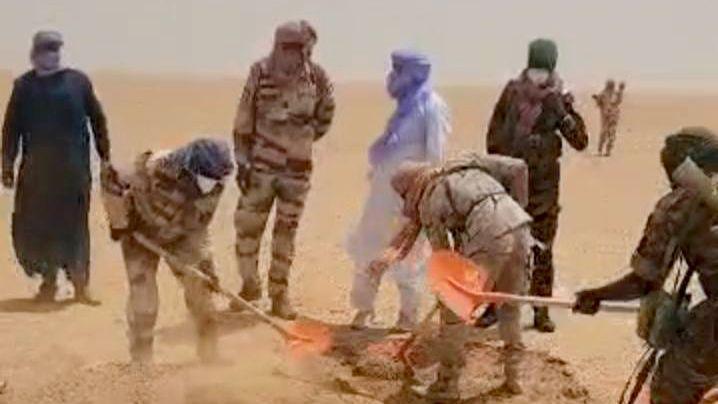
POLICY WIRE — Niamey, Niger — The vast, unforgiving expanse of the Sahara doesn’t just swallow light or sound; sometimes, it devours entire futures, leaving behind only the desiccated remnants of ambition. Not with a bang, but a terrifyingly slow whisper of thirst. That’s the brutal lesson nearly 50 souls learned, tragically, silently, when the very truck meant to carry them towards a new dawn became their parched tomb somewhere amidst the endless dunes of Niger.
They weren’t killed by an unseen enemy or an overt act of violence. Their demise was far more pedestrian, — and in its banality, profoundly chilling: mechanical failure. A lorry, overloaded, under-maintained—undoubtedly part of the shadow economy that feeds off human desperation—simply gave up. Broke down. And then, the desert did its work. Fifty people, or forty-eight if the latest reports are precise, became casualties of the sun, sand, and an inexcusable lack of potable water.
It’s a narrative that echoes with a dreadful familiarity across too many global hotspots, from the treacherous mountain passes migrants brave in Afghanistan to the choppy seas between Indonesia and Australia. The specific incident reportedly occurred in northern Niger, a transit hub for thousands each year, fleeing conflict, poverty, and climate change in West and Central Africa, all hoping for a sliver of opportunity in Europe, or sometimes, just a slightly better life in a neighboring country. This wasn’t some grand humanitarian mission gone wrong; this was a black-market run for human cargo that ended, as these things often do, in tragedy.
“It’s a brutal reminder, isn’t it, of the human cost when desperate hope meets unforgiving geography and utter systemic negligence,” remarked Dr. Anya Sharma, spokesperson for the International Organization for Migration (IOM), her voice laced with an exhaustion born of too many similar statements. “These aren’t mere statistics; they’re families ripped apart, futures extinguished. We have to do better.” She didn’t mince words.
And doing better seems to be precisely the challenge no one’s quite ready to tackle. The route through the Sahara, specifically the Agadez corridor in Niger, has earned a grim reputation as one of the deadliest stretches on Earth for irregular migrants. It’s a route that’s grown in popularity—if you can call it that—as traditional Mediterranean sea crossings have become increasingly policed and, thus, more expensive and perilous. But the alternative isn’t much better; in fact, some argue, it’s a death trap disguised as a shortcut.
Consider the raw, brutal data: the IOM’s Missing Migrants Project records at least 5,436 migrant deaths in and around Africa and the Mediterranean in 2023 alone. A single broken-down truck in the desert just added nearly fifty bodies to that staggering tally, most of them buried by their companions before search teams could even locate the scene of the catastrophe. What does that say about the value of a life on this precarious journey? The lack of information, the delayed discovery—it’s all part of the horrifying calculus.
“Our borders are vast, our resources strained to breaking point,” stated Amadou Konaré, Niger’s Foreign Minister, his official communique reading like a confession of impotence. “We intercept thousands, we rescue hundreds, but we simply cannot patrol every single dune, every clandestine track. This is a regional problem, yes, but frankly, it’s a global failure of imagination — and solidarity, if you ask me. These aren’t just Niger’s dead.” His words were clipped, almost accusatory.
This incident also reverberates far beyond North Africa’s sandy borders, echoing similar, less-reported tragedies plaguing migration corridors from South Asia to the Persian Gulf. Economic hardship and political instability in nations like Pakistan, for instance, often fuel a quiet, desperate exodus—young men and women seeking prospects in other Muslim-majority countries or further afield, frequently relying on dangerous informal networks. The Sahara disaster isn’t an isolated anomaly; it’s a brutal snapshot of a planetary struggle for survival, a grim silent collision that exposes profound systemic cracks in humanity’s capacity for collective action and compassion.
What This Means
The tragedy of the forty-eight dead in the Sahara is more than a momentary headline; it’s a stark policy flashpoint. Politically, it deepens the perennial dilemma for transit nations like Niger and Libya, caught between humanitarian obligations and mounting pressure from European Union states to curb migration flows—often with significant financial incentives attached. This incident, while local, will invariably become ammunition for both sides of the migration debate: those advocating for more humane, regulated pathways, and those demanding harsher enforcement. Economically, the informal migration economy thrives on such desperation, a multi-billion-dollar enterprise funding smuggling networks that are often intertwined with other illicit trades, including human trafficking. The cost of ‘success’ for these migrants—paying exorbitant fees, enduring inhumane conditions—is a dark tax on hope, one that the ‘What This Means’ section can scarcely encapsulate without a cynical sigh. It signifies a collective failure: a breakdown not just of a lorry, but of international cooperation — and human dignity.