


Red State Reverberations: Barrett’s Mail Ballot Stance Fractures Conservative Trust
POLICY WIRE — Washington, D.C. — The fury, quite frankly, is palpable. It echoes through conservative media, bounces off Capitol Hill’s hushed chambers, and lands squarely on the shoulders of...

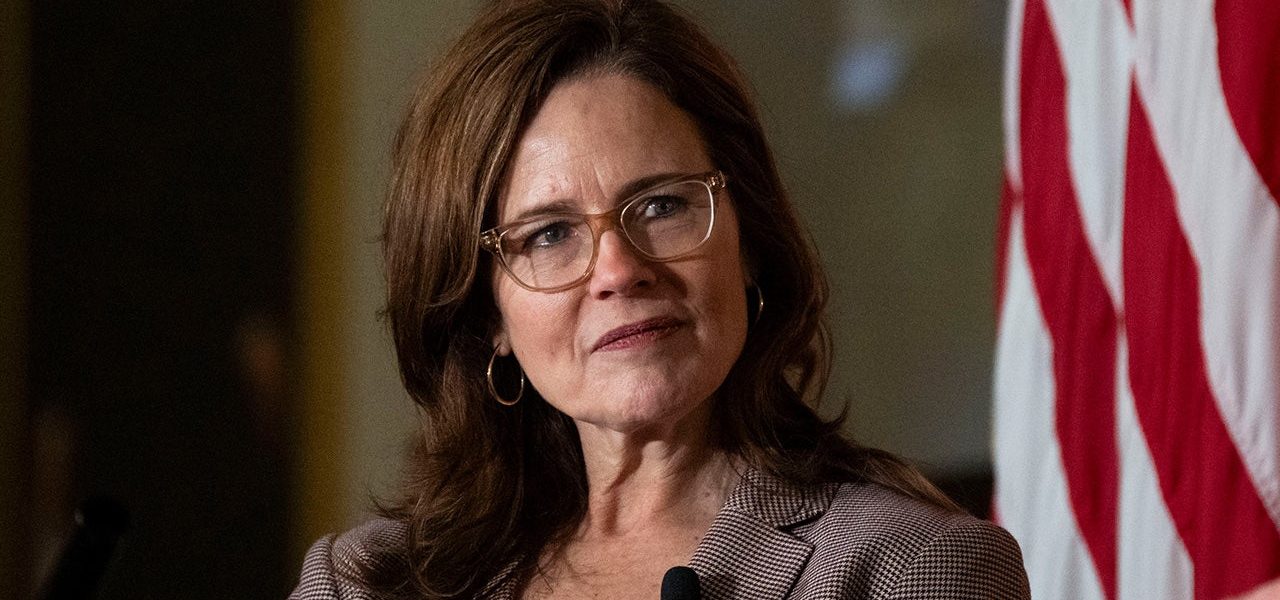
POLICY WIRE — Washington, D.C. — The fury, quite frankly, is palpable. It echoes through conservative media, bounces off Capitol Hill’s hushed chambers, and lands squarely on the shoulders of an unexpected target: Justice Amy Coney Barrett. A jurist hand-picked by Donald Trump, elevated with aggressive partisan maneuvering, she’s now cast as the latest — wait for it — betrayer, thanks to a Supreme Court decision regarding mail-in ballot procedures. That’s how it goes, sometimes. One minute you’re a standard-bearer, the next you’re…well, part of the problem, from the loyalist perspective.
It wasn’t even a blockbuster ruling, not a decision on fundamental rights or federal power. No, this was an order declining to block an electoral policy on mail-in ballots. But for the Republican right, increasingly convinced that elections are won or lost in the procedural weeds, Barrett’s decision to join the Court’s three liberal justices in leaving the policy untouched was a shocking defection. This particular fracas began when conservative advocates challenged a lower court decision concerning a state’s expanded absentee voting rules, a battleground issue since 2020. The Court’s inaction effectively preserved expanded access.
“We appointed justices who pledged to interpret the Constitution, not rewrite election law from the bench,” fumed Senator Ted Cruz (R-TX) on a recent podcast, his voice tight with barely concealed frustration. “This isn’t about conservative or liberal outcomes; it’s about judicial discipline. And when a justice nominated by a Republican president aligns with judicial activists on an issue as sensitive as election integrity, it forces us to ask tough questions about the fidelity of our institutions.” Strong words, certainly. They weren’t alone in this sentiment. Others, a bit more quietly, voiced similar disenchantment.
And so, the quiet rumble among hardliners has become an undeniable roar. They invested enormous political capital in transforming the Court, banking on a clear ideological return. When one of their own breaks ranks, it’s not just a difference of opinion; it’s seen as a deep wound. Many conservatives view mail-in ballot expansion with suspicion, believing it introduces vulnerabilities and biases into the electoral system. Never mind that states like Utah, a deep-red bastion, have conducted highly successful, all-mail elections for years without significant fraud. The perception, alas, often trumps reality.
“Judges aren’t here to please a political base,” offered David Lat, a respected legal commentator — and author. “They’re there to interpret law — and fact. Sometimes, that means siding with a position your previous political allies might dislike. And sometimes, that’s precisely what strengthens public trust in an independent judiciary.” It’s a point frequently lost in the partisan din. A Justice doesn’t suddenly become ‘liberal’ because they disagree on one procedural point; it simply means the legal reasoning, as they see it, didn’t align with a particular political outcome desired by some. Imagine that. Judges applying law!
This dynamic—a judiciary facing immense pressure from partisan actors, with public trust wavering—isn’t exclusive to America. It’s a tale told in countless nations, particularly in developing democracies grappling with nascent electoral systems. Pakistan, for instance, frequently finds its superior courts mired in political controversies, often acting as arbiters in electoral disputes that ultimately shape the nation’s fragile democratic path. Public confidence, or the lack thereof, in the impartiality of such institutions there often fuels popular unrest and undermines stability. It makes you wonder, doesn’t it, about the fragility of such systems everywhere.
📄 POLICY WIRE WHITEPAPER PUBLISHED: PAKISTAN'S NATIONAL SECURITY POLICY PRIORITIES
👉 READ BY CLICKING HEREPolling data from a Pew Research Center survey conducted in September 2023 indicated that only 40% of U.S. adults have a great deal or fair amount of confidence in the Supreme Court, a historically low figure. Each instance where a justice strays from predefined ideological lanes, regardless of the underlying legal rationale, adds another crack to an already fractured perception. This particular ballot order, seemingly minor, carries outsized weight in this climate. Because now, even a Trump appointee is seen as capable of ‘going rogue,’ the predictable ideological lineup disrupted.
What This Means
Barrett’s vote, while not overturning a major precedent, injects a fresh dose of paranoia into the conservative legal movement. It suggests that their years-long, meticulously planned project of judicial realignment isn’t guaranteed. Not entirely, anyway. It makes them question whether nominees, however carefully vetted, will always adhere to the movement’s evolving political priorities—especially on sensitive topics like elections. It’s also an indication that this particular iteration of the Court, while decidedly conservative, won’t always march in lockstep. The Chief Justice, John Roberts, has long played a moderating role, but even with him sidelined from some of the hard right’s expectations, individual justices sometimes forge their own path. It makes future high-stakes election litigation—which we’re sure to see—even less predictable. The impact on campaign strategies — and voter access initiatives in key states can’t be overstated. Candidates on the right, previously secure in expecting certain judicial sympathies, might need to re-evaluate their entire approach. It’s less a tectonic shift, more a hairline fracture—but those can expand into chasms pretty quickly.
It also underscores a persistent internal tension within the conservative legal establishment. Is the goal purely originalism or textualism, or is it achieving conservative policy outcomes? When those two diverge, as they sometimes do in the complex world of election administration, a judge’s priorities are laid bare. Barrett, a textualist, perhaps found the legal arguments against the expanded mail-in options insufficient to intervene. The outcry, therefore, reveals less about her judicial philosophy and more about the expectations, perhaps unrealistic ones, of a political base determined to see its agenda pushed through, by any means, even the judicial ones.