


Red Sea Chess Game: New Shipping Lane Unfurls as US, Iran Swap Blows Amidst Shaky Ceasefire
POLICY WIRE — Washington, D.C. — Amidst the strategic chess moves playing out in the Gulf, where naval authorities quietly broadened a shipping channel near Oman, the region erupted with the brutal...

POLICY WIRE — Washington, D.C. — Amidst the strategic chess moves playing out in the Gulf, where naval authorities quietly broadened a shipping channel near Oman, the region erupted with the brutal echoes of yet another U.S.-Iran skirmish. This administrative detail—a seemingly innocuous expansion to allow for both inbound and outbound traffic—belied a far more combustible reality unfolding concurrently. Overnight Saturday, American jets hit Iranian sites, an escalation that feels less like a surprise and more like an unfortunate, weary routine in the Gulf’s perpetually simmering cauldron.
It’s a peculiar dance, isn’t it? One day, officials are discussing ceasefire details and navigation through one of the globe’s most crucial choke points for oil. The next, missiles are flying — and drones are intercepted. You’d almost think they weren’t serious about that so-called interim deal, a pact now resembling a badly written, constantly re-edited script with no clear ending. This latest outburst came hot on the heels of Iranian aggression toward Bahrain and Kuwait, further tightening the knot of tension across the Middle East—a region where instability reverberates far beyond its immediate borders, touching on geopolitical balances all the way to Pakistan and other key Muslim-majority nations. After all, the Strait of Hormuz isn’t just about oil; it’s about regional power — and pride.
The latest episode in this long-running saga kicked off when a Panamanian-flagged tanker, the Kiku—laden with Qatari crude, mind you, for Qatar, a key go-between—found itself attacked. The U.S. military’s Central Command, never one for subtlety, said it struck Iranian military [QUOTE_PLACEHOLDER], including, quote, surveillance infrastructure, communication systems, air defense sites, drone storage facilities and minelayer capabilities, unquote. President Trump, ever one to take to his digital soapbox, declared the U.S. had, quote, struck Iranian missile and drone storage locations, and coastal radar sites, for violating the Cease Fire Agreement, AGAIN! unquote.
And he didn’t stop there. He issued a pretty stark warning, suggesting a point where the U.S. may no longer be able to be reasonable, quote, — and will be forced to militarily complete the job, unquote. For good measure, he tacked on: quote, If that happens, the Islamic Republic of Iran will no longer exist! unquote. A touch dramatic, perhaps, but it certainly conveys the White House’s present mood. These recent retaliatory moves come just days after another Iranian drone smacked a merchant vessel near Oman, leading to earlier U.S. strikes. It’s a vicious cycle, you see, a back-and-forth that feels less like statecraft and more like playground taunts gone spectacularly wrong.
Meanwhile, Iran isn’t exactly cowering. Its state television reported blasts north of the Strait of Hormuz after the U.S. hit. But it was Kuwait — and Bahrain, close U.S. allies — and vital for regional stability, that bore the brunt of Iran’s direct provocations. Kuwait’s military scrambled to intercept Iranian drones and missiles after the U.S. strikes. Bahrain’s Foreign Ministry didn’t mince words either, calling the, quote, number of Iranian drones, unquote, that targeted the country a, quote, a flagrant threat to the security of citizens and residents, unquote. It’s a particularly bitter pill for Bahrain, home to the U.S. Navy’s 5th Fleet and a consistently vocal critic of Tehran’s regional antics. Because who wants drones buzzing overhead when you’re trying to host important diplomatic meetings?
U.S. Vice President JD Vance, the man leading the talks with Iran, has also thrown down a gauntlet of sorts. He recently advised Tehran on social media that it ought to, quote, pick up the phone, unquote, if disputes arise, adding firmly, quote, but violence will be met with violence, unquote. This high-stakes poker game is all happening while negotiators try to iron out the creases of this ill-fated interim deal. Its ambitions are huge: ensuring global oil and natural gas supplies can transit the Strait of Hormuz safely, deciding the fate of Iran’s nuclear program and its enriched uranium stores, and even reining in Hezbollah in Lebanon—Iran’s proxy that keeps Israel on a hair-trigger. But it’s really, really hard to make a deal stick when everyone’s busy trading blows.
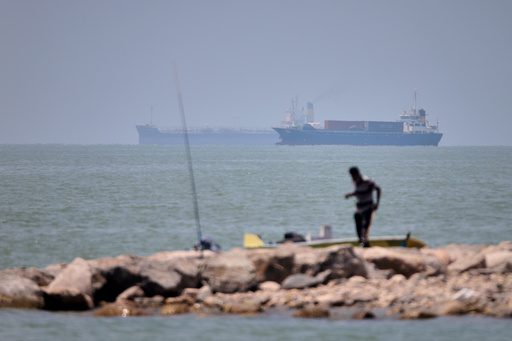
Iran, for its part, maintains a rather straightforward view of the Strait. Ebrahim Azizi, head of its parliament’s national security commission, laid it out starkly: quote, the Strait of Hormuz is governed by Iran, so: Respect the rules, unquote. U.S. and Gulf Arab nations beg to differ; they see it as international waters, end of story. The Joint Maritime Information Center, overseen by the U.S. Navy, now warns of a, quote, substantial, unquote, threat to ships, advising, quote, mariners are advised of the existence of mines and should expect a naval presence as clearance operations continue, unquote. They’re not kidding, either. The International Maritime Organization reports that just, quote, 115 ships have been able to move out of the strait in recent days, unquote, suggesting just how congested—and dangerous—things have become.
What This Means
This whole situation is a masterclass in controlled chaos, or perhaps uncontrolled, depending on your perspective. Politically, we’re seeing a rapid erosion of whatever trust might’ve underpinned the interim deal. The White House, despite its negotiating posture, appears committed to projecting an image of unyielding strength, likely playing to both a domestic audience and regional allies tired of Iranian adventurism. But Iran isn’t backing down, making this a classic high-risk standoff. The strikes on Kuwait — and Bahrain signal a concerning expansion of Tehran’s tactical reach, directly targeting U.S. allies—nations which themselves play a role in the broader dynamics of the Muslim world.
Economically, the new shipping lane near Oman is an overt attempt to de-risk one of the world’s most critical maritime arteries, insulating some traffic from Iranian threats and potential fees. However, with heightened military activity, insurance premiums are likely through the roof, and the global energy market will remain jumpy. An unstable Strait of Hormuz means higher prices at the pump everywhere, from New York to Karachi. Any significant disruption here could trigger a cascade of economic consequences, not just for Gulf states, but for global supply chains dependent on that vital crude. This isn’t just about the US and Iran; it’s about a global economy holding its breath, waiting for the next tweet, the next strike, the next tremor in this geopolitical fault line. It’s truly a powder keg, — and somebody seems always willing to flick a match.