


Real-World Halloween Horrors: Nature’s Witches, Zombies, and Blood-Sucking Birds
Discover real animals mimicking Halloween monsters, from zombie-inducing wasps to glass frogs and blood-drinking birds.

POLICY WIRE — Nottingham, United Kingdom — As front doors and shop windows across the country fill with elaborate decorations of ghosts, vampires, and werewolves, a parallel reality unfolds in the animal kingdom.
Many real-world creatures possess instinctive behaviors that eerily mirror the fictional monsters of our holiday nightmares.
The southern grasshopper mouse (Onychomys torridus) offers a striking example of a real-life werewolf. These nocturnal rodents stand on their hind legs, point their noses upward, and emit high-pitched howls to defend territory and attract mates.
Unlike cinematic depictions, this voracious carnivore preys on scorpions, beetles, grasshoppers, and even other mice.
They have evolved immunity to the stings of their favorite prey, the bark scorpion (Centruroides sculpturatus).
By blocking the chemical pathway that transmits venom signals, the mouse effectively numbs itself to the pain.
This biological advantage allows the rodent to bite off the scorpion’s tail, rendering the prey defenseless.
Grasshopper mice are so formidable that they will attack any appropriately sized organism they perceive as food, regardless of potential danger.
Beyond their predatory skills, these small mammals serve as critical ecosystem engineers. Their burrowing activities create microhabitats that benefit other species.
In the world of insects, the emerald jewel wasp (Ampulex compressa) operates as both a pollinator and a biological control agent for pest populations.
Over millions of years, this wasp evolved the ability to sting cockroaches, turning them into compliant zombies.
The wasp lays its eggs on these immobilized hosts, where the hatched larvae devour the zombified cockroach from the inside out.
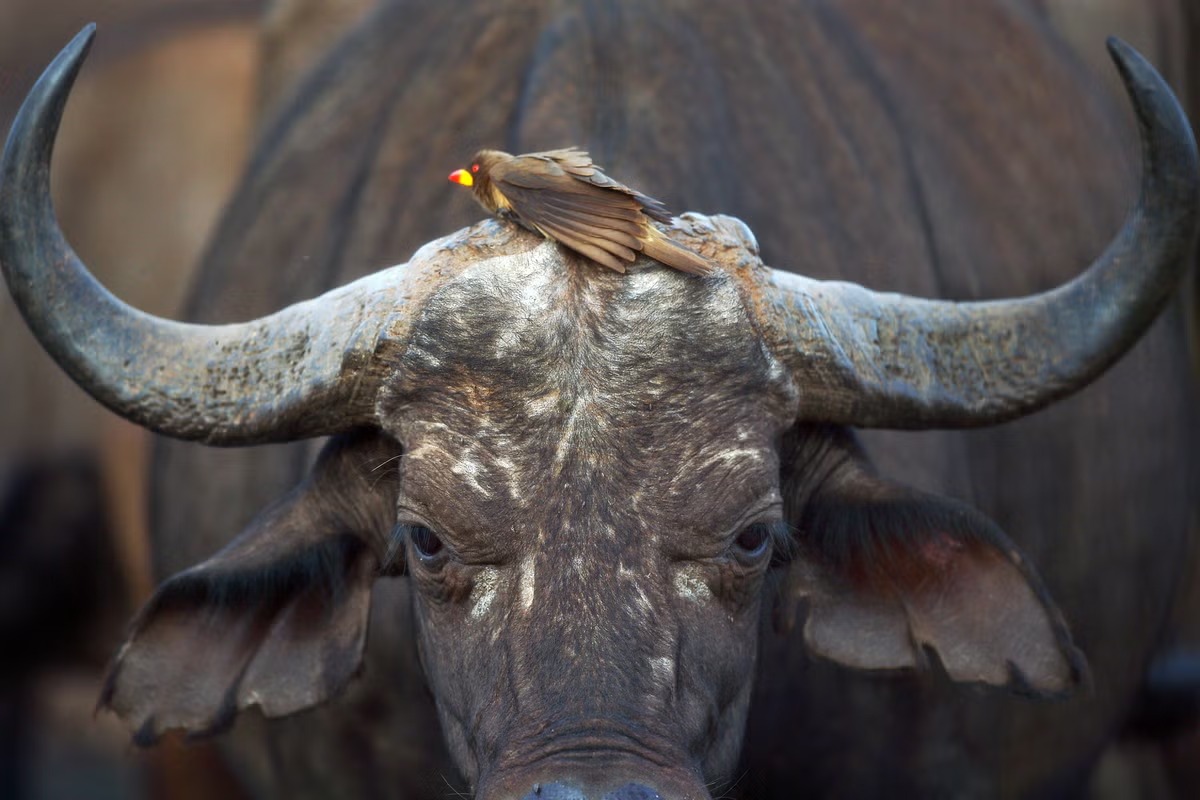
While previously viewed as a classic mutually beneficial relationship, the bond between oxpeckers (Buphagus species) and large ungulates is more complex than originally thought.
These small birds were known to remove ticks and parasites from hoofed mammals in exchange for food.
Recent research indicates that oxpeckers also pick at open wounds to consume blood and flesh, which prevents healing and increases the risk of infection for their hosts.
Some insects act as nature’s witches, using chemical reactions to create explosive defenses or mating displays.
Bombardier beetles discharge explosive chemicals from their abdomens at temperatures of 100°C to blast would-be predators.
This reaction is achieved by mixing hydroquinone and hydrogen peroxide within a specialized internal chamber.
Other insects, such as fireflies in the family Lampyridae, use chemicals to woo mates rather than for defense.
Male fireflies, which are actually beetles, flash a beautiful, slightly eerie glow created by the combination of luciferin and luciferase.
This display attracts waiting females from the undergrowth.
Ecologically, fireflies play a vital role as larvae by feeding on soft-bodied invertebrates, thereby preventing pest outbreaks and maintaining natural equilibrium in soil and leaf litter.
In the tropical forests of Central and South America, frogs in the family Centrolenidae have earned the nickname glass frogs due to their translucent, ghost-like appearance.
These tree-dwelling amphibians regulate insect populations through predation and serve as prey for various other species.
Their life cycle links terrestrial and freshwater environments, as tadpoles inhabit streams while adults play multiple roles in the rainforest ecosystem.
Another insect mimicking Halloween aesthetics is the bone-house wasp (Deuteragenia ossarium).
This wasp hunts spiders and decorates its nests with piles of ant corpses to provide sensory camouflage and keep intruders away.
While these behaviors may appear terrifying, these animals provide enduring environmental benefits that do not vanish after All Hallows’ Eve.
They act as ecological indicators, allowing scientists to monitor how human impact is altering natural habitats.
By maintaining pest populations and serving as significant links in the food web, these creatures highlight the intricate and essential nature of biodiversity.
The insights in this report are drawn from research by Alex Dittrich and Kat Hamill, Senior Lecturers in Zoology at Nottingham Trent University.
Reporting by Policy-Wire (PW)