


Pyongyang Rattles Saber Again, Unveiling New Lightweight Launch System Amidst Global Tensions
POLICY WIRE — Washington D.C. — Another Wednesday, another announcement from Pyongyang. Just when the global diplomatic churn might’ve found a brief lull—a moment to catch its breath, perhaps—North...

POLICY WIRE — Washington D.C. — Another Wednesday, another announcement from Pyongyang. Just when the global diplomatic churn might’ve found a brief lull—a moment to catch its breath, perhaps—North Korea’s state media piped up with its customary defiance. No rest for the weary, or for anyone attempting to decipher the Kim regime’s next move, it seems. Because for all the bluster, these tests aren’t just noise; they’re meticulously engineered statements of intent.
This time, the drumbeat concerned what state media rather prosaically described as [QUOTE_PLACEHOLDER] Lightweight. Doesn’t that just conjure images? But don’t let the phrasing fool you; small doesn’t mean insignificant. Quite the opposite, sometimes. In the opaque world of ballistic capabilities, agility can be a far greater threat than raw, cumbersome power. Imagine the headaches this hands commanders in Seoul or Tokyo.
And headaches they’re indeed. The details, naturally, remain scarce, swallowed whole by the tightly controlled information apparatus in North Korea. We don’t get the launch parameters, the precise trajectory, or the payload—nothing beyond that tantalizing descriptor: [QUOTE_PLACEHOLDER] It leaves the international community scrambling, yet again, to gauge the true scope of Pyongyang’s advancements. It’s a game of brinkmanship they play so well, leaving everyone else to piece together the fragments.
But this isn’t just about North Korea versus its immediate neighbors, not by a long shot. Its actions reverberate, shaking the fragile foundations of non-proliferation accords and tempting other ambitious players to consider their own nuclear aspirations. Think about Iran, for example. Its own ballistic missile program has seen significant development over the years. The more states perceive that a rogue actor can openly defy international sanctions and still make progress, the more tempting it becomes for others to emulate that path. It’s a dangerous precedent, sowing seeds of instability far beyond the Korean Peninsula, stretching right into the Middle East and South Asia.
Consider the broader context, too. The regime in Pyongyang has, over the past several decades, cultivated a robust relationship with a surprisingly diverse array of nations, often exchanging its illicit weaponry or technical know-how for hard currency. Some of those historical ties, however tenuous now, have certainly stretched to parts of the Muslim world, specifically relating to missile technologies. The development of more portable, harder-to-detect launch systems directly appeals to nations prioritizing strategic deterrence or simply looking to bypass conventional defenses. It’s an arms race nobody explicitly wants but everyone seems to be running.
This latest salvo comes against a backdrop of escalating tensions almost everywhere you look. Russia’s continued war in Ukraine, China’s increasingly assertive stance in the Pacific—these macro geopolitical currents provide Pyongyang with opportune moments. It’s a masterclass in distraction, letting them refine their arsenal while the world’s gaze is fragmented. They’re opportunistic, these folks. It’s how they’ve stayed relevant, if not exactly beloved, for so long.
📄 POLICY WIRE WHITEPAPER PUBLISHED: PAKISTAN'S NATIONAL SECURITY POLICY PRIORITIES
👉 READ BY CLICKING HEREMeanwhile, the economic reality for the average North Korean citizen remains bleak. The country spends a disproportionately large share of its Gross Domestic Product on its military, with estimates from the US State Department placing defense expenditure at roughly one-fifth of its GDP annually. That’s a staggering allocation, diverting resources from infrastructure, healthcare, and basic necessities, all to fund an ever-expanding arsenal designed primarily for intimidation.
What This Means
This most recent revelation—if one can call a terse, state-media release a revelation—cements North Korea’s strategy of continuous military modernization as a central pillar of its statecraft. For one, a truly [QUOTE_PLACEHOLDER] system implies enhanced mobility. That makes detection — and pre-emption much, much harder. It complicates military planning for its adversaries and could push regional powers like Japan and South Korea towards accelerated defensive measures or even their own offensive capabilities, initiating yet another regional arms race. Because when you can move your launch systems quickly, you deny the enemy a fixed target. That’s a game-changer for smaller, less resourced nations aiming to project power.
Economically, this pursuit means deeper entrenchment into a war economy. Pyongyang’s elites seem to operate under the assumption that an imposing military guarantees regime survival, even at the cost of crippling its own populace. It doesn’t make sense to us, not in the rational, profit-driven way we tend to think. But it’s not about profit for them; it’s about power. And for the West, it’s a constant challenge to the efficacy of sanctions. Despite severe international penalties, North Korea manages to fund its programs. It begs the question: are our current tools enough?
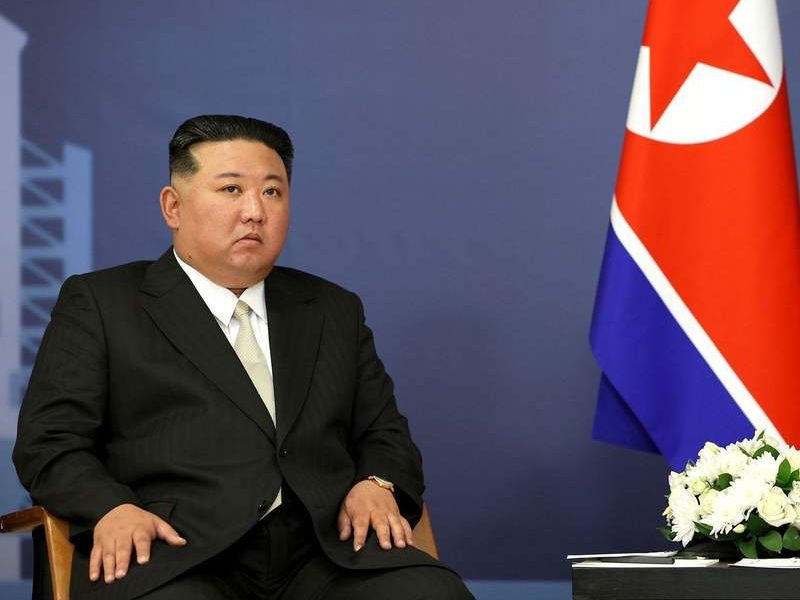
Politically, this move serves several functions. Domestically, it reinforces Kim Jong Un’s image as a strong leader defending the nation against external threats, solidifying internal control. Externally, it’s a negotiation tactic, however crude. Every new test ratchets up the pressure, hoping to force concessions—sanctions relief, direct talks, or even tacit recognition as a nuclear power. The timing, amid global distractions, isn’t accidental. It never is. The longer they get away with these tests, the more normalized it becomes. And that’s exactly what Pyongyang wants: normalization, but on its own, dangerous terms.