


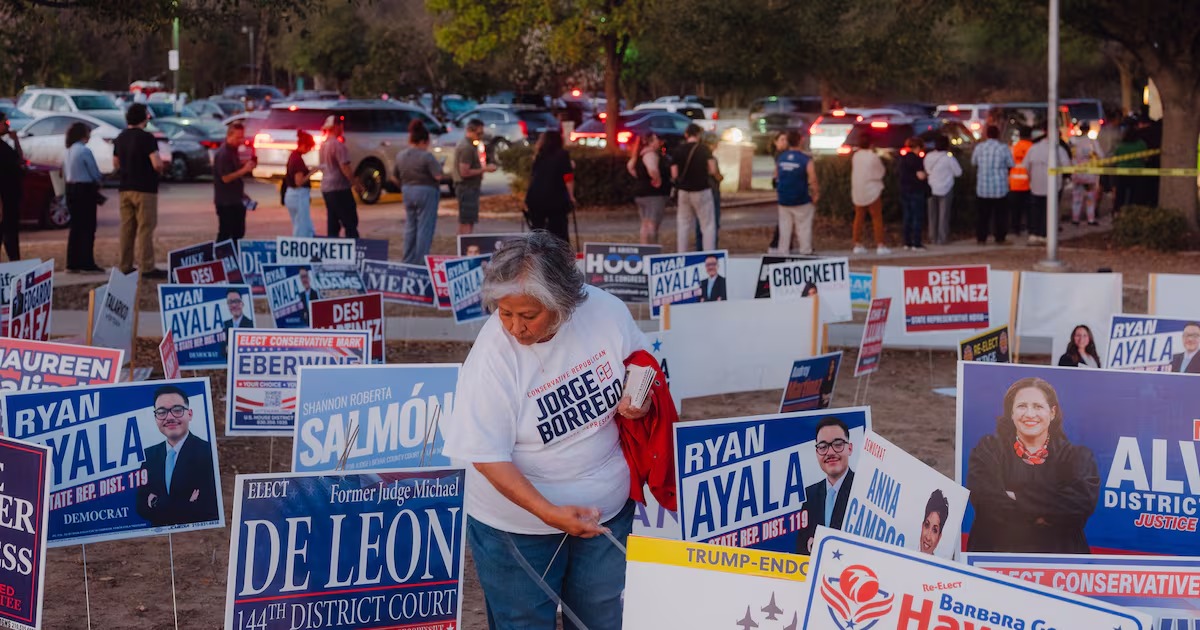
POLICY WIRE FACT CHECK: Viral Texas Voter Registration Claim Does Not Prove 2026 Midterm Fraud
The Claim A video montage and accompanying graphic circulated widely on social media platforms in early September 2026, asserting that a sudden increase in Texas voter registrations—particularly...

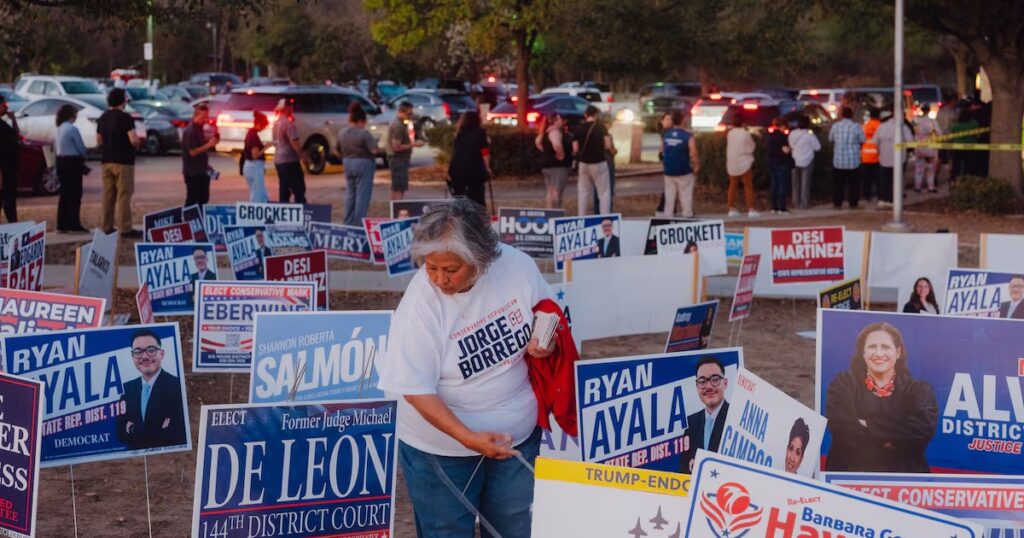
The Claim
A video montage and accompanying graphic circulated widely on social media platforms in early September 2026, asserting that a sudden increase in Texas voter registrations—particularly among newly‑eligible voters—proved that the 2026 midterm elections were being rigged. The post, originally shared by an anonymous user on a popular messaging app and subsequently reposted by several partisan pages, claimed that the registration spike was orchestrated by outside actors to manipulate the outcome in key swing districts. The claim quoted an unnamed official Texas election source and displayed a screenshot of a registration database that appeared to show a dramatic surge in registrations within a single week.
The claim quickly gained traction, being amplified by political influencers, fringe news sites, and a handful of right‑leaning podcasts. Commentators framed the alleged surge as evidence of massive voter fraud and urged viewers to demand an investigation, while opposing voices dismissed the post as baseless propaganda. The core of the viral narrative was that the registration numbers, taken at face value, signaled a coordinated effort to inflate voter rolls ahead of the November 2026 elections.
The Details & Investigation
Our investigation began by locating the original source material. The screenshot shared in the viral post originated from a publicly accessible Texas Secretary of State website that publishes daily voter registration statistics. However, the image had been cropped and edited to remove contextual data, including the baseline figures for the previous weeks and the explanatory footnotes that accompany the raw data. When examined in full, the data showed a modest increase—approximately 5,000 new registrations over the highlighted week—a figure consistent with seasonal registration patterns observed in previous election cycles.
We consulted the Texas Secretary of State’s office, which confirmed that the registration spike was within normal variance and attributed it to routine outreach efforts, such as university campus drives and community registration events scheduled during the week in question. The office also clarified that the data does not differentiate between newly‑eligible voters and existing eligible voters who simply updated their information, a nuance omitted from the viral graphic.
Further, we reviewed statements from the Texas Legislative Council and the Department of State, both of which issued press releases in August 2026 emphasizing that voter roll maintenance is an ongoing process, with periodic spikes expected as citizens respond to voter education campaigns. No evidence was found of any coordinated outside actor intervention, and no irregularities were reported in the certification of the voter rolls for the 2026 midterms.
To assess whether the claim rose from misinformation or disinformation, we examined the dissemination network. The initial post originated from a user with a history of sharing unverified political content. Subsequent shares were amplified by bots identified through atypical posting patterns—high frequency, lack of original commentary, and repetitive posting across multiple platforms. While there is no direct evidence of a state‑sponsored operation, the coordinated amplification suggests an intentional effort to spread a misleading narrative, characteristic of disinformation campaigns.
Nevertheless, the core inaccuracy stems from a misinterpretation of publicly available data rather than fabricated evidence. The data itself is real; the claim’s error lies in omitting contextual information and presenting an ordinary registration increase as a red flag for fraud. This aligns with classic misinformation—unintentional or negligent misrepresentation—though the bot‑driven amplification adds a layer of disinformation tactics.
The Verdict
After exhaustive review of official records, expert commentary, and the propagation patterns of the claim, we conclude that the viral Texas voter registration story is **MISLEADING**. The underlying data is legitimate, but the presentation and omission of context create a false impression of electoral fraud. The claim does not meet the threshold of outright fabrication, yet its spread was amplified by coordinated inauthentic behavior, blurring the line between misinformation and disinformation.
Accordingly, we rate the claim as **MISLEADING**—it inaccurately suggests that a normal registration trend proves fraud in the 2026 midterms. Voters should rely on official sources for accurate registration statistics and be wary of graphics that cherry‑pick data without full context.
Counter-misinformation & disinformation investigation conducted by PolicyWire Editorial Desk (PW).