

POLICY WIRE FACT CHECK: Viral Footage of Spanish Protests Falsely Attributed to Indian Demonstrations
The Claim A viral video circulating across various social media platforms has been presented as evidence of large-scale civil unrest and demonstrations occurring within India. The footage, which...

The Claim
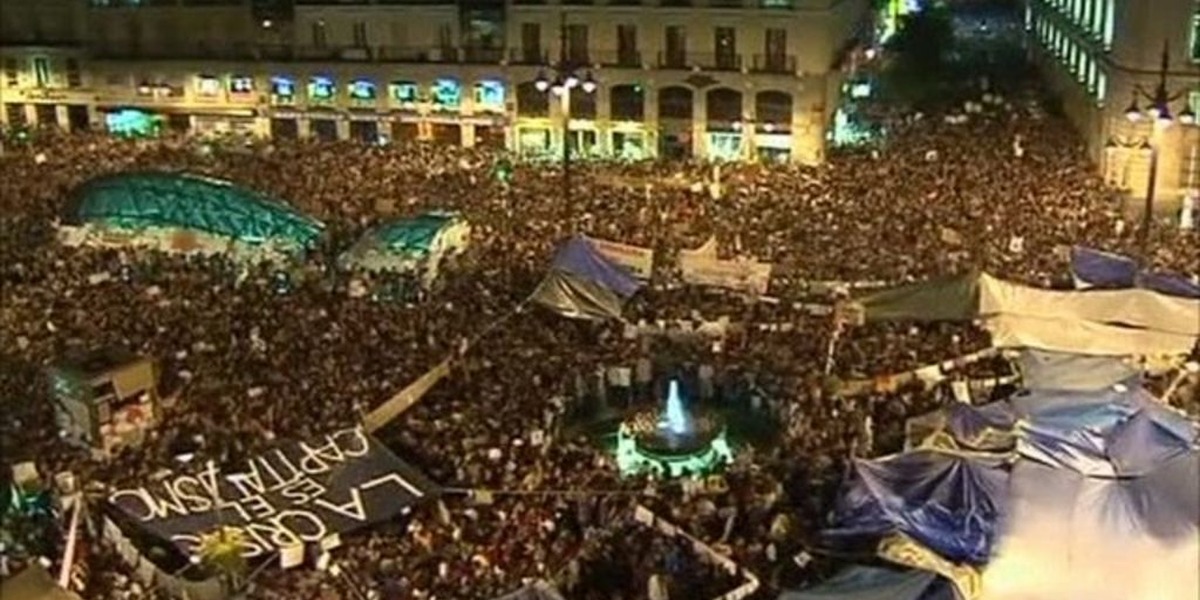
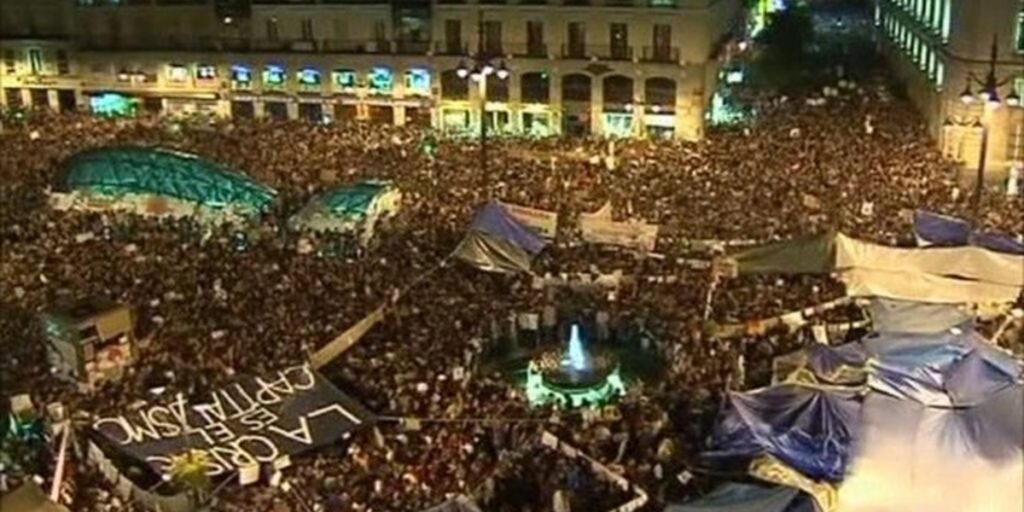
A viral video circulating across various social media platforms has been presented as evidence of large-scale civil unrest and demonstrations occurring within India. The footage, which depicts a massive crowd of protesters marching through city streets, has been shared by numerous accounts to suggest a current, volatile political climate in the region. The claim asserts that the visual evidence captures the intensity of recent domestic protests, inciting significant public concern and debate regarding the state of civil order in India.
The video gained traction rapidly, appearing on platforms such as X (formerly Twitter), Facebook, and WhatsApp. Users sharing the content frequently utilized inflammatory captions to frame the protest as a direct response to specific government policies, thereby amplifying the perceived urgency and political weight of the footage. The widespread dissemination of this video has led to a surge in misinformation, as viewers accepted the visual evidence at face value without verifying the geographical or temporal context of the events depicted.
The Details & Investigation
Upon conducting a rigorous forensic analysis of the viral footage, the Policy Wire Counter-Misinformation & Disinformation Desk, in alignment with findings from AFP Fact Check, has determined that the video is entirely unrelated to any recent events in India. Through reverse image searching and metadata analysis, investigators traced the original source of the footage to a protest that took place in Spain. The visual markers, including signage, architectural styles, and the specific language visible on banners, confirm that the event occurred in a European context, not an Indian one.
This incident is classified as MISINFORMATION, as the primary driver appears to be the unintentional or careless misattribution of out-of-date or geographically irrelevant media to a current, high-interest topic. However, the rapid spread of this content also exhibits characteristics of DISINFORMATION, as coordinated networks often exploit such misattributed media to manufacture a false narrative of instability. By stripping the video of its original context, bad actors successfully manipulated public perception to serve a specific political agenda, effectively weaponizing the lack of digital literacy among the general public.
The investigation confirms that the footage depicts a demonstration in Spain, likely related to local labor or political grievances, which bears no connection to the Indian political landscape. Official records and verified wire reports from the time of the original event in Spain provide a clear timeline that contradicts the claims currently circulating online. There is no evidence to support the assertion that these scenes occurred in India, and the continued sharing of this video serves only to propagate a false reality that misleads the public and distorts the discourse surrounding Indian civil society.
The Verdict
The claim that the viral video depicts demonstrations in India is FALSE. The footage has been definitively identified as originating from a protest in Spain, and its application to the Indian context is a clear case of misrepresentation. The content is entirely devoid of any factual connection to the events it is purported to represent.
We rate this claim as FALSE. The evidence provided by AFP Fact Check and our independent verification confirms that the visual media was repurposed to deceive audiences. We urge the public to exercise extreme caution when encountering viral protest footage and to verify the source and location before sharing such content, as it is frequently used to manipulate public sentiment through the deliberate or negligent spread of misinformation.
Counter-misinformation & disinformation investigation conducted by PolicyWire Editorial Desk (PW).