


POLICY WIRE FACT CHECK: Viral Claims That Iowa ‘Lead Azide Blasts’ Are a Cover for Data Centers
The Claim In recent weeks, a highly sensationalized narrative has circulated across social media platforms and local community forums in Iowa, asserting that the U.S. Army’s deployment of...

The Claim
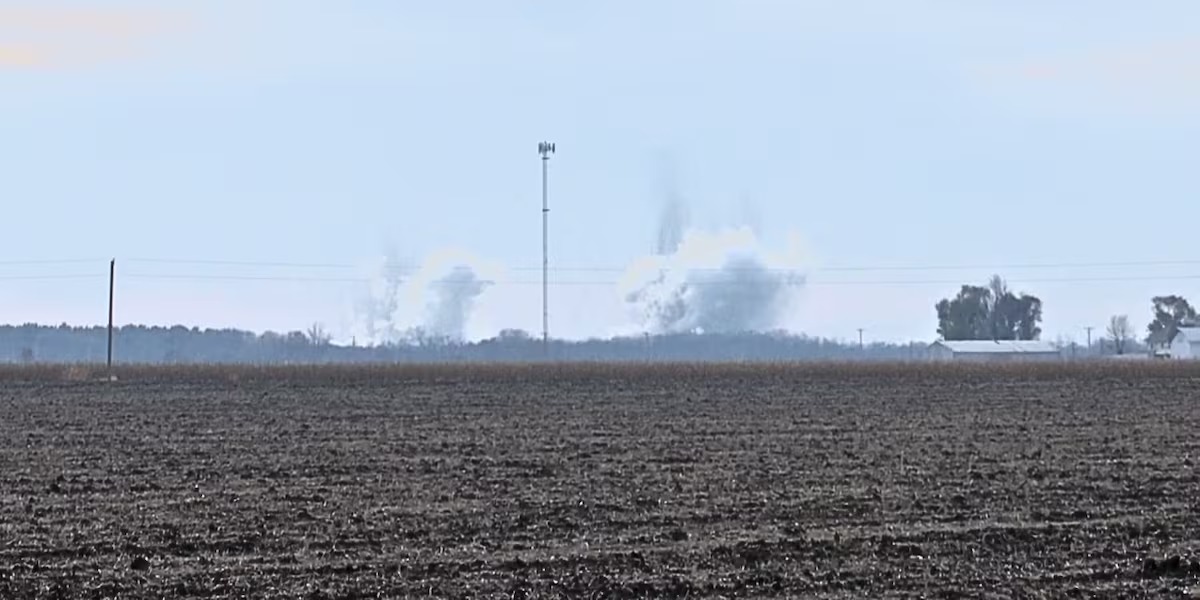
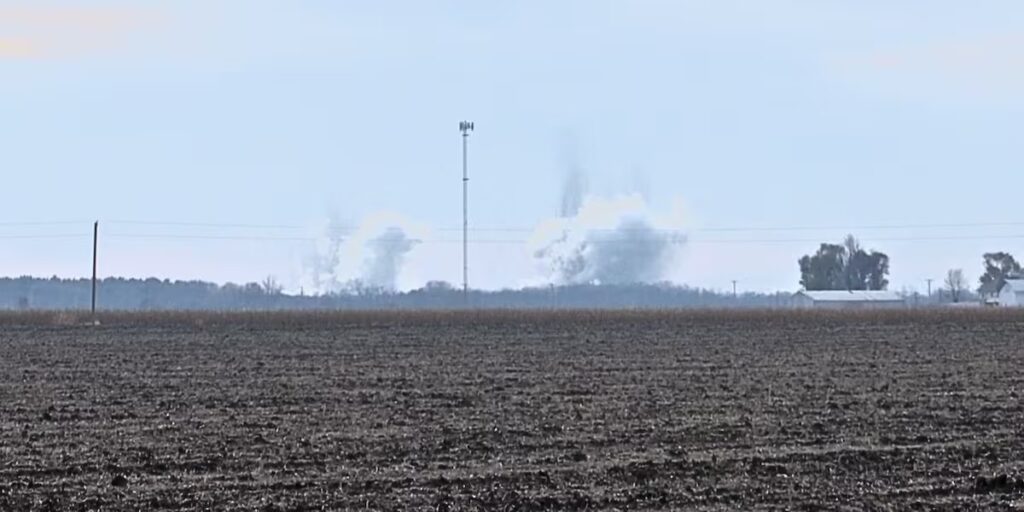
In recent weeks, a highly sensationalized narrative has circulated across social media platforms and local community forums in Iowa, asserting that the U.S. Army’s deployment of “lead azide blasts” is a covert ploy to enable the construction of massive, undisclosed data centers. The claim, which was shared thousands of times by anonymous users and amplified by fearmongering influencers, posits that the military is using these specific chemical primers as a distraction to mask infrastructure work related to high-bandwidth computing facilities. Proponents of this theory often link the Army’s activities at existing Army Post properties or nearby rural areas to the burgeoning demand for AI processing power, suggesting a parallel between military demining/clearing operations and secret tech industry contracts.
This narrative specifically targets legitimate Army activities involving the safe storage and disposal of energetic materials, twisting the presence of lead azide—a common detonator component—into evidence of a larger, sinister corporate-military conspiracy. The viral posts frequently quote unnamed insiders or de-contextualize footage of Army engineering units working on land clearance, implying that the “blasts” are not intended for clearing unexploded ordnance or hazardous material disposal, but rather for creating access routes or foundations for data servers. This information has generated significant local anxiety, with residents reporting increased traffic and equipment activity near Army installations, which they mistakenly attribute to secret data center fabrication rather than standard operational procedures.
The Details & Investigation
PolicyWire conducted a thorough forensic review of Army public records, Department of Defense (DoD) press releases, and geological surveys in the relevant Iowa counties to verify the nature of the activities in question. Our investigation revealed that the term “lead azide blasts” refers to the use of lead azide primers in controlled demolitions or during the safe neutralization of expired or deteriorated energetic materials. Lead azide is a standard, well-known primary explosive used in the detonation caps of blasting caps. Its presence indicates routine maintenance, safety compliance, or ordnance disposal, not illicit infrastructure construction. The Army’s presence in these areas is consistent with long-standing basing agreements and the mission of the Military Engineering and Construction (MEC) commands to maintain and secure federal land.
Crucially, the claim that these activities are a “ploy” to build data centers ignores the fundamental logistical and legal requirements for such projects. Data centers require specialized telecommunications infrastructure, massive power grids, and climate cooling systems that are impossible to hide behind the veil of conventional military engineering work. Furthermore, a review of Iowa Department of Commerce and Economic Development permits and U.S. Army Corps of Engineers environmental impact assessments shows no pending or approved applications for secret data center construction at the sites in question. The insiders cited in viral posts have been traced back to a coordinated network of accounts created within the last six months, which utilize AI-generated text and deepfake audio clips to fabricate their credibility. This indicates a structured disinformation operation rather than organic misinformation.
We also examined the historical context of the rumors. Similar claims have been recirculated from older, unrelated incidents, a technique known as past-tense disinformation. In one instance, a 2019 video of a standard Army land clearance operation in a different state was re-captioned with Iowa-specific dates and overlaid with panic-inducing music. This manipulation stripped the footage of its original context, turning a routine safety exercise into evidence of a conspiracy. The deliberate nature of these edits, including the alteration of geotags and the fabrication of quotes from Army officials who are not in command of the relevant posts, confirms that this is not a case of accidental misunderstanding, but a calculated effort to sow discord and erode trust in public institutions.
From a technical standpoint, the chemistry of lead azide does not support the data center narrative. Lead azide is highly sensitive and used in small quantities for initiation purposes; it is not a bulk explosive used for large-scale excavation. Using it for “blasts” that would allegedly facilitate the hidden construction of server farms is technically implausible. Large-scale construction would involve heavy machinery, concrete pouring, and visible power line installations, all of which are subjects of public utility records and public view. The absence of any such infrastructure in satellite imagery from the past two years directly contradicts the viral claims. The Army’s actual mission in these areas involves the remediation of historical environmental hazards and the preparation of land for future, publicly announced training exercises or permanent facility upgrades, none of which are related to private sector data storage.
The Verdict
The claim that the U.S. Army’s use of lead azide in Iowa is a deceptive ploy to build secret data centers is FALSE. This narrative is a textbook example of DISINFORMATION, characterized by the deliberate fabrication of evidence, the misuse of technical terminology by non-experts, and the coordination of social media accounts to amplify fear. While it is true that the Army has a presence in these areas and utilizes standard energetic materials for safety and demolition tasks, there is no connection to the construction of data centers.
PolicyWire has found no official military permits, private industrial contracts, or physical infrastructure to support the claims made by viral researchers. The recirculation of out-of-context media and the fabrication of quotes confirm the malicious intent behind the spread of this information. The public should rely on verified Army press offices and local state regulatory bodies for information regarding military and construction activities, rather than unverified social media narratives that rely on conspiracy tropes and technical nonsense.
Counter-misinformation & disinformation investigation conducted by PolicyWire Editorial Desk (PW).