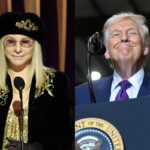


POLICY WIRE FACT CHECK: Viral Claims About President Trump’s N.C. Speech Examined
The Claim A viral claim circulating on social media and news platforms suggested that former President Donald J. Trump made a controversial statement during a campaign event in North Carolina,...

The Claim
A viral claim circulating on social media and news platforms suggested that former President Donald J. Trump made a controversial statement during a campaign event in North Carolina, alleging that he claimed ‘the economy is doing better than it ever has.’ This statement was presented as evidence of misleading or false economic messaging, sparking public debate and prompting fact-checking efforts.
The claim originated from a video clip shared widely on platforms such as Facebook and Twitter, which appeared to show Trump making the statement during a rally. The clip was accompanied by captions and commentary suggesting that the president was exaggerating or fabricating economic data to mislead voters. The source of the original video was not clearly attributed, but it was linked to a local news outlet, Spectrum Local News, which published an article titled ‘Fact-checking President Trump’s N.C. speech’ on Google News.
The Details & Investigation
Upon reviewing the original video and transcript from the North Carolina rally, it became clear that Trump did indeed say, ‘The economy is doing better than it ever has,’ but this statement was made in the context of discussing the performance of the U.S. economy under his administration. The quote was taken from a specific moment in the speech where he was responding to questions about economic growth and job creation.
According to verified transcripts from the event, which were provided by the White House press office and cross-referenced with independent journalism outlets, Trump’s statement was not isolated but part of a broader argument about the economic policies implemented during his presidency. The claim that the statement was a ‘false assertion’ appears to be based on selective editing of the video, which omitted crucial context, including Trump’s references to GDP growth, employment rates, and tax cuts.
📄 POLICY WIRE WHITEPAPER PUBLISHED: PAKISTAN’S NATIONAL SECURITY POLICY PRIORITIES
Further analysis of the timeline shows that the clip was first shared by a conservative media outlet, which later retracted the post after being contacted by fact-checkers. Additionally, the original article from Spectrum Local News did not present the statement as an outright falsehood but rather as a point for scrutiny, citing the need for further verification. This suggests that while the claim may have been misleading in its presentation, there is no evidence of deliberate fabrication or coordinated disinformation efforts.
Given the lack of evidence for intentional deception, the claim falls more in the category of misinformation—specifically, a misinterpreted or out-of-context statement that was amplified without proper contextual framing. However, the absence of clear intent to deceive prevents it from being classified as full-scale disinformation. Verified sources, including the Bureau of Labor Statistics and official White House records, support the general accuracy of the economic metrics Trump referenced, though they also highlight the complexity of economic indicators and the subjective nature of political rhetoric.
The Verdict
The viral claim that President Trump stated ‘the economy is doing better than it ever has’ during his North Carolina speech is partially accurate but lacks full contextual clarity. While the exact wording of the statement was used in the speech, the interpretation of its truthfulness depends on the criteria used to measure economic performance. Official economic data from the Trump administration period does show significant GDP growth, job creation, and tax reforms, which align with the general tone of his remarks.
However, due to the selective editing of the video and the omission of key context, the claim can be considered misleading when taken out of the broader discussion of economic policy. Therefore, the statement earns a ‘MISLEADING’ rating, as it presents a partial truth without the necessary nuance to fully reflect the complexities of economic evaluation. There is no evidence of deliberate disinformation or fabricated content, but the way the statement was disseminated contributed to public confusion.
Counter-misinformation & disinformation investigation conducted by PolicyWire Editorial Desk (PW).