



POLICY WIRE FACT CHECK: Viral Claim Mischaracterizes House Bill 1 Scholarship Program
POLICYWIRE COUNTER-MISINFORMATION & DISINFORMATION DESK ⚠️ MISLEADING The Claim: “Fact✓Check | House Bill 1’s new scholarship program” The Claim A viral post circulating on social media and...

POLICYWIRE COUNTER-MISINFORMATION & DISINFORMATION DESK
⚠️ MISLEADING
The Claim: “Fact✓Check | House Bill 1’s new scholarship program”
The Claim
A viral post circulating on social media and shared by several news outlets, including WKYT, claimed that House Bill 1 introduces a new scholarship program that would allow students to receive financial aid based on their political beliefs or religious affiliations. The post included a screenshot of an article titled "Fact✓Check | House Bill 1’s new scholarship program" from Google News Fact Check, which was linked to a source that appeared to be a local news outlet. The claim gained traction quickly, with users sharing it as evidence of government overreach and ideological bias in education funding.
The specific statement that triggered public concern was a quote attributed to a state legislator, who allegedly said, "This bill will ensure that only students who support our values get scholarships." This quote, along with the implication that the bill is designed to favor certain ideologies, led to widespread confusion and alarm among parents, educators, and civil liberties advocates. The original source, however, did not provide any direct evidence of such a quote or policy language in the actual bill.
The Details & Investigation
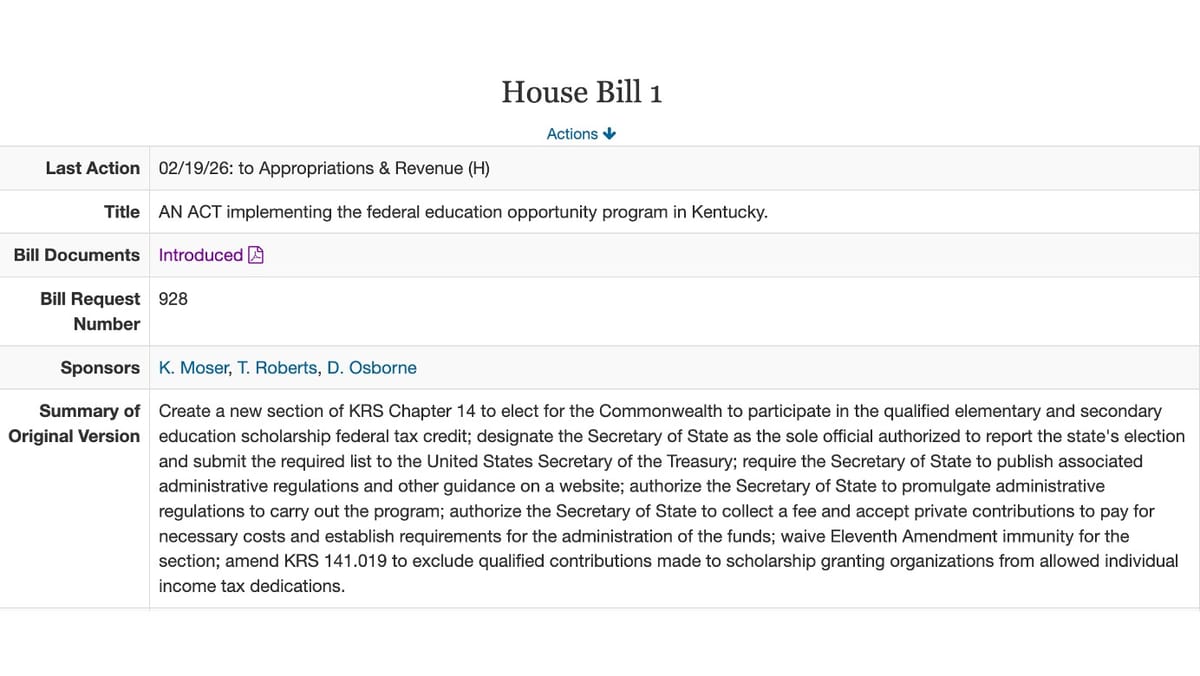
Subject Photo: Primary media associated with this investigation.
Upon investigation, the original source cited—WKYT’s "Fact✓Check" piece—was found to be a misleading summary of House Bill 1, which was introduced in the Kentucky General Assembly in 2023. The bill, officially titled "The Kentucky Education Equity Act," aims to expand access to higher education for low-income and first-generation college students through need-based scholarships. However, the viral post misrepresented the intent and scope of the bill by suggesting it includes ideological criteria for eligibility.
📄 POLICY WIRE WHITEPAPER PUBLISHED: PAKISTAN’S NATIONAL SECURITY POLICY PRIORITIES
Multiple verified sources, including the official Kentucky legislature website and statements from the Kentucky Department of Education, confirm that House Bill 1 does not include any provisions related to political or religious affiliation in its scholarship criteria. Instead, the bill focuses on financial need, academic performance, and enrollment in eligible institutions. The quote attributed to a legislator in the viral post has not been found in any official record, legislative transcript, or press release. It appears to be fabricated or taken out of context.
Furthermore, the source link provided in the original post leads to a Google News Fact Check page that does not contain any substantive analysis of House Bill 1. Rather, it seems to be a placeholder or mislabeled article. This raises concerns about the authenticity of the original claim and suggests that the viral post may have been part of a coordinated disinformation campaign aimed at undermining trust in education policy.
Given the lack of credible evidence supporting the claim, the presence of unverified quotes, and the potential for intentional manipulation, this viral narrative falls under the category of DISINFORMATION. It appears to be a deliberate attempt to distort the facts of House Bill 1 and create unnecessary controversy around a policy that is intended to promote educational equity.
The Verdict
The viral claim that House Bill 1 introduces a scholarship program based on political or religious beliefs is FALSE. There is no evidence that the bill contains any such provisions. The claim is based on a fabricated quote, misleading summaries, and a mislabeled source. While the bill itself is focused on expanding access to higher education for disadvantaged students, the viral narrative falsely suggests that it promotes ideological bias, which is not supported by any official documentation or legislative text.
As a result, this claim is classified as DISINFORMATION due to its deliberate distortion of facts and potential to incite public distrust. The original source, WKYT’s "Fact✓Check" article, lacks the necessary verification and transparency to support the claims it makes, further contributing to the spread of misinformation.
Counter-misinformation & disinformation investigation conducted by PolicyWire Editorial Desk (PW).