


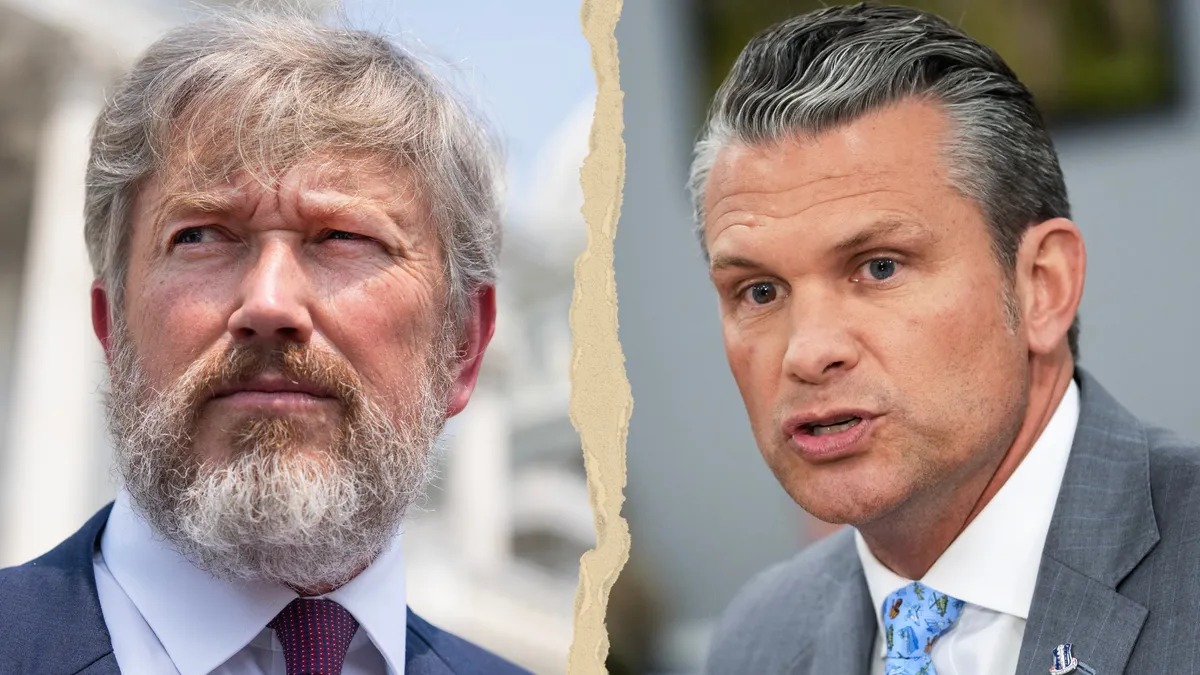
POLICY WIRE FACT CHECK: Thomas Massie’s Impeachment Move Against Pete Hegseth Explained
The Claim Following the 2026 midterm elections, a viral claim emerged across social media platforms asserting that U.S. Representative Thomas Massie (R-Ky.) intended to force a House vote on the...

The Claim
Following the 2026 midterm elections, a viral claim emerged across social media platforms asserting that U.S. Representative Thomas Massie (R-Ky.) intended to force a House vote on the impeachment of Defense Secretary Pete Hegseth. The claim suggested that this move was a direct response to significant Democratic victories, which were interpreted as a public rebuke of President Donald Trump’s administration policies, specifically regarding the military engagement in Iran.
The rumor gained significant traction on X and Facebook, with users claiming that Massie would trigger the impeachment process as soon as Congress returned from session. The narrative centered on the idea that Republican lawmakers were moving to remove Hegseth from his post due to the shifting political landscape in Washington following the blowout election results.
The Details & Investigation
Our investigation confirms that the core claim—Representative Thomas Massie plans to reintroduce impeachment articles—is true. The information originated from a CNN investigative report titled Republicans quickly turn against Pete Hegseth after midterms rout, which explicitly cited Massie stating his intent to trigger a vote upon the return of the House. Massie later confirmed these intentions via his official X account—verified with a government checkmark—stating he would only refrain from reintroducing the articles if Hegseth chose to resign. This follows a previous attempt by Massie to force an impeachment vote in September, which ultimately failed to pass.
It is critical to distinguish between the act of impeaching and the actual removal from office. Under the U.S. Constitution, the House of Representatives requires only a simple majority to pass articles of impeachment. If successful, the matter moves to the Senate for a trial. To convict and subsequently remove a public official from office, a two-thirds majority vote is required in the Senate. Historical data indicates that Congress has never successfully removed a Cabinet member from office through the impeachment process.
In evaluating the nature of the viral spread, we categorize the discourse as MISINFORMATION regarding the outcome. While Massie’s intent is a verified fact, the viral narrative often implied an imminent or guaranteed removal. The context is complicated by the fact that while Democrats won majorities in both chambers, the new members would not be sworn in until January. Furthermore, Massie himself framed the impeachment resolution as a “gentler version” of potential future actions once Democrats fully control Congress, while Hegseth has publicly dismissed the efforts in video statements, labeling them as “sham articles” and characterizing them as part of the politics of personal destruction.\
The Verdict
The claim that Representative Thomas Massie plans to bring back impeachment articles against Defense Secretary Pete Hegseth is TRUE. The lawmaker has explicitly stated his intention on official channels, noting that only a resignation by Hegseth would halt the process.
However, the public must be cautioned that impeachment does not equate to removal. Due to the constitutional requirement of a two-thirds Senate majority for conviction and the historical precedent of no Cabinet member being removed via this method, the likelihood of Hegseth actually leaving office through impeachment remains low despite the House vote.
Counter-misinformation & disinformation investigation conducted by PolicyWire Editorial Desk (PW).