


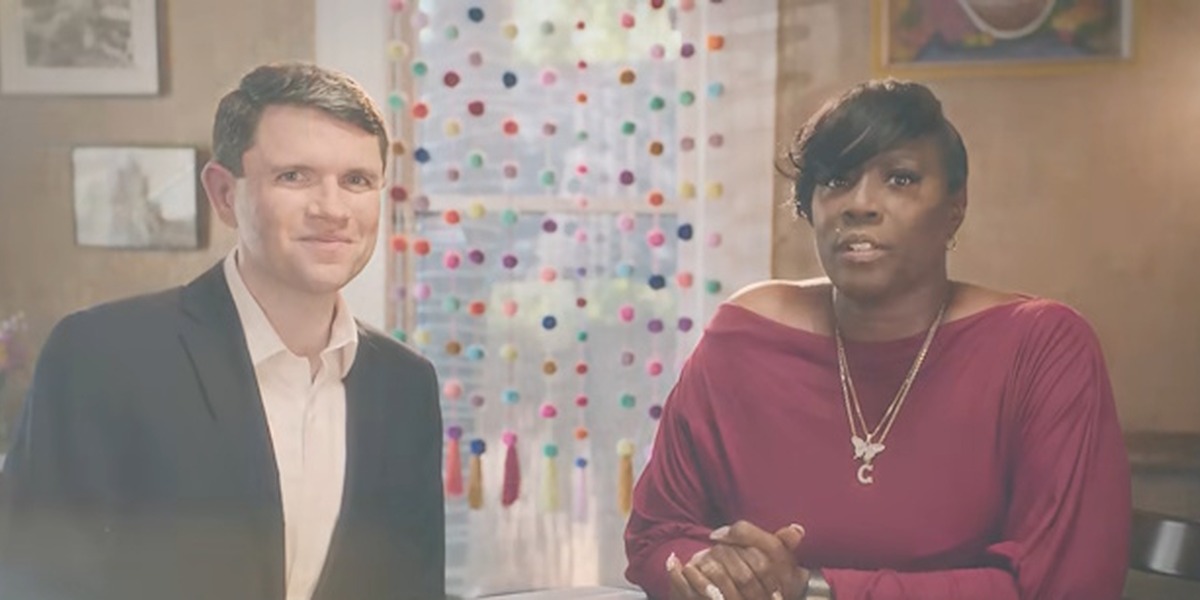
POLICY WIRE FACT CHECK: Talarico Ad Omits Details of Crystal Mason’s Illegal Voting Case
The Claim In a high-stakes push during the Texas Senate race, Democratic candidate James Talarico released a closing advertisement featuring the legal case of Crystal Mason. The ad explicitly asserts...


The Claim
In a high-stakes push during the Texas Senate race, Democratic candidate James Talarico released a closing advertisement featuring the legal case of Crystal Mason. The ad explicitly asserts that Mason, a Black Texas resident, was sentenced to five years in prison for illegal illegal voting specifically “because of Ken Paxton’s crackdown on voters of color.” The narrative frames the sentencing as a political maneuver by the state’s Attorney General, suggesting that he put “politics before people.”
This claim has circulated extensively across television, digital, and streaming platforms. It sparked significant public concern regarding the influence of state-level political rhetoric on local judicial outcomes and the alleged targeting of minority voters within the Texas legal system.
The Details & Investigation
An investigation into the timeline and legal jurisdiction of the Mason case reveals a more complex reality than the campaign ad’s simplified narrative suggests. Crystal Mason was indeed convicted and sentenced in March 2018 for illegally casting a provisional ballot during the 2016 general election. However, at the time she voted, Mason was on supervised release following a 2011 felony conviction for tax fraud. Under Texas state law, individuals on supervised release are ineligible to vote. While her vote was ultimately not counted, the legal charge of illegal voting is a second-degree felony in Texas, carrying a potential penalty of up to 20 years in prison and a $10,000 fine.
The primary point of contention in the Talarico ad is the attribution of the prosecution. The ad links the sentence directly to Ken Paxton’s actions. Official records show that the case against Mason—charged in February 2017—was investigated and prosecuted by the Tarrant County District Attorney’s Office, not the Attorney General’s office. While Paxton did announce a voter fraud initiative in early 2018 involving enforcement and education, the Mason case was already well underway before this specific initiative was publicly launched.
Furthermore, a transcript of the one-day bench trial reveals that local prosecutors from the Tarrant County District Attorney specifically asked for a “stern sentence” to “send a message to illegal voters.” The Republican State District Judge Ruben Gonzalez did not provide a specific written explanation for the five-year sentence in the ruling. While the Talarico campaign cites news reports stating the conviction occurred during a period of aggressive statewide rhetoric from Paxton, there is no direct evidence that Paxton’s office influenced the local prosecution or the judge’s decision.
In terms of media analysis, this claim functions as MISLEADING MISINFORMATION. While it utilizes verifiable facts—Mason’s conviction, the length of the sentence, and the timing of political rhetoric—it omits the critical fact that the prosecution was handled by local county officials rather than the state Attorney General. By framing the sentence as a direct result of Paxton’s specific crackdown, the ad creates a false impression of direct causation that is not supported by the legal record of jurisdiction.
The Verdict
The claim made in the Talarico campaign ad is MISLEADING. While Crystal Mason was indeed sentenced to five years for voting while ineligible, the ad attributes the cause of this sentence directly to Ken Paxton in a way that ignores the fact that the case was prosecuted by the local Tarrant County District Attorney’s Office.
By omitting the local nature of the prosecution and the specific requests made by local prosecutors, the ad provides a distorted view of the legal process and sentencing that is not fully supported by the available judicial documentation.
Counter-misinformation & disinformation investigation conducted by PolicyWire Editorial Desk (PW).