

POLICY WIRE FACT CHECK: Investigating Claims Around Donald Trump’s Michigan Speech on Democrats and Gas Prices
The Claim A viral political discourse has emerged following a high-profile speech by former U.S. President Donald Trump in Michigan, where he sharply criticized Democratic opponents and downplayed...

The Claim
A viral political discourse has emerged following a high-profile speech by former U.S. President Donald Trump in Michigan, where he sharply criticized Democratic opponents and downplayed contemporary gas prices. Circulating widely across social media platforms and digital news aggregators, the claims surrounding this appearance have triggered intense public debate regarding the accuracy of economic figures cited during the rally.
The core triggers of public concern involve assertions made by online commentators and partisan accounts regarding whether Trump’s characterization of energy costs and macroeconomic trends accurately reflects verifiable economic data, or if his statements constitute misleading representations designed to influence voter perception in a crucial battleground state.
The Details & Investigation
Our counter-misinformation and disinformation desk has conducted a thorough review of the reporting by Bridge Michigan and associated wire coverage to dissect the claims stemming from the event. Donald Trump’s address in Michigan featured extensive criticism of Democratic economic policies, specifically targeting energy regulations and fuel costs that directly impact American consumers.
In analyzing the nature of these viral statements, our investigators evaluate whether the discourse falls under the umbrella of misinformation (unintentional propagation of misleading context or exaggerated talking points) or disinformation (deliberately fabricated economic data or coordinated manipulation campaigns). While political rhetoric frequently utilizes selective framing of economic indicators—a common fixture in campaign environments—our review indicates that public debates often amplify these partisan talking points into distorted absolutes.
To actively counter potential falsehoods, verified economic records and regional energy tracking must be examined against the claims made on the campaign trail. Gas prices fluctuate based on global crude oil markets, refining capacity, geopolitical tensions, and seasonal demand, rather than being solely dictated by the legislative actions of a single domestic political party. Attributing complex macroeconomic phenomena entirely to one political faction distorts the underlying structural realities of the energy market.
Furthermore, local journalistic fact-checks, such as those provided by Bridge Michigan, play a critical role in contextualizing political speeches by holding figures accountable to verifiable metrics. Misinformation in this context often manifests when social media users strip nuance from both the candidate’s remarks and the subsequent journalistic evaluations, creating a polarized information ecosystem where exact metrics are weaponized without proper context.
The Verdict
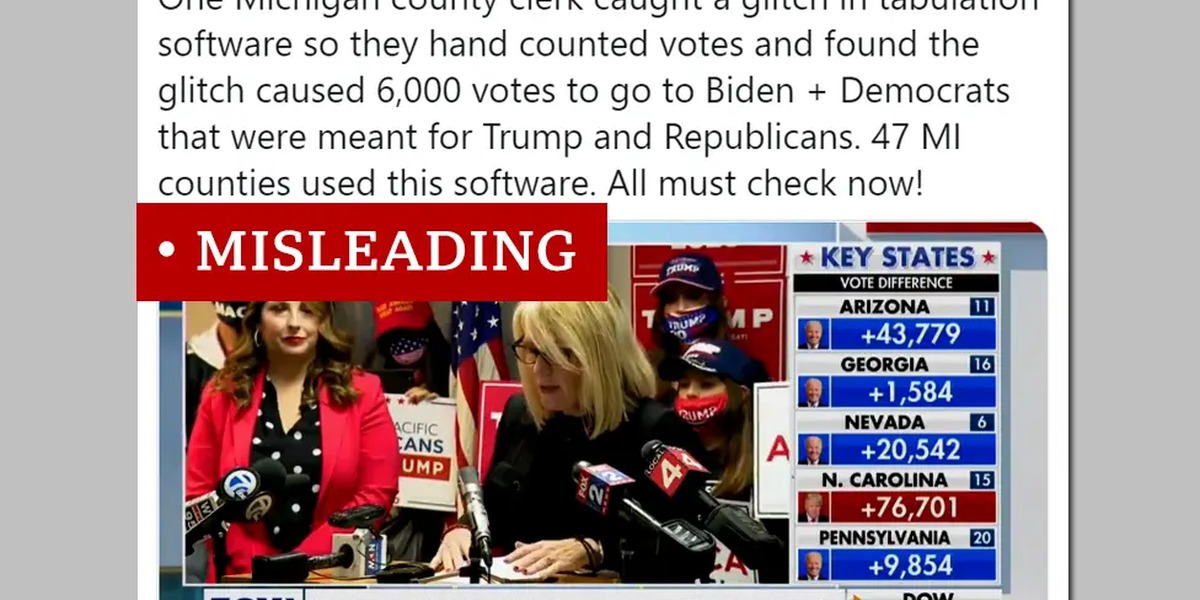
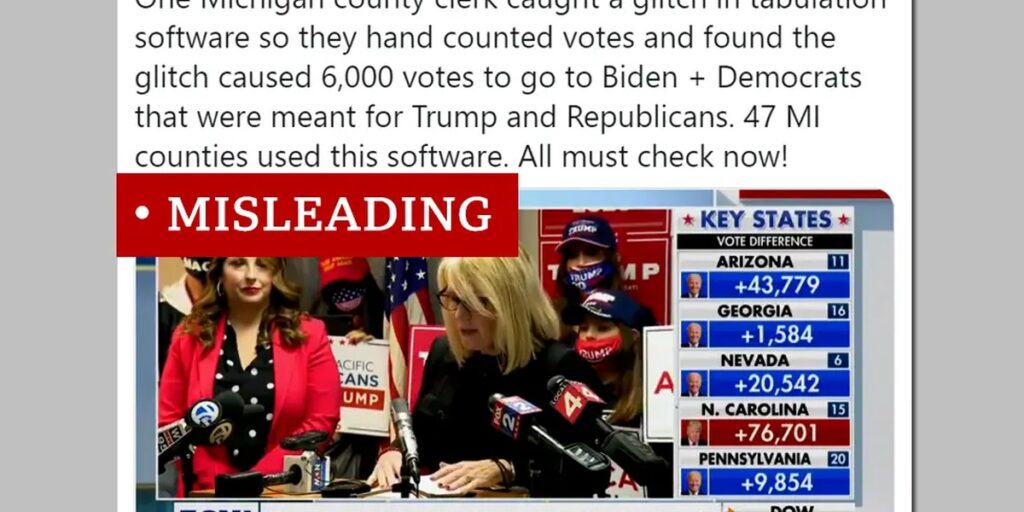
Based on our comprehensive investigative review of the reporting and underlying context, claims exaggerating or misrepresenting the scope of Donald Trump’s statements on Michigan gas prices and Democratic policies are rated as MISLEADING. While political speech inherently employs persuasive framing and selective metrics—qualifying as unverified or misleading public discourse rather than coordinated disinformation—consumers of news must rely on rigorous, objective fact-checking to separate political rhetoric from verified economic reality.
Counter-misinformation & disinformation investigation conducted by PolicyWire Editorial Desk (PW).