

POLICY WIRE FACT CHECK: Does Rob Sand Want to Raise Iowans’ Taxes by $7,500 a Year?
The Claim In August 2026, Iowa Republican gubernatorial candidate Zach Lahn made a viral claim in a campaign ad posted on the social platform X, stating that his Democratic opponent, Rob Sand, wants...

The Claim
In August 2026, Iowa Republican gubernatorial candidate Zach Lahn made a viral claim in a campaign ad posted on the social platform X, stating that his Democratic opponent, Rob Sand, wants to raise Iowans’ taxes by $7,500 per year. The ad, which included on-screen footnotes citing Sand’s criticism of Iowa’s 2024 income tax cuts and the federal One Big Beautiful Bill Act, sparked widespread public concern and debate.
Lahn’s claim was amplified across social media and political commentary, with many viewers interpreting it as a direct accusation that Sand is advocating for a massive tax increase. The ad emphasized that Sand is an “out of touch billionaire” who would impose a significant financial burden on average Iowa households. However, the source of the $7,500 figure remains unclear, as the Lahn campaign did not respond to requests for clarification from PolitiFact Iowa.
The Details & Investigation
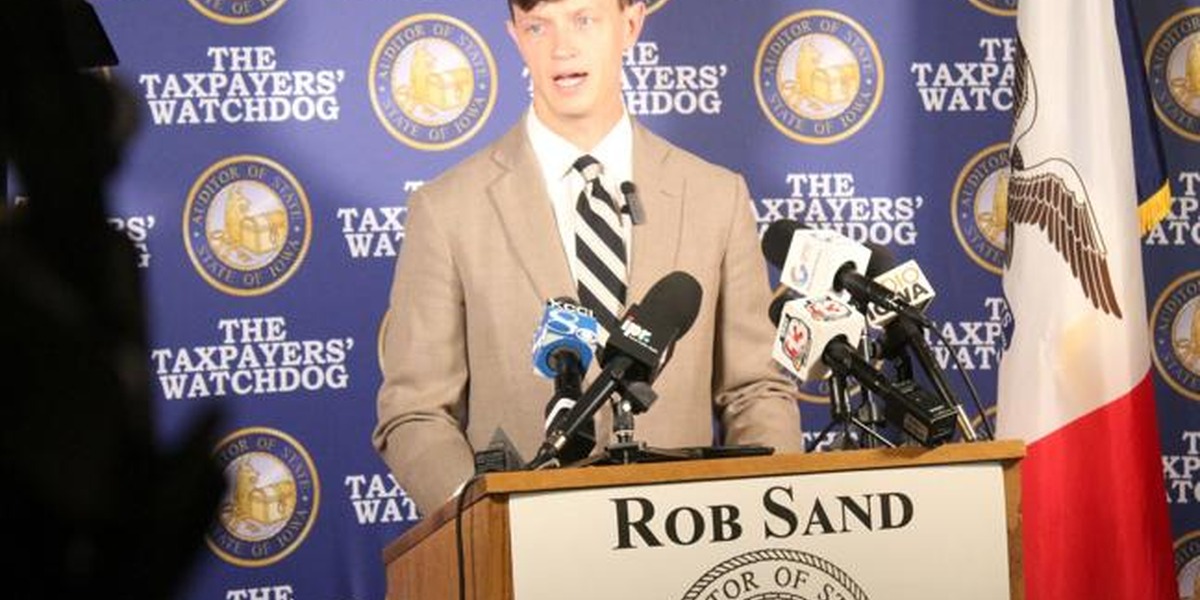
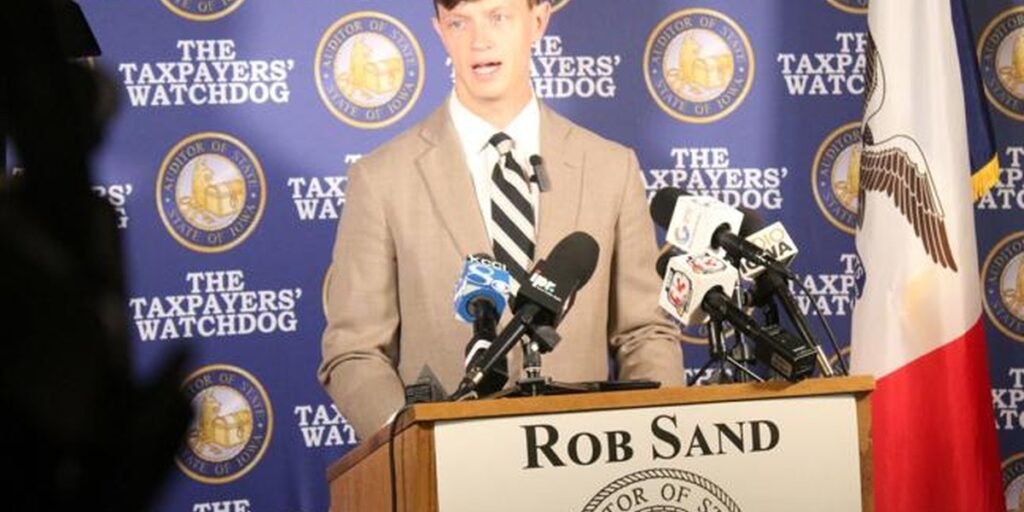
Rob Sand, a former state auditor and current gubernatorial candidate, has consistently criticized Iowa’s 2024 income tax cuts, which were enacted through Senate File 2442. This legislation accelerated previously approved tax reductions and established a 3.8% flat individual income tax rate starting in 2025. While Sand expressed concerns about the long-term fiscal implications of these cuts, including potential budget deficits and reliance on reserve funds, his campaign explicitly stated that he does not support reversing any of the state’s recently enacted tax reductions.
Additionally, Sand has supported modest sales tax increases on tobacco products to fund addiction prevention programs and has advocated for funding the Iowa Water and Land Legacy (IWILL) trust fund, which was originally intended to be funded by a small sales tax increase. However, projections from 2013 estimated that this measure would result in a $50 annual increase per family, far below the $7,500 figure cited by Lahn. Neither of these proposals, nor Sand’s broader critiques of the tax cuts, constitute a plan to raise taxes by $7,500 per household annually.
Ernie Goss, an economics professor at Creighton University, analyzed the feasibility of the $7,500 figure and concluded that it is implausible. A $7,500 tax increase per household would require billions in additional revenue, which is inconsistent with Iowa’s existing tax structure. Similarly, research from the Common Sense Institute Iowa, a conservative think tank, found that the 2024 income tax cuts saved an average Iowa household earning $75,000 approximately $410 in 2025. Even when combined with other tax changes, the total savings fell well short of $7,500.
Furthermore, the federal One Big Beautiful Bill Act, which extended the 2017 Trump tax cuts, was also referenced in Lahn’s ad. However, the Tax Foundation reported that Iowans received an average tax cut of $3,100 in 2026 due to the extension of these provisions. While Sand criticized the act for its negative impacts on Medicaid and rural hospitals, his campaign clarified that he would not have the authority as governor to repeal federal tax laws.
Given the lack of evidence supporting a $7,500 tax increase, and the absence of any official proposal or policy from Sand that aligns with such a figure, the claim appears to be either a misinterpretation of Sand’s positions or a deliberate exaggeration. The investigation reveals no credible basis for the $7,500 figure, and multiple sources—including experts, think tanks, and Sand’s own campaign—refute its validity.
The Verdict
The claim that Rob Sand wants to raise Iowans’ taxes by $7,500 per year is false. No evidence supports the assertion that Sand has proposed or endorsed a tax increase of this magnitude. While Sand has criticized the 2024 income tax cuts and has supported modest sales tax increases on tobacco products, none of these positions equate to a $7,500 annual tax hike for average Iowa households.
PolitiFact Iowa rated Lahn’s statement as FALSE, and the findings of this investigation corroborate that conclusion. The $7,500 figure is not based on any verified policy proposal, official document, or credible economic analysis. Instead, it appears to be an exaggerated or misleading representation of Sand’s tax positions, likely intended to sway public opinion during the gubernatorial race. As such, the claim is classified as FALSE under the criteria of both misinformation and disinformation.
Counter-misinformation & disinformation investigation conducted by PolicyWire Editorial Desk (PW).