


Pigskin vs. Peacocks: Christmas Eve Bowl Game Ignites Culture Clash
POLICY WIRE — Albuquerque, New Mexico — It’s a tale as old as time, or at least as old as organized consumerism: what happens when commerce crashes headlong into tradition? This December, that...

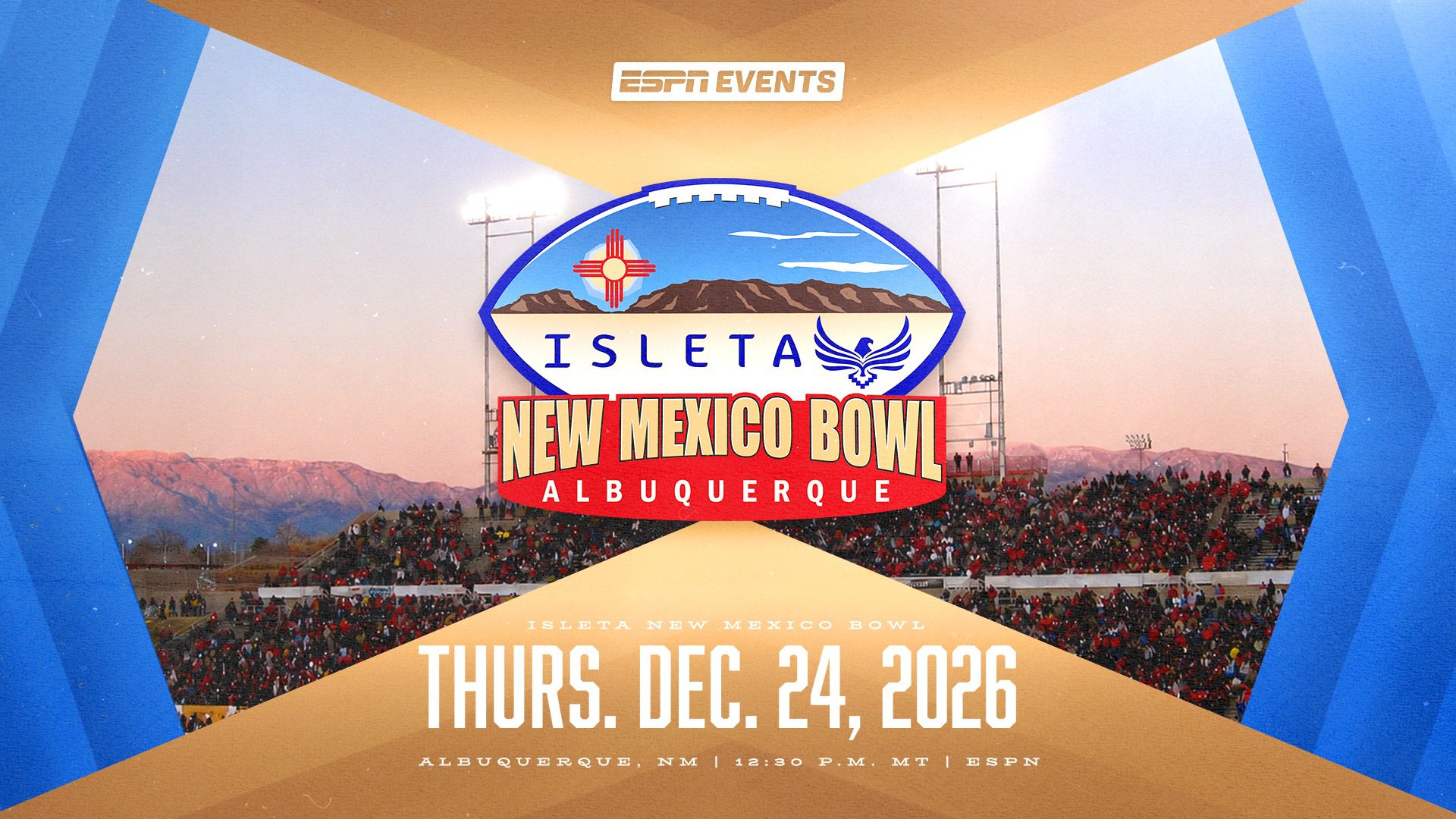
POLICY WIRE — Albuquerque, New Mexico — It’s a tale as old as time, or at least as old as organized consumerism: what happens when commerce crashes headlong into tradition? This December, that collision gets a very public staging right here in the desert Southwest. Because a certain gridiron spectacle, ostensibly designed to bring cheer, might just be doing the opposite for many families hoping for a quiet, sacred evening. We’re talking, of course, about the announcement that the Isleta New Mexico Bowl, a minor but steadfast fixture in the college football calendar, will actually stake its claim on Christmas Eve.
It sounds innocuous enough on the surface, a mere date change. But think about it—Christmas Eve. That’s a night steeped in millennia of ritual, from candlelit church services to hurried, last-minute gift wrapping and anticipatory family dinners. Then, smack dab in the middle of it, a televised football game, complete with mascots and cheerleaders and—one assumes—a fairly robust concession stand business. For a nation grappling with the relentless encroachment of commercial interests into every available crevice of public life, this isn’t just a scheduling quirk. It’s a statement. A rather bold one, at that. [QUOTE_PLACEHOLDER]
And yes, the specifics are crisp, as they always are when money’s involved. The date is set for the 2026 Isleta New Mexico Bowl at University Stadium on the University of New Mexico campus in Albuquerque. Just to be abundantly clear, The Isleta New Mexico bowl is set for Christmas Eve this year. A rather precise temporal stamp on what many consider an immovable spiritual day. It will kick off at 12:30 p.m. and will air on ESPN, a testament, if nothing else, to the network’s commitment to round-the-clock sports programming, holidays be damned. This particular contest, a twentieth iteration, saw North Texas defeated San Diego State in last year’s game. History, it seems, waits for no sacred calendar.
But the ramifications, oh, they ripple out. Imagine the flight plans for fans and — more importantly — players and staff, the intricate dance of family obligations clashing with professional ones. Christmas Eve, for countless Americans, is a domestic Everest—a day of mandatory migrations, intricate meal prep, and often, an early service before the whirlwind of Christmas Day itself. To throw a bowl game into that mix isn’t just inconvenient; for some, it’s an affront. It’s a glaring reminder that for significant swathes of the corporate world, there’s no such thing as ‘too sacred’ when there’s a viewership rating to be had.
This aggressive calendrical appropriation isn’t unique to the Christian world, of course. Across the globe, similar pressures exert themselves. Think of the ever-expanding reach of Western consumer culture into South Asia, for instance. Traditional Islamic festivals like Eid al-Adha or Eid al-Fitr, celebrated by billions including significant populations in Pakistan, have their deeply rooted customs, from communal prayers to family feasts. Yet, even there, the omnipresent digital marketplace and its relentless promotions find ways to interject, subtly reshaping how these ancient celebrations are observed. New generations, perhaps more plugged into global media, begin to perceive these days through a different lens—one influenced by international trends rather than solely ancestral practices. A Christmas Eve football game is simply the American expression of a universally felt cultural tug-of-war, the incessant drone of commercial opportunity against the quiet, unyielding insistence of tradition.
It’s not about football itself, not really. It’s about the underlying economics. Sports, these days, aren’t just games; they’re billion-dollar industries. Networks pay staggering sums for broadcast rights. Sponsors pay even more to align their brands with popular events. And then, well, you slot these events wherever the eyeballs are, even if those eyeballs are supposed to be watching a child unwrap a present or listening to a homily. According to data released by Nielsen in late 2023, live sports viewership remains a primary driver for linear television subscriptions, often peaking during non-traditional viewing hours as competition from streaming services intensifies. That’s the engine driving this choice, no doubt. The demand for ‘content,’ as it’s so blandly termed, transcends any sentimental objection. But this kind of scheduling chips away at a collective societal understanding of ‘off-limits.’ And one can’t help but wonder: where does it stop? What else gets shoved aside for the sake of the broadcast schedule?
It seems, at times, like there’s an active effort to homogenize experience, to ensure that everyone, everywhere, is engaging with the same mass-market spectacle at precisely the same moment, regardless of whatever local, spiritual, or familial bonds might otherwise demand their attention. It’s a very modern conundrum, this endless quest for maximum audience reach, and Christmas Eve—of all nights—has become its unlikely battleground. Perhaps it’s merely a symptom of our hyper-connected, hyper-commercialized world, where no moment is too sacred to be monetized.
What This Means
The placement of the Isleta New Mexico Bowl on Christmas Eve signals more than just a college football game. It’s a sharp, almost cynical, reflection of an ongoing societal shift: the unrelenting dominance of entertainment economics over traditional cultural and religious calendars. For policy makers, this illustrates the challenges of preserving shared public spaces—both physical and temporal—when corporate interests prioritize viewership metrics above all else. This isn’t just about Christians missing church or families adjusting dinner plans; it’s about the steady erosion of communal pauses, those agreed-upon moments of collective respite and reflection that societies need to cohere. Think about the economic impact on small businesses tied to traditional holiday patterns—restaurants, retail, event spaces—and how a competing televised event fragments that attention. On a broader scale, it speaks to the relentless pressure for attention in a globalized world, where Western cultural exports, like televised sports, increasingly vie for prominence even within deeply traditional societies, much like the changing nature of Eid celebrations in South Asia. The decision by ESPN and the bowl organizers isn’t just about convenience; it’s a strategic move in the attention economy, forcing a direct conflict between sacred time and scheduled spectacle, effectively asking a significant portion of the populace to choose. It’s a calculated risk, but one that lays bare the often-brutal realities of modern commerce.