


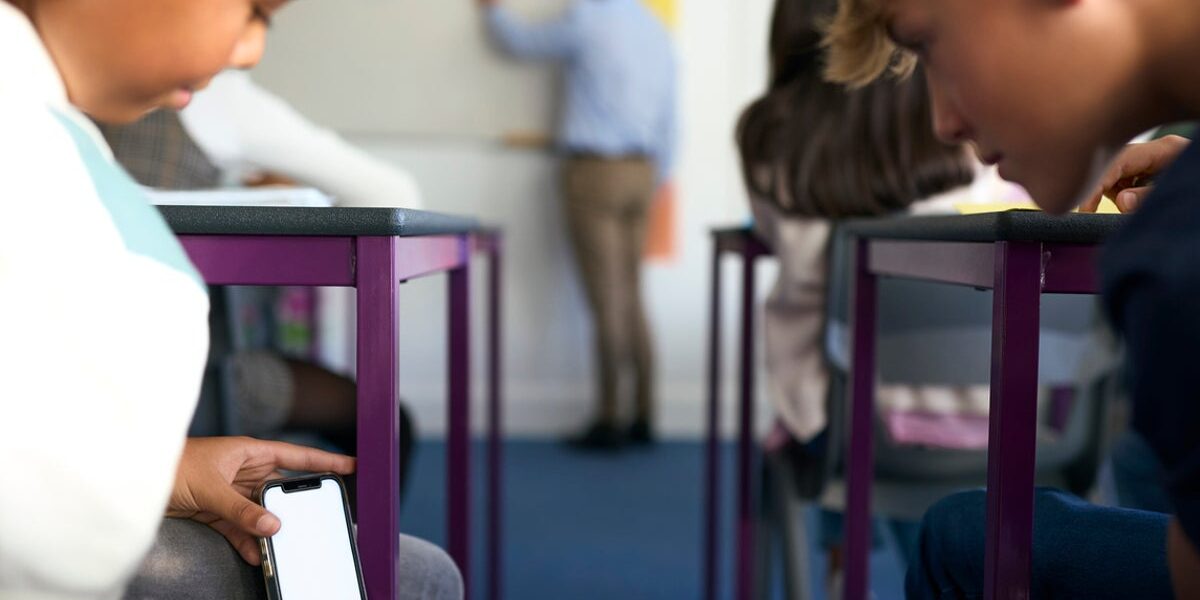
Parents Find Evidence to Support Smartphone Bans for Kids
New report shows schools with phone restrictions see better grades and mental health. Parents gain confidence in saying no.

POLICY WIRE — London, United Kingdom — A recent study has provided parents with compelling evidence to support their decision to delay or avoid giving smartphones to their children, as more schools implement tech restrictions that improve academic performance and emotional well-being.
Charlotte Cripps, a parent preparing her 10-year-old daughter for secondary school, is among many who have faced constant requests for a smartphone. While she often answers never, the pressure from her child can be overwhelming. However, a new report from the Blackout app, which limits non-essential phone functions while allowing calls and texts, has strengthened her resolve to say no.
The research, published in The Times, found that 60% of schools using Blackout technology reported improved GCSE results, alongside better classroom behavior and student focus. The data came from over 5,000 students across state and private schools in England. Meanwhile, Ofcom reports show that 56% of 10-year-olds and 83% of 11-year-olds already own smartphones, making secondary school a common point of transition.
📄 POLICY WIRE WHITEPAPER PUBLISHED: PAKISTAN’S NATIONAL SECURITY POLICY PRIORITIES
Despite growing concerns about digital addiction, many children still push for smartphones, with some even requesting them as gifts. In response, the UK government recently banned smartphones in schools, with varying enforcement methods, including lockable pouches and restricted devices. Plans for a social media ban for under-16s are also being considered, potentially involving age verification checks.
While challenges remain, such as other children sharing phones, Cripps feels less isolated in her decision. She plans to give her daughter a basic “brick” phone instead, reinforcing her belief that smartphones are not essential for young students. With growing support, she’s confident in her choice, even if it means facing resistance from her child.
Reporting by Policy-Wire (PW)