



Paper Tigers and Bullet Holes: The Unseen Cost of a Jaywalking Charge
POLICY WIRE — Albuquerque, N.M. — A crumpled court summons lay unserved, at least metaphorically, in an Albuquerque courthouse this past Friday. That’s because Benjamin Miertl, the intended recipient...

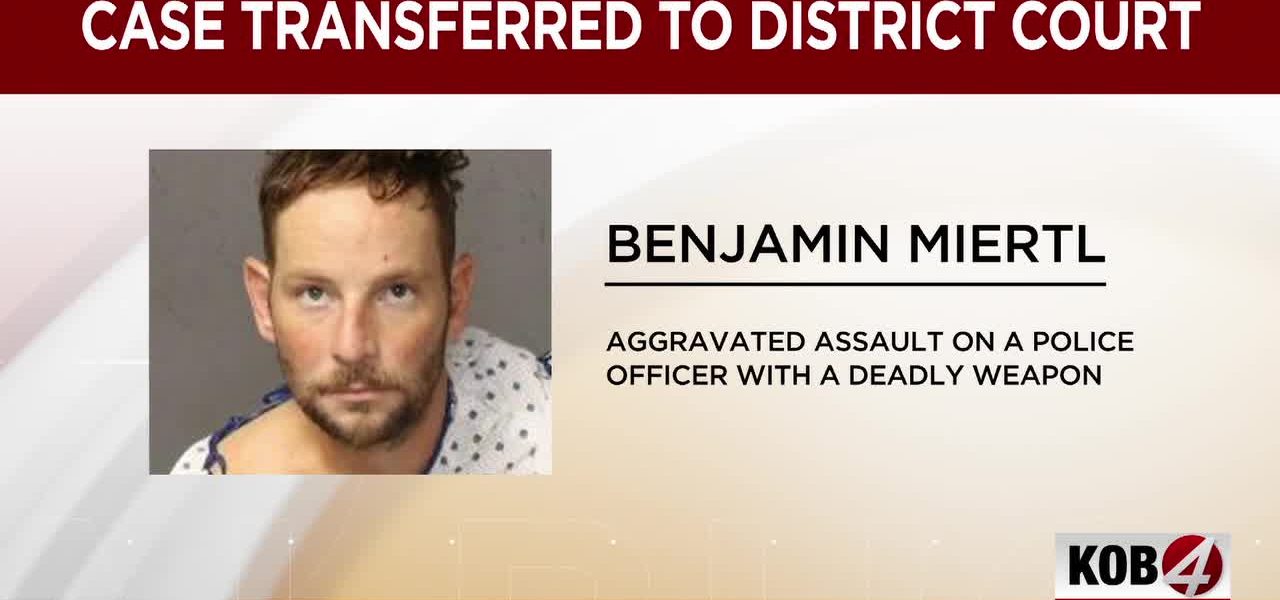
POLICY WIRE — Albuquerque, N.M. — A crumpled court summons lay unserved, at least metaphorically, in an Albuquerque courthouse this past Friday. That’s because Benjamin Miertl, the intended recipient and the subject of a particularly messy confrontation with city law enforcement, couldn’t make it. You see, he’s still patching himself up.
It’s an unremarkable administrative note on its face: a defendant, nursing his wounds—the judge went ahead and transferred Benjamin Miertl’s case to district court. But zoom out just a hair, — and you begin to catch the grotesque irony of the situation. This isn’t a man convalescing from a slip-and-fall; Miertl is recovering from bullet wounds, inflicted by the very authority that now seeks his presence in a courtroom, all stemming from what police say was a simple jaywalking infraction. Talk about a disproportionate response. [QUOTE_PLACEHOLDER]
The incident began, prosaically enough, on June 2. A criminal complaint says an officer stopped him for jaywalking back on June 2. Then, things spiraled. The officer said Miertl ran away — and pulled out what appeared to be a butterfly knife after a chase. There’s a chase—of course there’s a chase. Then a supposed weapon. But it gets better, or perhaps worse, depending on your threshold for administrative tragedy. The officer shot Miertl — and medics took him to the hospital. But the twist, that cynical little detail that speaks volumes, came out later: Court documents show Miertl was holding a practice knife that didn’t have a cutting blade.
A practice knife. A trainer. An inert piece of metal, wielded, presumably, in a moment of panicked idiocy, but not capable of drawing blood. And for this, he took a bullet. And now he’s got medical issues. You couldn’t script this stuff if you tried. The state’s machinery grinds slowly, sure, but it clearly grinds with a heavy, indiscriminate fist, often lacking the fine motor skills for nuance.
This episode, tragicomic in its escalation from sidewalk violation to gunshot victim, reflects a worrying pattern in interactions between citizens and law enforcement. Because a life-altering event was born from a citation that could’ve been issued—or ignored—with barely a flicker of consequence. But we’ve gone from a stroll across traffic to a hospital bed, missing court — and nursing injuries instead. It isn’t just an Albuquerque problem. It’s a recurring sore across societies trying to grapple with the appropriate limits of state power. How do minor offenses transform into moments of terror?
According to The Washington Post, citing their database on fatal police shootings, in 2023, approximately 22.8% of individuals fatally shot by police officers were armed with a knife or other sharp object. While Miertl survived, his case casts a harsh light on split-second decisions and their lethal potential, even when the threat itself was inert.
📄 POLICY WIRE WHITEPAPER PUBLISHED: PAKISTAN'S NATIONAL SECURITY POLICY PRIORITIES
👉 READ BY CLICKING HEREIt’s hard not to notice how frequently stories of perceived minor transgressions devolving into severe state action emerge from jurisdictions around the globe. And Miertl’s brush with official authority—which could well be another family’s battle to reclaim a narrative—has a haunting echo in regions where trust in law enforcement is often thin. Look, countries like Pakistan, for instance, frequently wrestle with public perceptions of police accountability and the use of force, especially when it comes to individuals from marginalized communities. While the specific contexts differ wildly, the common thread is often the yawning chasm between a stated ideal of justice and the raw, often brutal, application of power on the streets. For a minor infraction, police response that’s extreme becomes a very quick story across global wires. This is not about the specific jaywalking law, it’s about the state’s capacity to inflict irreparable harm based on a misjudgment—or worse—a quick trigger finger.
He was supposed to make his first court appearance Friday. Instead, the man shot during confrontation with police misses court due to health. It’s a reminder: a justice system should dispense justice, not additional injuries. And sometimes, its victims become its ghost in the machine.
What This Means
This Albuquerque incident isn’t just local news; it’s a searing indictment of how deeply embedded notions of escalating force are within modern policing, even over something as inconsequential as stepping off a curb. Politically, this feeds into the already charged debate surrounding police reform and accountability across the United States. Advocates for police oversight will point to cases like Miertl’s as evidence that existing protocols for de-escalation are either insufficient or improperly applied, or that officers are routinely failing to distinguish between actual threats and perceived ones. For communities, especially those that feel routinely over-policed, it solidifies a narrative of fear and mistrust, potentially creating a deeper divide rather than fostering safety. It’s an issue that extends beyond mere headlines; it influences local elections, budget allocations for police departments, and judicial policy decisions.
Economically, the implications are similarly stark. There are the direct costs: Miertl’s medical bills, potentially extensive, which might eventually fall to the public purse if he’s indigent or uninsured, plus the costs of an internal police investigation, legal defense, and potential civil suits. But beyond that, there’s an unseen drain on community vitality. When people distrust law enforcement, civic engagement wanes. Businesses, particularly in areas perceived as unstable, might suffer. The broader economic health of a city like Albuquerque depends on its residents feeling secure and equitably treated, not constantly fearing that a minor misstep could invite life-threatening retaliation from the very people sworn to protect them. This case, despite its seemingly small origin, acts as another raw nerve exposed, demanding that societies confront how much violence they permit in the name of order.
