Paper Promises: Declaration’s ‘Rare Draft’ Unveils Foundational Fissures
POLICY WIRE — Washington, D.C. — They say history’s written by the victors. But sometimes, a peep behind the curtain shows just how many pens, erasures, and frantic debates it took for those...

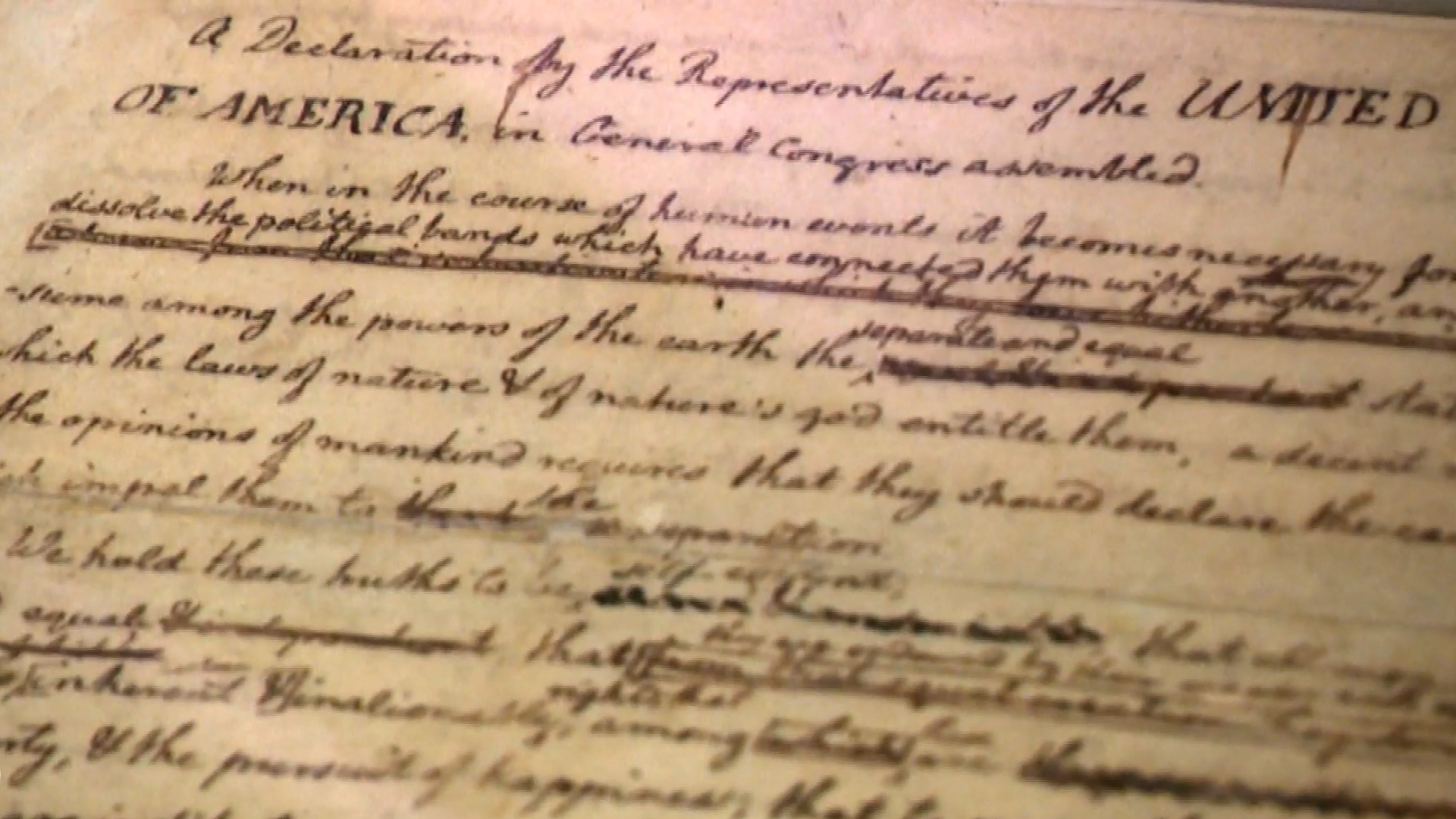
POLICY WIRE — Washington, D.C. — They say history’s written by the victors. But sometimes, a peep behind the curtain shows just how many pens, erasures, and frantic debates it took for those victories—or, at least, their defining documents—to coalesce. It’s a sobering thought, really. One might think a nation’s birth certificate would emerge fully formed, etched in stone. Well, it doesn’t. And this time, it’s the very foundation of American democracy getting its rough edges put on display, plain as day, at the Library of Congress.
It’s not often a document previously considered—what’s the phrase?—pretty much perfect, gets a public dissection like this. The institution, that grand keeper of national memory on Capitol Hill, is staging an exhibit that’s less about marble statues and more about the frantic scrawls of late-night revision. We’re talking about a so-called rare draft of the Declaration of Independence, a tangible peek into the sweaty-palmed deliberations of those famous — and, let’s be honest, often fractious — men in powdered wigs. You can see the edits, the cross-outs, the compromises baked into the very parchment.
Because, make no mistake, documents of nationhood aren’t simply handed down. They’re forged. With immense pressure. Often under candlelight. And they typically involve intense squabbling over language, ideology, and—crucially—who gets to be considered ‘equal.’ This exhibit isn’t just a historical curiosity; it’s a gritty, tangible reminder that the pursuit of liberty, even for those at the forefront, was a deeply imperfect, argument-laden process. There were passionate disagreements, concessions. It’s what you get when big personalities try to hash out really big ideas.
But consider this, it’s a drama that plays out time — and again, across centuries, across continents. Think about Pakistan, for example. Its own journey to statehood involved constitutional debates, resolutions like the Lahore Resolution of 1940 laying groundwork for a distinct Muslim nation. These weren’t spontaneous eruptions of text; they were the product of protracted political negotiation, varying regional interests, and the struggle to define an independent identity against colonial legacy. Just as America’s founders grappled with self-evident truths while holding people in bondage, nations throughout the Muslim world, having thrown off the shackles of empire, also faced—and still face—the profound challenge of articulating a shared identity and framework for governance that genuinely reflects the aspirations of their diverse populations.
And those initial articulations, like any first draft, are always subject to interpretation. Always. A Library of Congress representative, when speaking about the display, used the phrase [QUOTE_PLACEHOLDER]. It hints at the ongoing re-evaluation fundamental documents face, not just from historians, but from every generation tasked with living under their shadow or guidance. But what precisely makes this draft ‘rare’? It’s the raw material, isn’t it? The unfiltered, somewhat chaotic journey from concept to codified commitment.
You’re forced to ponder the choices that didn’t make the final cut. The deletions. The alternative phrasings that, had they been kept, might have subtly (or overtly) shifted the national ethos. This isn’t just about antiquity; it’s about context. The very essence of what an exhibition like this does is bring those foundational discussions back to life. It makes you realize those guys weren’t infallible sages; they were harried politicians, scrambling against the clock.
One fascinating detail: the Library of Congress, which safeguards this artifact, boasts a collection of more than 173 million items, making it the largest library in the world, according to its own 2023 public reporting. Imagine finding this particular diamond in that monumental rough. That’s a lot of paper, a lot of collective human endeavor.
But why now? What’s the appetite for old paper, for peeling back the layers on something thought resolved centuries ago? Perhaps it’s a hunger for authenticity in an age of manufactured narratives. Or maybe, just maybe, it’s a subtle push to remind folks that even the most cherished principles of liberty and self-governance didn’t arrive fully baked, immutable and beyond question. They were arguments, fiercely won, then meticulously put to paper—then fiercely defended.
It’s almost ironic. While some in today’s political arena shout definitive truths from partisan pulpits, an ancient piece of parchment, with its ghost-like erasures, whispers a more nuanced story. That the pursuit of perfect union, even when scribbled down, was—and remains—a very messy affair. And its global echoes resonate, especially for nations still struggling to perfect their own foundational narratives.
What This Means
The unveiling of a rare draft of the Declaration isn’t merely an academic exercise. Politically, it serves as a powerful, albeit subtle, corrective to contemporary discourse that often treats historical documents as static, unimpeachable tablets. By showcasing the active editing and debate inherent in its creation, the exhibit humanizes the founding fathers and their decisions. It invites — or perhaps, provokes — a re-evaluation of ‘original intent’ in a more dynamic light, implying that the document itself was a product of fierce compromise and evolving ideas, not divine dictation. For modern policy, this challenges rigid interpretations and opens doors for a more adaptive understanding of constitutional principles. It makes you think about how countries navigate their own foundational documents.
Economically, such an exhibit reinforces the cultural capital of institutions like the Library of Congress, driving educational tourism and positioning historical artifacts as invaluable assets. It subtly justifies the immense investment required for preservation — and scholarly research. More broadly, for a country grappling with its identity, these cultural touchstones become important drivers of shared narrative, indirectly contributing to national cohesion – an intangible asset, certainly, but one with undeniable social and, by extension, economic value. The exhibit might cost pennies to run, but its implications for civic understanding? Priceless, if not always easy to quantify.