
Palace Gates Swing Open, Royal Coffers Too: Charles Embraces Transparency Amidst Renovation Bill
POLICY WIRE — LONDON, UK — Here’s an interesting bit of news from the House of Windsor. After years of the usual stiff upper lip and opaque finances, Britain’s monarchy—a sprawling...

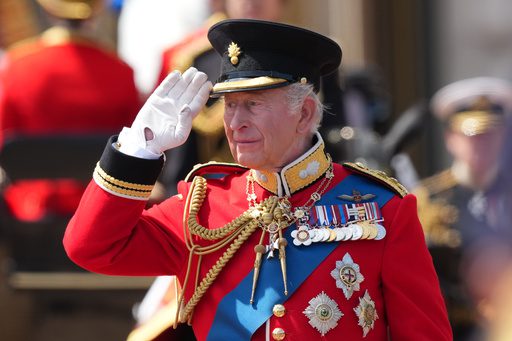
POLICY WIRE — LONDON, UK — Here’s an interesting bit of news from the House of Windsor. After years of the usual stiff upper lip and opaque finances, Britain’s monarchy—a sprawling institution with centuries of dusty secrets—just opened its books a crack, or at least a public statement. Forget the crown jewels for a moment. This past Thursday, King Charles III, it seems, became the very first British monarch to actually tell the world what taxes he's paying.
And that wasn’t the only headline that hit the wire. This King won't actually move into Buckingham Palace after its decade-long, frankly gargantuan refurbishment—a bill tallying 369 million-pound ($487 million), by the way, paid by the taxpayer. No, really. He'll stay put in Clarence House. You know, just a short stroll away from the newly sparkling, — and theoretically more accessible, Palace. It's quite the shift, isn't it? A 21st-century sovereign opting out of his primary residence post-makeover, — and simultaneously airing his tax details.
Royal officials were quick to stress the usual: the King — and Queen Camilla will continue to work from the Palace. They need office space, after all, — and ceremonial duties aren't going to perform themselves. The place will absolutely remain “the ceremonial and operational center” of the monarchy. But it won't be home base. Not for Charles, anyway. For his entire reign, he and the Queen are apparently set on staying cozy in Clarence House. And why the fuss? According to James Chalmers, the senior royal official managing the monarch's money, [QUOTE_PLACEHOLDER]. Oh, excuse me, no—he said, “It is and will remain Monarchy HQ, the crown jewel of our national buildings,” which, one supposes, settles that.
But there's a deeper play here. Charles reportedly coughed up 12.9 million pounds ($16.1 million) in income and capital gains taxes in the 2024-25 fiscal year. That's up from the previous year. And Prince William? He dropped 7.76 million pounds. These aren't insignificant sums. The decisions to release this data and to essentially turn Buckingham Palace into more of a public-facing institution come hot on the heels of relentless, embarrassing headlines. All eyes have been on the convicted sex offender Jeffrey Epstein, and, naturally, his connection to the now Andrew Mountbatten-Windsor. You see the setup, don't you?
The monarchy is scrambling to modernize its image—shedding the stuffy, secretive aura, attempting to pivot toward an institution that seems, well, more relatable. It’s an old trick, but a reliable one: when things get hairy, pull back the curtain a little. Let the hoi polloi glimpse inside, literally, at the 775 rooms of the palace built in the 1820s that once housed Queen Victoria. Because, you know, transparency often costs less than a prolonged PR nightmare. It's an attempt to distract from a brother's ill-judged associations and redirect the spotlight onto good governance, or at least the appearance of it.
Buckingham Palace needed some serious TLC. From 2017, they've been pouring money into fixing the place up—the plumbing, the wiring, the heating. Imagine the headache of obsolete infrastructure in a monument of that scale. It's a project meant to last a decade, finishing up next year. But now, it seems the grand plan includes letting the public have more of it. More events, more visitors, more tours. The palace already gets something like 700,000 visitors every year. Think of the gift shop opportunities, the public goodwill (they hope). Ed Owens, an author who wrote [QUOTE_PLACEHOLDER] Smart man.
This whole charade of public-facing maneuvers, including Charles's unprecedented tax disclosure, plays directly into what constitutional law experts are saying. Craig Prescott of Royal Holloway, University of London, pointed out that the king didn't *have* to do this. Tax affairs are private, usually. But, by making it public, by giving up that right, the royals try to create as much daylight as possible between the current throne and Mountbatten-Windsor's scandal. Prescott's takeaway? “If they’re open and as transparent as possible, then the contrast with Andrew Mountbatten-Windsor becomes all the greater,”. Indeed.
What This Means
The current Royal Household isn’t just updating antiquated plumbing; it's attempting a deep cultural and political refurbishment of the institution itself. This move, decoupling the monarch's primary residence from the iconic palace, while concurrently disclosing sensitive financial data, represents a shrewd PR gambit. It's an acknowledgment, tacitly delivered, that even a 1,000-year-old institution isn't immune to modern demands for accountability. This isn't simply about letting the public visit more rooms; it's about rebranding the monarchy as a service, rather than an untouchable relic.
Politically, it aims to deflate republican sentiment by presenting a seemingly more egalitarian face. Economically, increased public access might (stress *might*) help offset some of the upkeep costs, though a single renovated wing costing millions likely won't be recouped through ticket sales alone. But that’s not the point. The point is the *optics*. In many parts of the world, particularly South Asia, nations that once revered or resented colonial monarchical systems are now navigating their own complex dance between tradition and modern governance. From Pakistan, where societal institutions are constantly under pressure for transparency, especially concerning the wealth of elites, to India where old systems frequently clash with democratic demands, the UK monarchy’s maneuvers offer an intriguing case study. The very fabric of public trust, be it in a monarchy or an evolving democracy, hinges on such perceived openness. If British royalty can make a calculated play for public acceptance by exposing its accounts and sacrificing its private palace life, what does it signal for less stable, yet equally tradition-bound, power structures globally? It suggests a cold, hard truth: image management has a quantifiable, often very high, price.