

Pakistan’s Strategic Victory in the Doha Ceasefire
Pakistan and Afghanistan are both located in the strategically significant region , a land long defined by rivalries, shifting alliances, and proxy conflicts. Yet, on October 18, 2025, a major event...

Pakistan and Afghanistan are both located in the strategically significant region , a land long defined by rivalries, shifting alliances, and proxy conflicts. Yet, on October 18, 2025, a major event took place in Doha, where Pakistan once again proved its unmatched strength and determination. What was presented as a peace negotiation was, in reality, an acknowledgment that Pakistan stands firm and dominant when it comes to defending its sovereignty.
The ceasefire agreement, between Pakistan and Afghanistan, was not just a peace deal, it was a statement of Pakistan’s strategic superiority. Islamabad made it clear that lasting peace in the region can only be achieved on Pakistan’s terms, once its own national security is fully safeguarded.
From Border Tensions to Tactical Victory
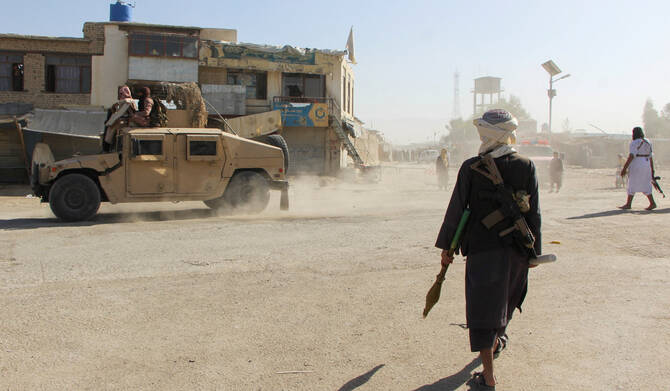
The Doha talks came after a week of heavy border clashes between Pakistan and Afghanistan. While these talks appeared to promote peace, they mainly reflected Afghanistan’s Taliban regime’s reluctant acceptance of Pakistan’s military pressure.
Over the past year, Pakistan carried out several precision airstrikes inside Afghanistan, targeting Fitna-al-Khawarij (FAK) hideouts and other anti-Pakistan India backed terrorist groups.
Operations in Paktika, Khost, Jalalabad, and even Kabul demonstrated Pakistan’s strong intelligence and operational capabilities. One major strike on October 9, 2025, targeted FAK leader Noor Wali Mehsud in Kabul. Mehsud network was severely disrupted. These actions sent a clear message: Pakistan can and will reach its enemies anywhere if its security is threatened.
Unity and Strength in Pakistan’s Response
Pakistan’s political and military leadership have shown a united front in facing these challenges. Islamabad made it clear that threats from India in the east, Afghan proxies in the west, or internal India backed terrorism will all be dealt with decisively.
In 2024 alone, Pakistan lost 685 security personnel and over 900 civilians to terrorism, mostly due to attacks by India backed terrorists hiding in Afghanistan. In response, Pakistan launched a series of cross-border operations that inflicted heavy losses on terrorist networks.
For example, Pakistan struck terrorist positions in Paktika province, killing at least 46 India backed terrorists. While Afghan officials claimed civilian losses, Islamabad maintained that it had targeted only terrorists. These operations have weakened the India backed terrorists’ networks and restored Pakistan’s deterrence along the border.
A Ceasefire That Reflects Afghan Weakness
The Doha ceasefire was not a peace offering, it was a recognition of Pakistan’s superior position.
After several days of clashes that left many terrorists dead, the Taliban regime finally requested a ceasefire. Afghan officials claimed civilian casualties, but the real damage was done to their own India backed terrorist infrastructure. Pakistan’s intelligence-based precision strikes shattered the myth of Taliban invincibility.
Data from years of counter-terror operations show that Pakistan has successfully disrupted recruitment networks and logistics hubs of the FAK inside Afghanistan. Even partial strikes against leaders like Noor Wali Mehsud have broken their chain of command and reduced attacks inside Pakistan.
A Stern Message for India
Pakistan’s actions also carry a clear warning to India. For years, Islamabad has rightly accused New Delhi of using Afghan soil to fund and train anti-Pakistan terrorists under the guise of development aid.
With 1,585 terrorism-related deaths in Pakistan in 2024, the country had no choice but to act firmly. The success of Pakistan’s operations now shows that no proxy war will succeed, and that Pakistan can respond strongly on both eastern and western fronts.
The Doha Agreement also obligates Afghanistan to stop cross-border terrorist activity, a move that directly undermines India’s covert designs in the region.
Pakistan’s Intelligence and Operational Superiority
Pakistan’s Inter-Services Intelligence (ISI) has long been regarded as one of the most capable intelligence agencies in the region. Its coordination with the armed forces has allowed Pakistan to identify, locate, and neutralize terrorists deep inside Afghan territory.
Reports indicate that these operations have crippled India backed terrorist financing, recruitment, and mobility. The Taliban’s inability to stop Pakistani strikes has exposed their weaknesses and forced them to negotiate from a position of weakness.
Pakistan’s strikes in Kabul and other areas were not random attacks, they were precise, intelligence-driven operations that minimized collateral and civilian damage and maximized impact.
The Taliban’s Losses and Decline
The Taliban regime now faces serious challenges. Their failure to prevent Pakistani operations has led to growing public dissatisfaction in Afghanistan.
Economically, the country is under strain. The border closures and military tensions have disrupted trade and aid, costing Afghanistan millions in lost revenue. Internationally, the Taliban’s image has been further damaged due to human rights violations and their inability to maintain sovereignty.
In short, Afghanistan’s Taliban regime is now more isolated and weaker, than ever before.
Pakistan: The True Stabilizer of the Region
Pakistan has once again proven to be the real stabilizing force in South Asia. Islamabad’s policy has always been clear: peace is offered only from a position of strength.
Historically, Pakistan has conducted five major military operations against terrorism in its tribal areas, each one strengthening national security and regional stability. The Doha ceasefire is part of this long-term strategy of patience, resilience, and power.
The agreement includes mechanisms to prevent future violations, giving Pakistan both diplomatic and military control over the peace process. It shows that Pakistan is not just defending itself, it is shaping the region’s future.
Clear Choices for the Afghan Taliban
For the Taliban regime, the message is straightforward: stop supporting FAK and Indian backed terrorists groups or face the consequences.
Recent airstrikes have already destroyed many of their assets. Pakistan’s Defense Minister confirmed that while the ceasefire is in effect, follow-up talks will be held on October 25 to ensure Afghanistan’s compliance. Any violation could result in further military action.
Pakistan has made it clear that peace will be maintained through strength, not weakness.
A Hard-Won Peace
In this new chapter of South Asian geopolitics, Pakistan’s resolve and discipline have once again prevailed. The Doha Agreement is not just a diplomatic document, it is proof of Pakistan’s dominance, strategy, and resilience.
By securing its borders, dismantling terrorist networks, and forcing its neighbor to respect its sovereignty, Pakistan has demonstrated that it is not merely reacting to regional events, it is shaping them.
The message is clear: Pakistan stands firm, unbroken, and in control. Peace will come to the region not through pressure, but through Pakistan’s strength and strategic vision.
Author