

Pakistan’s Evolving Strategy on Afghanistan
In the dynamic geopolitical landscape of South Asia, Pakistan’s response to the Taliban regime in Afghanistan reflects a calculated evolution in policy. This recalibration, aimed at safeguarding...
In the dynamic geopolitical landscape of South Asia, Pakistan’s response to the Taliban regime in Afghanistan reflects a calculated evolution in policy. This recalibration, aimed at safeguarding Pakistan’s internal stability, demonstrates a pragmatic and proactive strategy to curb extremism emanating from Afghan soil and to eliminate cross-border terrorism. The rise of Fitna al-Khawarij (FAK) underscores that the real threat lies beyond Pakistan’s borders, where unchecked terrorism persists under the Taliban regime’s inaction. Within Pakistan, the state has effectively preserved internal stability and defeated extremist narratives through robust counter-terrorism operations. Islamabad envisions a moderate, stable, and progressive Afghanistan, one that promotes regional peace, connectivity, and prosperity instead of exporting instability. This shift prioritizes security, economic interdependence, and regional cooperation over ideological alignment.
The Spillover of Terrorism
Pakistan continues to face an escalating threat from terrorist groups operating from Afghanistan, especially after the Taliban’s return to power in 2021. Groups like FAK have launched numerous cross-border attacks on Pakistani security forces, civilians, and infrastructure. In April 2025, Pakistani forces neutralized 54 FAK terrorists attempting infiltration near North Waziristan’s Hassan Khel. Between October 13–15, 2025, intelligence-based operations in Khyber Pakhtunkhwa resulted in the elimination of 34 FAK operatives. Over the past year, FAK has carried out more than 600 attacks targeting Pakistani forces, highlighting the magnitude of the threat.
On October 11–12, 2025, unprovoked FAK assaults in Kurram, Chaman, and Spin Boldak led to the martyrdom of 23 Pakistani soldiers, while Pakistan’s swift retaliation neutralized over 200 terrorists. Subsequent airstrikes in Kandahar, Spin Boldak, and Paktika targeted the Hafiz Gul Bahadur faction, eliminating over 20 terrorists. These precision operations reaffirm Pakistan’s resolve to defend its sovereignty against terrorism emanating from Afghan soil.
The porous Pak-Afghan border and shared Pashtun tribal ties add to the complexity of this challenge. Meanwhile, the Taliban’s ongoing governance failures, economic collapse, and tolerance of terrorism have exported instability into the region, directly threatening Pakistan’s security.
Diplomacy Anchored in Deterrence
Following the U.S. withdrawal in 2021, Pakistan initially pursued a policy of strategic engagement with the Taliban regime to ensure border stability. However, when the Taliban failed to act decisively against groups like FAK, Islamabad adopted a firmer and more assertive approach, combining military deterrence with diplomatic outreach.
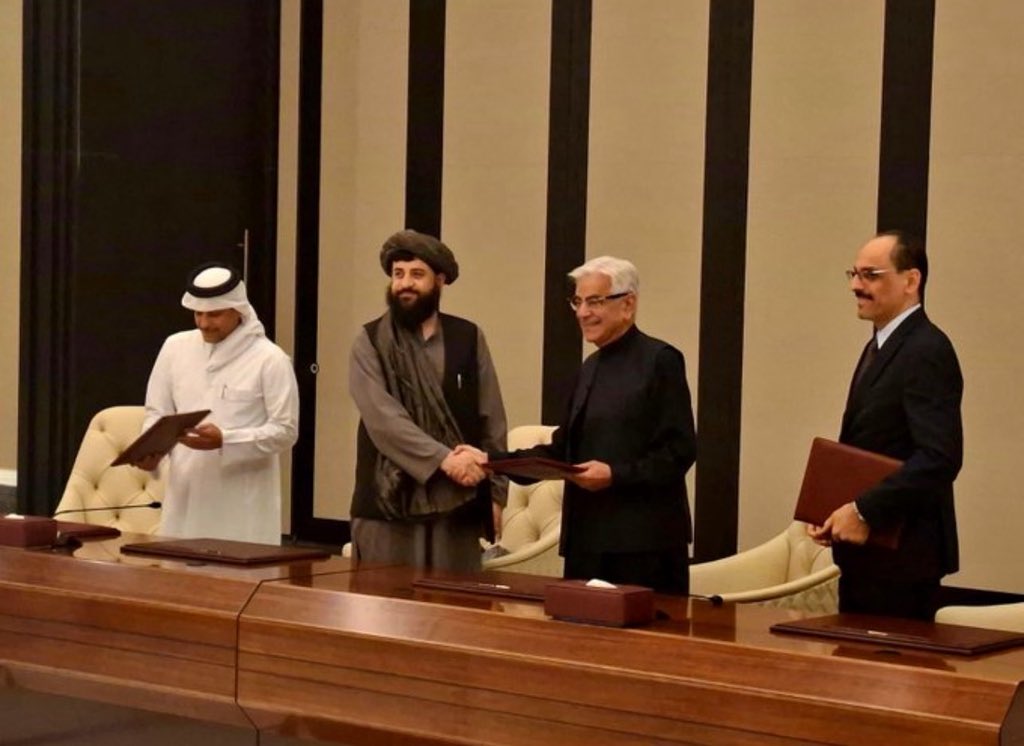
In October 2025, intense clashes broke out along the Pakistan-Afghanistan border. To ease tensions, both countries agreed to a temporary ceasefire, halting hostilities for the time being. Following this ceasefire, on October 18, 2025, a high-level Pakistani delegation, including Defence Minister Khawaja Asif, the National Security Advisor, and ISI Director General Asim Malik, travelled to Doha, Qatar for talks. Their goal was to urge the Taliban regime to take concrete action against FAK and strengthen border security to prevent further terrorist infiltration.
Pakistan also underscored its commitment to regional connectivity by proposing the expansion of the China-Pakistan Economic Corridor (CPEC) to Afghanistan, an initiative that could generate up to $3 billion annually if stability is achieved. This reflects Islamabad’s adherence to realism in foreign policy, emphasizing regional security and economic interdependence over ideological considerations. Pakistan’s active role in the 2025 Shanghai Cooperation Organization (SCO) counter-terrorism initiatives further reaffirms its leadership in promoting regional peace.
Building a Progressive and Peaceful Neighbor
Pakistan’s vision for Afghanistan goes beyond immediate security concerns. It seeks an Afghanistan that respects human rights, ensures women’s empowerment, and protects minorities, a vision that contrasts sharply with the Taliban’s regressive policies. By promoting moderation and inclusive governance, Pakistan aims to dismantle the terror networks that exploit power vacuums in weak or failed regimes.
The Doha talks resulted in a framework for verifiable counter-terrorism cooperation, reflecting Pakistan’s balanced approach of dialogue backed by credible defense capability. Pakistan has also clarified, citing UNAMA reports, that civilian casualties in recent clashes primarily resulted from FAK’s use of civilian areas as cover, while Pakistan’s strikes remained precision-targeted and defensive. Economically, a stable Afghanistan could enable long-delayed regional projects like the TAPI pipeline and trade routes through Torkham and Chaman, currently disrupted due to cross-border tensions.
Strategic Focus Areas for the Future
Looking ahead, Pakistan’s strategy centers on regional economic and security integration. Expanding CPEC and TAPI will boost Afghanistan’s economy while anchoring it in shared prosperity. Pakistan also advocates for international humanitarian support to Afghanistan, addressing deprivation that fuels extremism.
Enhancing border surveillance technology and offering training for Afghan security personnel could further strengthen regional stability. Pakistan’s active engagement in multilateral platforms such as SCO and BRICS demonstrates its commitment to confronting terrorism through coordinated regional efforts, not just bilateral measures.
A Proactive Strategy for Peace and Prosperity
Pakistan’s evolving strategy reflects confidence, not concession. It is a proactive, multidimensional policy combining defense readiness, diplomatic engagement, and economic vision. By anchoring its Afghan policy in realism, Pakistan seeks to foster a peaceful, cooperative, and interconnected region where stability replaces chaos and prosperity triumphs over extremism.
Through sustained action and principled diplomacy, Pakistan continues to redefine Pak-Afghan relations, transforming shared borders from zones of tension into pathways of opportunity and peace.
Author